Table of Contents:
- The Inherent Vulnerability of Standard Glass in Modern Structures
- What is Safety Film for Glass? Defining a Core Security Solution
- Beyond Basics: Differentiating Safety Film, Security Film, and Specialized Glass
- Strategic Applications: Enhancing Safety and Security Across Diverse Projects
- Specifying the Right Film: Key Performance Metrics for Project Success
- The Imperative of Professional Installation: Ensuring Long-Term Reliability and Compliance
- Conclusion: Safety Film as a Strategic Investment in Modern Building Integrity
- Frequently Asked Questions
- Related Posts from Window Film Depot
The Inherent Vulnerability of Standard Glass in Modern Structures
Standard architectural glass, while aesthetically appealing for natural light and open design, possesses an inherent structural vulnerability. Glass is inherently brittle and fractures into sharp, hazardous shards upon impact. These impacts result from accidents, vandalism, or forced entry attempts. Environmental stressors like high winds or seismic activity also cause glass failure. This characteristic transforms a robust barrier into a highly susceptible weak point. Standard glass offers minimal resistance to intrusion and poses risks to occupants. Modern structures often leave vast expanses of glass as unreinforced weak links. Material science has advanced elsewhere, yet glass remains a significant vulnerability.
Understanding Project Risks from Unprotected Fenestration
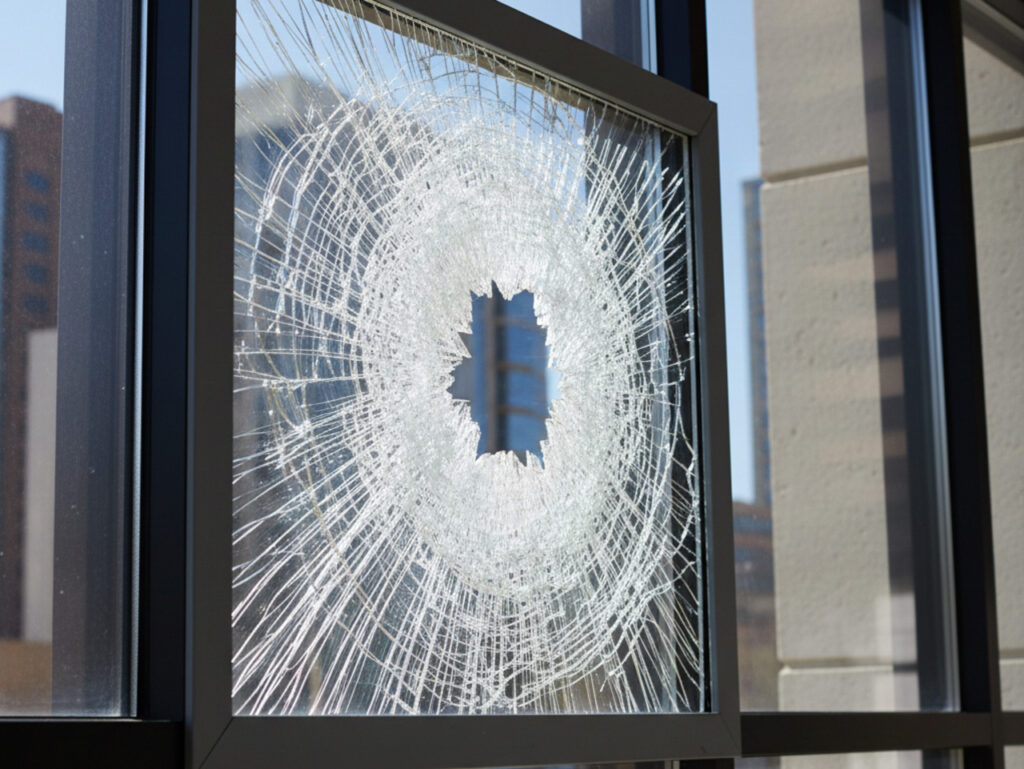
For construction and renovation managers, unprotected fenestration translates directly into quantifiable project risks. Beyond the immediate costs of glass replacement, which can be substantial, these vulnerabilities lead to broader financial and operational impacts. Project timelines can be disrupted by lengthy repair processes, critical assets within the building are exposed, and business continuity can be severely compromised.
Consider the potential for:
- Property Damage and Financial Loss: Unauthorized access leading to theft, damage to internal fixtures, and prolonged business interruption.
- Occupant Safety and Liability: The risk of injury from flying glass shards during an impact, which can result in increased insurance claims, legal action, and a failure to meet duty of care obligations.
- Security Breaches: Glass offers a rapid entry point for determined intruders, bypassing more robust perimeter defenses.
- Regulatory Non-Compliance: In certain high-risk environments or jurisdictions, specific blast or impact resistance standards may be mandatory, rendering standard glass non-compliant.
Addressing these risks proactively is crucial for delivering projects that meet contemporary security demands and mitigate long-term client liability.
Safety Film: A Critical Engineering Control for Risk Mitigation
Safety film for windows emerges as a critical engineering control rather than a simple add-on. This proactive solution fortifies existing glass and transforms its performance characteristics. It removes the need for costly and disruptive full-scale window replacements. By reinforcing vulnerable points, the film improves a building’s overall defensive posture. This application significantly reduces exposure to security and environmental risks. Safety film is an essential component in modern building specifications. It delivers enhanced security and compliance at a lower cost. This method avoids the complexity of other structural hardening alternatives.
What is Safety Film for Glass? Defining a Core Security Solution
The Multi-Layered Science Behind Shatter Resistance
Safety film is an advanced, multi-layered polymer product engineered for impact resistance. It comprises multiple plies of high-tensile polyester film of varying thicknesses. Specialized, aggressive acrylic adhesives laminate these layers together into a unified system. These adhesives form a strong molecular bond directly with the glass surface. The film is meticulously engineered to absorb and distribute kinetic energy. High tensile strength and tear resistance are key to its performance. These technical specifications must match specific project security requirements. Experts often guide selections using industry standards like ANSI Z97.1 or GSA criteria.
How Safety Film Transforms Standard Glass into a Robust Barrier
The fundamental transformation enabled by safety film occurs immediately upon impact. Untreated glass fractures instantaneously and separates from its frame when struck. This creates a large opening and scatters dangerous, sharp debris. Security window film converts brittle glass into a durable, impact-resistant membrane. The robust adhesive layer holds fractured glass fragments together. This keeps the debris contained within the window frame. Retaining the glass prevents rapid penetration and acts as a significant deterrent. It buys critical time during a security breach scenario. The building envelope remains intact even after a severe impact. This protects occupants and interior assets from external threats. Finally, it reduces the complexity of post-event clean-up and repairs.
Core Mechanisms: Shard Containment and Impact Distribution
The effectiveness of safety film hinges on two core mechanisms: shard containment and impact distribution.
- Shard Containment: This mechanism is paramount for occupant safety and security. Upon an impact event, whether from an intentional attack, accidental collision, or natural disaster, the film’s powerful adhesive prevents glass shards from detaching and flying inward. Instead, the broken glass adheres to the film, holding the pane largely intact within the window frame. This significantly reduces the risk of injury from flying glass fragmentation and minimizes property damage, while also deterring immediate forced entry by maintaining a physical barrier, albeit a compromised one.
- Impact Distribution: When kinetic energy strikes a treated pane of glass, the film absorbs and disperses this force across a broader surface area. This distribution prevents the localized point of impact from immediately leading to catastrophic glass failure and full penetration. Instead, the energy is managed, causing the glass to fracture but remain adhered to the film. This engineering characteristic effectively increases the time an intruder requires to breach the window. It provides valuable minutes for security personnel or law enforcement to respond. For high-security projects, the film’s impact management is absolutely critical. This is especially true for buildings subject to blast mitigation specifications. The film helps protect occupants by containing glass shards during an explosion. It maintains structural integrity and prevents the building envelope from failing. This proactive defense significantly lowers the risk of injury during a crisis.
Beyond Basics: Differentiating Safety Film, Security Film, and Specialized Glass
Understanding the distinctions between various glass protection solutions is critical for specifying the appropriate system for any given project. While often used interchangeably, “safety film” and “security film” address different threat profiles and achieve varying levels of performance. Similarly, evaluating film technologies against specialized glass types illuminates their respective roles in a comprehensive building envelope strategy.
Safety Film vs. Security Film: Nuances in Threat Response and Performance
The primary differentiation lies in their intended application and the type of threat they are engineered to mitigate.
- Safety Film: These films are designed to hold shattered glass fragments together upon impact. Their main objective is to prevent injuries from flying shards during accidental breakage, natural disasters like earthquakes or high winds, or even spontaneous glass failure. Performance is typically measured against standards such as ANSI Z97.1 and CPSC 16 CFR 1201, which focus on human impact safety. They transform standard annealed glass into a safer surface, reducing liability related to glass related injuries.
- Security Film: Thicker and often featuring more robust adhesive systems, security films are engineered to delay forced entry resistance, mitigate blast effects, and withstand more severe impacts. They not only contain shattered glass but also maintain the integrity of the window pane within the frame for a prolonged period, actively resisting penetration. Their performance is rated against more rigorous standards, including ASTM F1642 (for blast mitigation) and UL 972 (for glazing materials in burglary resistance applications). The selection of a security film is directly tied to the desired delay time for intrusion or the specified blast pressure resistance.
While security films inherently offer the safety benefits of a safety film, their design prioritizes delaying access or containing explosive forces. Project specifications must clearly define the anticipated threat to ensure the correct film type and performance standard are selected.
Comparing Film Technologies to Tempered and Laminated Glass
Each glazing solution offers distinct characteristics. Understanding these allows for informed decisions, particularly when evaluating retrofit options against new construction or full glass replacement.
- Tempered Glass: This glass is significantly stronger than annealed glass and, upon breakage, shatters into small, relatively harmless granular pieces. While this fragmentation pattern greatly reduces laceration hazards, tempered glass offers minimal resistance to forced entry once shattered. It does not provide a robust barrier.
- Laminated Glass: Comprising two or more panes of glass bonded together by a polymer interlayer (typically polyvinyl butyral, PVB, or SentryGlas Plus, SGP), laminated glass is engineered to remain largely intact when broken. The interlayer holds the glass fragments in place, maintaining a barrier that resists penetration and reduces the risk of injury from flying shards. Laminated glass is a highly effective solution for both safety and security from the outset.
Film Technologies:
- Cost-Effectiveness: For existing structures, applying a safety or security film is significantly more cost effective and less disruptive than replacing existing glass with tempered or laminated units. This is particularly relevant for large-scale projects or national rollouts where full glass replacement is logistically prohibitive or budget constrained.
- Performance Enhancement: Security films, especially when combined with an attachment system, can upgrade standard annealed or tempered glass to achieve performance levels that rival or even exceed certain laminated glass configurations, particularly concerning blast mitigation and forced entry resistance.
- Flexibility: Film allows for phased upgrades and customization based on specific threat assessments for different areas of a building, offering a flexible commercial security solution that new glass alone might not provide without extensive construction.
For Project Manager Paul, the ability to upgrade existing glass with a high-performance film system represents a powerful tool for achieving enhanced safety and security compliance without the substantial capital expenditure and operational disruption associated with glass replacement.
Understanding the Role of Specialized Attachment Systems in System Performance
While the film itself is crucial, a critical component often overlooked is the attachment systems. These systems are essential for maximizing the performance of security films, particularly in scenarios involving significant impact, blast pressure, or sustained forced entry attempts.
An attachment system mechanically or chemically anchors the filmed glass to the window frame. Without it, even a strong security film might hold the glass fragments together, but the entire pane could be dislodged from the frame during a severe impact, effectively creating an opening.
- Wet Glaze Systems: This method involves applying a structural silicone sealant to bond the film and the glass directly to the window frame. The silicone creates a continuous, flexible bond that absorbs impact energy and keeps the glass unit secured within the frame. While requiring specific cure times, wet glaze systems are highly effective for blast mitigation and forced entry resistance scenarios.
- Mechanical Attachment Systems: These systems utilize physical battens, clips, or profiles that secure the filmed glass to the window frame. They often involve metal components that are fastened directly to the frame, creating an immediate and robust physical barrier. Mechanical systems are particularly advantageous where immediate structural integrity is required or where silicone curing times are impractical.
The integration of an appropriate attachment system is paramount for a security window film installation to meet its specified performance criteria, especially for GSA blast ratings or UL 972 forced entry resistance. Specifying and installing these systems correctly requires specialized expertise, reinforcing the need for highly skilled and certified vendors to ensure the engineered system performs as intended.
Strategic Applications: Enhancing Safety and Security Across Diverse Projects
The versatility and cost-effectiveness of safety and security films make them invaluable for upgrading and reinforcing the glazing in a wide array of building types. Their strategic application directly addresses project objectives related to occupant safety, asset protection, and regulatory compliance.
Elevating Commercial Security: Protecting Retail, Office, and Industrial Spaces
Commercial environments present diverse security challenges, from deterring opportunistic theft to safeguarding critical infrastructure. Safety and security films offer tailored solutions.
- Retail: High-visibility storefronts are vulnerable to smash-and-grab incidents. Security films significantly delay forced entry, increasing the time needed for a thief to breach the glass and acting as a deterrent. This protects valuable merchandise and provides crucial minutes for alarm response. Films also mitigate damage from accidental impacts, maintaining business continuity.
- Office Buildings: Beyond protecting against common vandalism, office spaces benefit from enhanced perimeter security against active threats or civil unrest. Security films delay potential intruders, providing occupants with valuable time to implement lockdown procedures or evacuate. They also improve safety by preventing glass fragmentation during internal accidents or external events.
- Industrial Facilities: These sites often house expensive machinery, sensitive data, or hazardous materials. Security films can reinforce glazing against forced entry, internal explosions, or external threats, ensuring operational continuity and protecting critical assets. In areas with potential internal hazards, safety films prevent glass from becoming shrapnel during an incident.
The application of security window film in these environments directly contributes to reducing insurance costs, protecting assets, and ensuring the safety of employees and the public, all while maintaining the aesthetic integrity of the building.
Safeguarding Educational Environments: From Schools to University Campuses
The unique vulnerabilities of educational facilities, high occupancy, presence of minors, and often outdated infrastructure, make safety and security films a critical consideration.
- Active Threat Mitigation: In an active threat scenario, every second counts. Security films applied to exterior and interior classroom windows and doors significantly increase the time an intruder needs to gain entry. This delay provides essential time for students and staff to shelter in place, barricade doors, or initiate escape.
- Accidental Breakage and Natural Disasters: Safety films prevent glass from shattering into dangerous shards, protecting students and staff during everyday accidents, severe weather events, or seismic activity. This is particularly important in high-traffic corridors and common areas.
- Privacy and Vandalism: Certain film types can also offer privacy solutions for sensitive areas while providing an additional layer of protection against vandalism and graffiti, which can be a recurring issue on campuses.
For educational institutions, film installations are often implemented in phases to minimize disruption to academic schedules, highlighting the logistical advantages of retrofitting over glass replacement for large campuses.
Mitigating Hazards in High-Traffic and Public Facilities
Public spaces such as airports, transportation hubs, government buildings, healthcare facilities, and sports arenas are designed for high occupancy and continuous operation, making occupant safety and operational resilience paramount.
- Mass Casualty Event Prevention: In the event of a blast or large-scale impact, unfixed glass can become a primary source of injury. Security films, particularly with attachment systems, are engineered to contain glass fragments, significantly reducing the risk of lethal shrapnel injuries. This is a crucial element of a comprehensive threat mitigation strategy in public areas.
- Accident Safety: With high volumes of people, accidental collisions with glass are more likely. Safety films ensure that even if glass breaks, it remains intact, preventing cuts and other injuries.
- Operational Continuity: By reinforcing glass, these films help maintain the structural integrity of the building envelope, aiding in rapid recovery and reducing downtime after an incident. This ensures that essential services can be restored quickly.
The implementation of film in these environments is often driven by stringent safety regulations and the need for robust risk management strategies to protect vast numbers of people.
Illustrative Scenarios: Applying Safety Film for Blast Mitigation and Forced Entry
To illustrate the tangible benefits, consider specific application scenarios where film technology makes a critical difference.
Blast Mitigation
- Scenario: A critical government building or embassy, located in an area susceptible to external explosive threats, needs to enhance its perimeter security. Existing annealed or insulated glass units are vulnerable to blast pressure waves.
- Film Application: A high-performance security film (e.g., 8-mil or greater) is applied to all exterior glazing, coupled with a wet glaze attachment system that firmly anchors the filmed glass to the window frame.
- Outcome: In the event of a blast, the film and attachment system work synergistically to hold the shattered glass in place, preventing it from becoming a deadly projectile. The entire window unit may bow inward, but it remains largely intact, significantly reducing injuries to occupants and mitigating structural damage. This system enables the building to meet stringent GSA performance levels for blast resistance, a common requirement for such facilities.
Forced Entry Resistance
- Scenario: A retail jewelry store or a school with vulnerable ground-floor windows faces a high risk of break-ins. The goal is to delay entry long enough for security personnel or law enforcement to respond.
- Film Application: A robust security film (e.g., 7-mil to 14-mil, depending on the required delay) is installed on all susceptible windows. Mechanical attachment systems are employed to ensure the filmed glass cannot be easily pried or forced out of the frame.
- Outcome: When an intruder attempts to smash the glass, the film holds the glass shards together, creating a tough, resilient membrane that resists repeated blows from blunt objects or even tools. This significantly increases the time required for forced entry, typically delaying an intruder for several minutes. This delay provides critical response time for security systems to alert authorities and for personnel to react, greatly enhancing asset protection and occupant safety. These applications often aim for specific UL 972 classifications, demonstrating measurable resistance.
Specifying the Right Film: Key Performance Metrics for Project Success
Deciphering Technical Specifications: Tensile Strength, Tear, and Puncture Resistance
When selecting safety film, project managers must move beyond generic descriptions and evaluate specific technical metrics that define a film’s real-world performance. Tensile strength quantifies the maximum stress a material can withstand before breaking when stretched, directly correlating to its ability to hold glass fragments together under severe impact. This is crucial for containing glass shards within the frame, reducing projectile hazards and delaying forced entry.
Tear resistance measures the film’s ability to resist the propagation of a tear once initiated. In a security context, a high tear resistance means the film will not easily rip open when subjected to blunt force or sharp objects, maintaining the integrity of the protective barrier. Puncture resistance, conversely, indicates the force required for a sharp object to penetrate the film. Combined, these metrics are engineering controls that dictate how effectively a film can withstand direct assault, blast pressure, or ballistic impact, critically influencing the delay of intrusion and the protection of occupants.
Understanding ASTM Standards and Building Code Compliance for Glass Systems
The performance of safety film is not anecdotal. It is rigorously tested against industry standard protocols, most notably those established by the American Society for Testing and Materials (ASTM). For instance, ASTM F1642 defines a standard test method for glazed openings subjected to air blast loading, vital for structures requiring protection against explosive devices. Similarly, ASTM E1886 and E1996 address the resistance of exterior windows, curtain walls, and doors to missile impacts and cyclic pressure differentials, essential for buildings in hurricane zones.
Specifying films that meet or exceed these ASTM standards directly addresses building code compliance and significantly reduces project liability. By demonstrating that glass systems, augmented with safety film, can withstand specified threat levels, projects can achieve higher safety ratings and comply with increasingly stringent regulations without the prohibitive cost and disruption of full window replacement. This strategic application positions safety film as a cost-effective, high-impact security upgrade.
The Importance of Film Thickness and Material Composition for Threat Response
The physical characteristics of safety film, specifically its thickness (measured in mils) and material composition, are paramount in determining its efficacy across various threat scenarios. Thicker films (e.g., 8-mil, 12-mil, or even 15-mil systems) inherently offer greater resistance to impact, providing extended delay times against forced entry and enhanced blast mitigation. This direct correlation between thickness and protection level allows project managers to tailor specifications precisely to the anticipated threat profile of a given building or specific glazing.
Beyond thickness, the material composition, typically multiple layers of high-tensile polyester combined with proprietary laminates and robust adhesive systems, is equally critical. Advanced films utilize micro-layer technologies that distribute impact energy more effectively across the film surface, preventing localized failure. The elasticity and adhesive properties of these films ensure that even when the glass breaks, the fragments adhere firmly to the film, maintaining a continuous barrier. This engineered construction transforms standard glass into a resilient, threat-responsive component of a building’s security envelope.
Exploring Advanced Solutions: Features of 3M Ultra Series and Similar High-Performance Films
The evolution of safety film technology has led to advanced solutions, such as the 3M Ultra Series and comparable high-performance films, which represent the pinnacle of glass protection. These films distinguish themselves through innovative micro-layer construction, often comprising dozens of ultra-thin layers that provide superior tear and impact resistance compared to monolithic films of equivalent thickness. This multi-layered design allows for exceptional strength without sacrificing optical clarity, ensuring uncompromised aesthetics.
Key features often include:
- Superior Tear Resistance: The micro-layering prevents tears from propagating, maintaining the film’s structural integrity even after severe impact.
- Enhanced Adhesion: Advanced adhesive systems ensure an incredibly strong bond to the glass, holding shattered fragments securely in place during high-energy events.
- Blast Mitigation Performance: Designed to absorb and dissipate significant blast energy, reducing the risk of flying glass and occupant injury.
- Optical Clarity: Despite their multi-layered construction, these films maintain high light transmission and low haze, preserving natural light and views.
Specifying these advanced films is a strategic decision for projects requiring the highest levels of security and occupant safety, providing an engineered solution that drastically reduces risk and enhances long-term asset protection.
The Imperative of Professional Installation: Ensuring Long-Term Reliability and Compliance
Why DIY or Subpar Installation Compromises Performance and Warranty
The intrinsic qualities of a high-performance safety film are only realized through meticulous, professional installation. Treating safety film application as a commodity service or attempting a DIY approach inevitably compromises its intended performance and, critically, voids manufacturer warranties. Improper installation can lead to a host of issues, including inadequate adhesion, air bubbles, unsightly blemishes, and premature peeling, all of which diminish the film’s ability to resist impact or contain glass fragments.
Under a security threat, a poorly installed security window film may delaminate from the glass, rendering it ineffective as an engineering control. This not only negates the investment but also increases project liability significantly. The complex chemical processes of adhesion and curing, combined with the precision required for seamless application, demand specialized expertise that generic installers or in-house staff rarely possess. The integrity of the safety film as a protective barrier hinges directly on the quality of its installation.
The Technicalities of Film Application: Adhesion, Edge Sealing, and Curing Processes
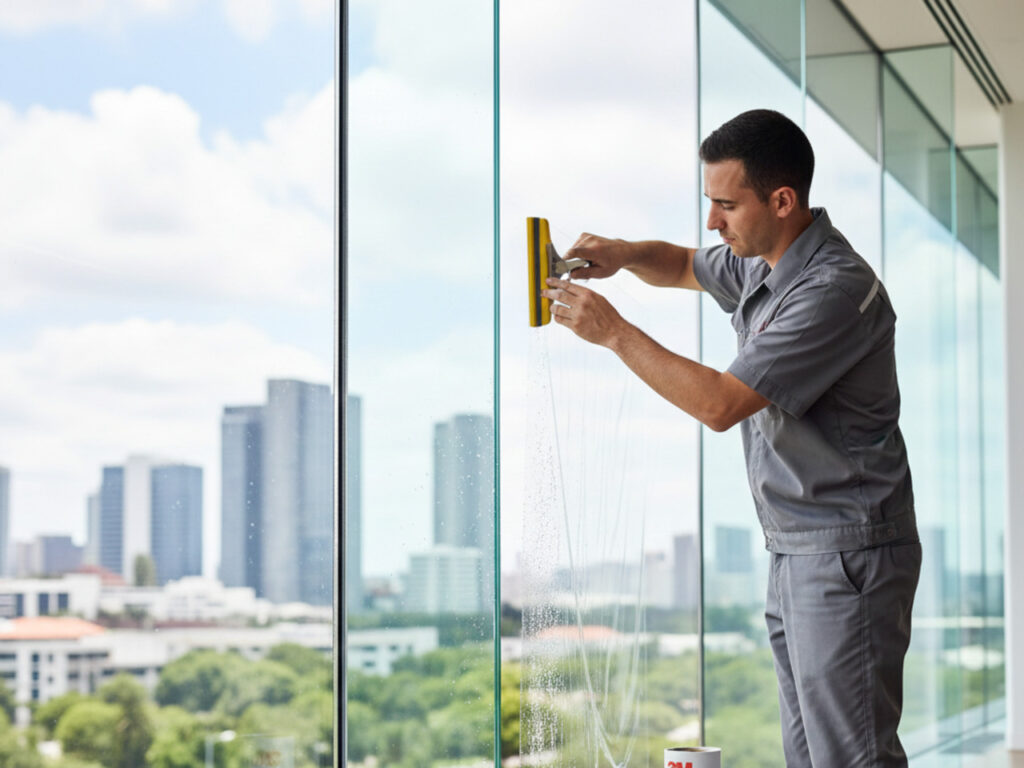
Professional safety film application is a specialized craft involving several critical technical stages to ensure optimal performance and longevity. The process begins with rigorous surface preparation, including thorough cleaning and degreasing of the glass, often requiring a dust-free environment to prevent particulate contamination under the film. Precision cutting of the film to exact dimensions is paramount, allowing for minimal edge gaps while accommodating expansion and contraction.
During application, a precisely formulated slip solution facilitates positioning, followed by expert squeegee techniques to remove all moisture and air bubbles, initiating the adhesive bond. Crucially, for security applications, edge sealing or anchoring systems are often employed. These attachment systems mechanically fasten the film to the window frame, preventing the entire film-glass system from being dislodged under extreme pressure, such as from a blast or forced entry attempt. Finally, the curing process, where the adhesive fully cross-links and bonds with the glass, is vital and can take several weeks depending on ambient conditions. Professional installers understand and manage these variables to guarantee maximum bond strength and system integrity.
Addressing Large-Scale Project Demands: The Value of National Rollout Capabilities
For project managers overseeing national rollouts or multi-site projects, the ability to partner with a vendor offering national installation capabilities is not merely a convenience. It is a strategic necessity. A specialized vendor with a national footprint ensures consistent quality, standardized processes, and unified project management across all locations, irrespective of geographical spread. This capability mitigates the logistical complexities and administrative burdens associated with coordinating multiple local subcontractors.
The value derived from a national rollout partner includes:
- Standardized Quality: Ensuring every installation adheres to the same high technical specifications and performance criteria.
- Centralized Project Management: A single point of contact streamlines communication, scheduling, and progress reporting, enhancing efficiency.
- Scalability and Logistics: Expertise in managing material procurement, shipping, and deployment for large volumes across diverse sites.
- Consistent Compliance: Adherence to national and local building codes and safety regulations across all installations.
- Predictable Timelines: Experienced national teams can reliably meet aggressive project schedules and minimize downtime.
This integrated approach significantly reduces project risk, ensures uniformity in security enhancements, and frees up project management resources to focus on other critical project aspects.
Partnering with Qualified Installers: What to Look for in a Specialized Vendor
Selecting the right installation partner is as critical as specifying the correct film. For project managers, a specialized vendor goes beyond mere application. They are an extension of your project team, ensuring the safety film system performs as an engineered security control. When evaluating potential partners, consider these key indicators of qualification:
- Manufacturer Certification: Ensure the installer is certified by the film manufacturer (e.g., 3M Certified Dealer/Applicator). This guarantees training, adherence to best practices, and access to genuine products and warranties. Look specifically for experience with 3M safety film if that brand is a preference.
- Proven Track Record: Look for extensive experience with similar-scale and complexity projects, particularly those involving advanced security or blast mitigation films. Request case studies and references.
- Specialized Equipment and Techniques: Verify they possess the proper tools, clean room protocols, and advanced application techniques necessary for high-performance films, including expertise in edge retention systems.
- Comprehensive Insurance and Safety Protocols: Confirm adequate liability insurance and adherence to rigorous safety standards on job sites.
- Project Management Capabilities: Assess their ability to manage multi-site logistics, scheduling, communication, and quality control for national rollouts.
- Warranty and Post-Installation Support: Understand the film and installation warranty coverage and the vendor’s commitment to post-installation service and maintenance.
- Clear Communication and Transparency: A reliable partner will provide detailed proposals, accurate timelines, and proactive communication throughout the project lifecycle.
By meticulously vetting installers against these criteria, project managers can ensure that the investment in safety film translates into a reliable, long-term security solution that significantly reduces liability and protects client assets effectively.
Conclusion: Safety Film as a Strategic Investment in Modern Building Integrity
Key Takeaways: Re-emphasizing Liability Reduction and Asset Protection
The strategic integration of high-performance safety film fundamentally transforms a building’s glazing from a critical vulnerability into a robust defensive layer. This engineering control delivers tangible benefits directly impacting project liability and client asset protection. Beyond its primary function of reinforcing glass, a professionally installed safety film system contributes significantly to overall building resilience.

Key benefits and takeaways for project managers include:
- Enhanced Security Posture: Security window film significantly delays forced entry attempts, providing crucial response time for security personnel and law enforcement. This directly mitigates risks associated with property theft and unauthorized access.
- Occupant Safety and Injury Mitigation: By containing glass shards upon impact, film dramatically reduces the risk of laceration injuries during accidents, natural disasters, or ballistic events. This directly lowers potential workers’ compensation claims and occupant liability.
- Asset Protection: In addition to physical security, film safeguards internal assets from flying debris and projectile damage, preserving interiors, equipment, and inventory during critical events.
- Cost-Effectiveness and Project Efficiency: Implementing what is safety film for glass offers a fraction of the cost and complexity compared to replacing existing glass with laminated glass or specialty security glass. This translates into budget adherence, reduced installation timelines, and minimal operational disruption.
- Regulatory Compliance and Insurance Benefits: Specifying films that meet recognized industry standards (e.g., GSA, ASTM) ensures compliance with safety regulations and can positively influence insurance premiums by demonstrating a proactive risk management strategy.
Next Steps for Construction and Renovation Managers: Integrating Safety Film into Project Planning
Effective integration of safety film requires a proactive approach, beginning early in the project lifecycle. For construction and renovation managers overseeing diverse portfolios, especially national rollouts, a systematic strategy ensures optimal performance, consistent quality, and controlled costs.
Early Specification and Design Integration
Incorporate safety film specifications during the initial design phase. This allows for proper film selection based on threat assessment, existing glass types, and desired performance outcomes. Specifying early also streamlines procurement and avoids costly retrofits or scope changes later in the project. Engage with film manufacturers or specialized consultants to define precise performance criteria, material thickness, and attachment systems.
Vendor Selection and Quality Assurance
Identifying and partnering with experienced, certified installers is paramount, particularly for large-scale or multi-location projects. Project managers must vet vendors for proven expertise in safety film application, adherence to manufacturer guidelines, and a track record of successful installations. Prioritize partners who can demonstrate:
- Manufacturer Certifications: Ensuring installers are trained and certified by leading film manufacturers, such as those specializing in 3M safety film.
- Project Management Capabilities: Ability to manage logistics, scheduling, and quality control across multiple sites.
- Comprehensive Warranties: Clear warranties covering both film performance and installation craftsmanship.
- References and Case Studies: Verifiable examples of successful projects of similar scope and complexity.
- Compliance with Industry Standards: Familiarity with and adherence to relevant building codes and safety and security standards.
The Future of Building Security: Proactive Measures for Evolving Threats
As societal threats evolve and security expectations heighten, building integrity demands continuous re-evaluation and adaptation. Safety film represents a critical, yet often overlooked, component of a comprehensive and forward-thinking security strategy.
By proactively fortifying vulnerable glazing points, project managers ensure buildings remain resilient and safe. These measures protect against dynamic challenges like extreme weather and evolving security risks. Investing in professionally installed safety film is a strategic move for any project. It contributes to a more secure and sustainable built environment for the future. This proactive approach ensures long-term compliance with modern safety standards.
Frequently Asked Questions
What is safety film for glass, and how does it work?
Safety film for glass is a multi-layered polymer application engineered to enhance the shatter resistance of glass. It works by forming a strong bond with the glass surface, holding fragments together upon impact. This prevents dangerous glass fragmentation, retains the glass within the window frame, and significantly reduces the risk of injury and forced entry.
What is the difference between safety film and security window film?
Safety film primarily focuses on holding glass together to prevent injuries from shattering, often used for accident mitigation. Security window film is typically thicker and designed for more robust applications, such as blast mitigation or delaying forced entry resistance, by prolonging the time an intruder needs to breach the glass. Security films inherently provide safety benefits.
Can safety film make glass truly shatterproof?
While no glass is entirely shatterproof under extreme force, safety film significantly upgrades standard glass to provide a high degree of shatter resistance. It acts as a shatterproof glass coating, ensuring that even when the glass breaks, the film contains the shards, maintaining a protective barrier and drastically reducing injury risk.
What are attachment systems, and why are they important for security window film?
Attachment systems mechanically or chemically anchor the security window film and glass directly to the window frame. They are crucial for maximizing performance in high-impact scenarios, such as blast mitigation or sustained forced entry attempts. Without attachment systems, even a strong film could allow the entire pane to be dislodged from the frame.
How does 3M safety film compare to other brands?
3M safety film, particularly its Ultra Series, is known for its advanced micro-layer technology. This construction offers superior tear resistance and strength compared to monolithic films of similar thickness, enhancing blast mitigation and forced entry resistance without sacrificing optical clarity. Other reputable brands also offer high-performance films, with selection often depending on specific project requirements and performance standards.