If one room in your house feels too hot by midafternoon, your TV is hard to watch because of glare, or your front-facing windows feel exposed to the street, window tint may be a practical fix. The right film can improve comfort, privacy, and UV protection without making your home feel closed off.
This guide explains how residential tint works, what it costs per square foot, which films fit different rooms, and what to expect from installation, maintenance, and warranty coverage.
Table of Contents:
- Residential Window Tint at a Glance (Start Here)
- Types of Window Film for House Windows and Sliding Doors
- Benefits of Tinting Home Windows
- Cost of Home Window Tint Per Square Foot
- Choosing the Right Tint for Each Room
- Frequently Asked Questions About Residential Window Tint
- Conclusion: Is Tinting Your House Windows Worth It?
Residential Window Tint at a Glance (Start Here)
Residential window tint is a thin window film applied to the inside of house windows, doors, and sliding doors to improve comfort and performance. Homeowners use it to reduce glare, block heat, create more privacy, and protect interiors from harmful uv rays.
It is especially useful in rooms where the sun’s heat creates hot spots, where blinds or curtains stay closed all day, or where outsiders can see in from the street. Residential window tints enhance privacy and block UV rays, and many modern films preserve natural light better than older dark tint options.
Quick benefits include:
- Privacy for exposed glass, entry areas, and bedrooms
- UV protection for floors, furniture, artwork, and furnishings
- Energy savings by reducing solar heat gain and cooling demand
- Glare control for screens, reading, and daily comfort
- Style upgrades with frosted, decorative, clear, or mirror finishes
This article covers typical cost per square foot, exact price ranges by film type, and how to choose the right tint for different rooms in your house.
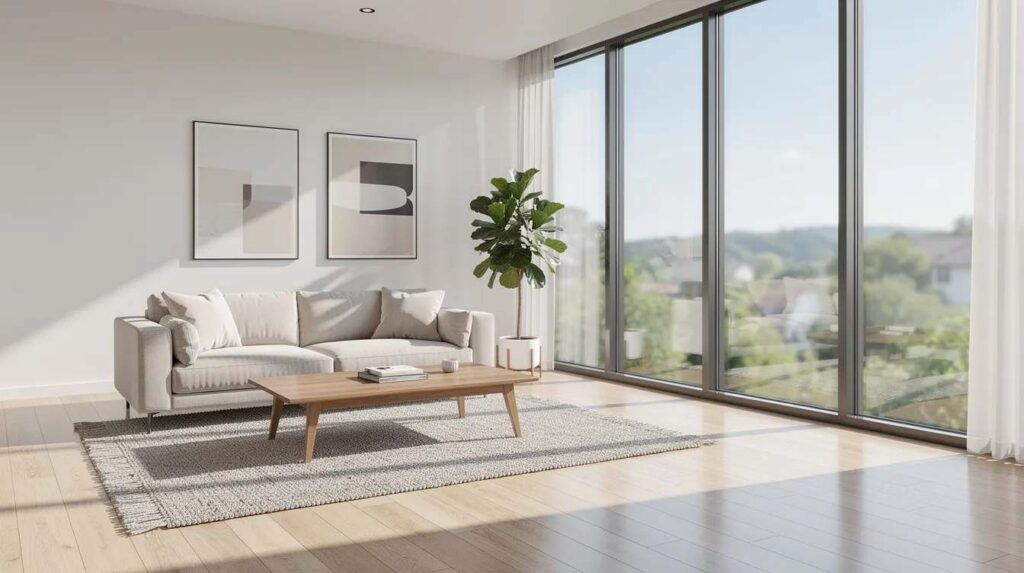
How Residential Window Tint Works
Window film technology is simple in concept but precise in performance. Most films use thin polyester layers, a scratch-resistant coating, and either adhesive or static cling backing. Adhesive films bond to glass with a glue-like layer, while static cling films can be removed without leaving residue.
Films block heat and reduce glare by controlling how much light, infrared heat, and uv rays pass through the glass. Some films absorb solar energy; others reflect it. Solar film blocks infrared heat and reduces energy bills by reducing the heat coming through the windows during peak sun hours.
Clear films are popular when you want protection without a noticeable shade. High-quality films block up to 99% of harmful ultraviolet rays, and window tinting can block up to 99.9% of UV rays depending on the product. Some clear films can block nearly all UV without noticeably darkening glass, which helps preserve natural light.
Factory Low-E glass and aftermarket film solve related problems in different ways. Low-Emissivity films act as insulators by reflecting radiant heat back inside, which can help during colder months. Factory Low-E glass is built into the window unit, while aftermarket film is added to existing home window glass when replacement is not the goal.
Types of Window Film for House Windows and Sliding Doors
Not all films are designed for the same purpose. The right tint depends on your goals, the room, the direction the glass faces, and whether the window is single-pane, double-pane, tempered, or already coated.
Residential window tints are categorized by solar control, privacy, security, and decorative functions.
Solar control films: These are designed to block heat, reduce glare, and limit UV. Solar control films reflect and absorb up to 80% of incoming solar energy, while window films can block up to 75% of heat. Ceramic film blocks 65% of heat and UV rays, and non-reflective film blocks 35% of heat and UV rays. Silver reflective film rejects over 75% of heat, making it useful for intense sun exposure.
Privacy films: Tinting creates a mirror-like finish during the day for daytime privacy. Silver reflective window film offers 100% daytime privacy when conditions are right, and tinted windows create a mirror-like effect for outside visibility. However, standard reflective privacy film only works when it is brighter outside than inside. At night, interior light can reverse the effect.
Frosted and decorative films: Frost and decorative films provide privacy day and night. Frost and decorative films provide privacy day and night while still letting daylight into bathrooms, entries, and sidelights. Privacy films come in various colors and patterns, including etched, stained-glass, geometric, and soft diffusion styles.
Security and safety films: Security film thickness ranges from 3 mil to 15 mil. These thicker films are designed to reinforce glass, keep shards together, and slow someone trying to gain entry. The adhesive bond of window film reinforces the glass and holds shattered glass together after impact.
Clear films: Clear films are a good solution when appearance must stay almost unchanged. They are often used on front-facing house windows where the homeowner wants protection from fading but does not want a dark look.
You can also mix films across one home. For example, use a stronger solar tint on west-facing glass, a frosted film at an entry, and lighter clear films on north-facing windows.
Benefits of Tinting Home Windows
Tinting is a long-term upgrade that improves comfort, protection, and curb appeal without replacing the glass.
Energy savings: Windows are responsible for up to 30% of a home’s heating and cooling energy loss. By reducing solar heat gain, films ease the load on HVAC systems. Tinting can reduce energy costs by up to 30% in some homes, especially in sunny climates, and residential window tint provides immediate energy savings and glare reduction. A GSA evaluation with Lawrence Berkeley National Laboratory found notable perimeter HVAC savings from Low-E window film compared with clear single-pane glass.
Comfort: Tinting removes uncomfortable hot spots in rooms with direct sunlight exposure. It also helps rooms feel more even in temperature, especially when the sun hits large glass walls or sliding doors.
Glare control: Tinting reduces glare, improving comfort indoors. It can make TVs, laptops, and home office monitors easier to use without shutting out all natural light with blinds or curtains.
UV and fading protection: Tinting blocks almost all ultraviolet rays, preventing permanent sun fading. Tinted windows can protect furniture from fading, along with rugs, hardwood floors, artwork, and other furnishings.
More privacy: Window tinting makes it harder for outsiders to see valuables. This can matter for street-facing rooms, entry glass, and ground-floor doors.
Improved safety: Safety and security films help hold broken glass in place during accidental impacts, storms, or attempted break-ins. They do not make glass unbreakable, but they add protection and slow intrusion.
Curb appeal and resale: A consistent, well-chosen tint can make older windows look more uniform and modern. Buyers may also value lower energy costs, better comfort, and protected interiors.
Cost of Home Window Tint Per Square Foot
Prices vary by film type, glass type, window height, and project size. As a general installed range, standard solar film often runs around $5–$8 per square foot, premium ceramic projects may land around $8–$12 per square foot, and security film can cost more depending on thickness and access.
More specific film ranges include:
- Non-reflective window film costs between $5.50-$6 per square foot.
- Silver reflective window film costs between $6-$7 per square foot.
- Ceramic window film costs between $7-$9 per square foot.
- Frost and decorative window films cost between $6-$10 per square foot.
- Security window film costs between $5-$15 per square foot.
Installation costs can increase by $0.50-$1.50 per square foot for tall windows. Arches, half-moons, sidelights, divided panes, second-story access, and unusually dirty glass can also raise the total.
For a typical project, assume 150 square feet of glass on a single-story home. At $6 per square foot, the project is about $900. At $9 per square foot, it is about $1,350. A premium or complex project may cost more.
The exact price is only available after reviewing measurements, glass condition, access, and film choice. Before requesting a free estimate, prepare window sizes, photos, the number of panes, and notes about which rooms feel hot, bright, or exposed.
DIY products from retail stores cost less, but professional-grade films usually offer better clarity, durability, performance, and warranty coverage.
Choosing the Right Tint for Each Room
The right tint depends on direction, room use, and how much natural light you want to keep.
Living rooms and family rooms: Choose films that reduce glare on TVs, block heat, and keep the room bright. A ceramic or spectrally selective film is often a good fit because it controls heat without making the room feel too dark.
Bedrooms: Bedrooms often benefit from more privacy and temperature control. A medium shade can help with sleeping comfort while still allowing daylight.
Home offices: Prioritize glare reduction and consistent light. A non-reflective or ceramic film can reduce harsh contrast on screens and improve video calls without creating a dark background.
Bathrooms and entry doors: Frosted or decorative privacy films are usually the best choice. They obscure views while keeping daylight, and they are more reliable than a daytime mirror film at night.
Sliding doors and large glass walls: These areas collect a lot of heat. Higher-performance solar or ceramic films can block heat without heavily changing the view.
North vs. south and west exposure: North-facing windows usually need less solar control. South- and west-facing glass gets stronger sunlight and often needs higher heat rejection, especially in summer. Research from national labs, including NREL modeling on window film retrofits, shows larger benefits where solar heat gain is a bigger problem.
Glass Compatibility and Installation Considerations
Not every film is suitable for every piece of glass. Compatibility matters because the wrong tint can trap too much heat, stress seals, or increase the risk that glass could crack.
Common residential glass types include single-pane, double-pane insulated glass, tempered glass, and Low-E glass. Installers ask about these because film selection must match the glass construction and existing coatings.
Certain dark or highly reflective films are not recommended on some double-pane units because of heat stress risks. This is one reason professional assessment matters before installation.
Pre-installation checks should include:
- Existing chips, scratches, or cracks
- Fogging or failed seals
- Factory tint or Low-E coatings
- Manufacturer warranty limitations
- Frame depth and edge condition
- Access around furniture, floors, and curtains
A professional installation usually includes measuring, custom cutting, cleaning the glass, applying solution, positioning the film, squeegeeing water and air out, and trimming the edges. A small project, such as several front-facing windows and one sliding door, may take a few hours. Window tinting can take longer than 15 minutes per window, especially when the glass is large, high, or shaped.
How to Install Window Film (DIY vs. Professional)
Some homeowners successfully install window film themselves. Others prefer hiring a professional because glass preparation, cutting, and bubble-free finishing take practice.
DIY window film
DIY window tinting requires accurate measuring and cutting. Basic tools include a spray bottle, utility knife, squeegee, lint-free cloth, scraper, straightedge, and mild installation solution.
Typical DIY steps are:
- Measure the glass carefully.
- Cut the film slightly oversized.
- Clean the glass thoroughly.
- Spray the glass with solution.
- Position the film.
- Squeegee bubbles and water outward.
- Trim the edges cleanly.
Common problems include bubbles, creases, dust under the film, and edges lifting. Most issues come from rushed cleaning, dry application, dull blades, or touching the adhesive side too much. Static cling films are more forgiving and can be removed without glue residue.
Professional installation
Professional installation ensures a bubble-free finish and gives customers access to better films, cleaner edges, proper glass assessment, and written warranty coverage.
Professional help is strongly recommended for large picture windows, tall glass, complex shapes, security film, and any project where the film’s performance must matter for energy savings or security.
Maintenance, Lifespan, and Warranty
Once installed correctly, quality window tint is low-maintenance. The main rule is to let it cure before cleaning.
Curing can take several days to a few weeks, depending on film type, temperature, humidity, and sunlight exposure. During that time, light haze or small water pockets may appear and then dry out.
After curing, clean tinted windows with mild soap, water, and a soft cloth. Avoid abrasives and ammonia-based cleaners because they can damage the film surface.
Window films can last 10 to 20 years when installed correctly. Basic dyed films may have a shorter life, while high-quality ceramic, reflective, and Low-E films usually last longer.
A good warranty should clearly explain coverage for peeling, bubbling, discoloration, adhesive failure, and, in some cases, glass breakage. Keep your invoice, film specifications, warranty paperwork, and photos for future reference or if you sell the home.
Frequently Asked Questions About Residential Window Tint
How much natural light will I lose?
It depends on visible light transmission. Clear films may allow 70%–90% of visible light through. Mid-range solar films often allow 30%–50%. Dark privacy films may allow 5%–20%. The goal is to reduce glare and heat without making the room feel closed in.
Does one-way window tint work at night?
Not in the same way. Standard reflective privacy film only works when it is brighter outside than inside. At night, if interior lights are on, people outside may see in unless you use blinds, curtains, or frost/decorative films.
Can window tint be removed or replaced?
Yes. Film can usually be softened with heat, peeled away, and cleaned with adhesive remover. The final appearance depends on the condition of the glass under the film and whether scratches or residue remain.
Will window tint hurt my indoor plants?
Most plants still receive enough light with clear or medium films. Sun-loving plants may notice a difference with dark tint, so place them near higher-VLT glass or add supplemental light if needed.
Does tint interfere with double-pane gas fill or seals?
The film does not directly touch the gas fill, but the wrong film can increase heat stress on insulated glass. Proper film selection helps avoid seal problems.
How long is the payback period on energy bills?
Payback varies by climate, energy costs, glass area, and film type. In hot, sunny regions, the payback may be several years. In mild climates, comfort and protection may matter more than direct money savings.
Can film be applied to doors and sliding doors?
Yes, but tempered glass areas may have safety and code considerations. Sliding doors also need careful trimming so the film does not interfere with seals, tracks, or hardware.
Is residential film the same as tint used on cars?
No. Automotive tint and residential window tint are designed for different glass, heat loads, visibility needs, and installation conditions.
Why Choose Our Team for Your Home Window Tinting
Our team focuses on home window solutions that are practical, clear, and carefully installed. We help homeowners decide which film makes sense for each room instead of pushing one product for every window.
We provide clear written estimates, explain performance numbers in plain language, and suggest film options based on privacy, heat, glare, security, style, and budget. When possible, we can demonstrate samples on actual house windows or sliding doors so you can see the difference before choosing.
We also respect furnished homes. That means careful work around floors, furniture, blinds, curtains, and entry areas. You can expect transparent pricing per square foot, detailed proposals instead of vague quotes, and warranty terms in writing.
If you are comparing brands, shades, or performance levels, we can help you decide what matters most for your project and provide a free estimate with an exact price tailored to your windows.
Conclusion: Is Tinting Your House Windows Worth It?
Tinting home windows and doors is worth considering if your rooms feel hot, too bright, or exposed. The right film can block heat, reduce glare, improve more privacy, and protect interiors from fading.
Modern films do not have to sacrifice the natural light that makes a room feel open. With clear, ceramic, solar, privacy, decorative, and security options available, you can choose a solution that fits each room’s purpose.
Start by identifying the windows that cause the most discomfort: the west-facing bedroom, the bright office, the exposed entry, or the sliding doors that overheat the living room. Then contact our team for a personalized recommendation and exact price quote based on your total square footage, glass type, and goals.