Table of Contents:
- What Is Residential Window Frosting & Why Homeowners Choose It
- Key Benefits of Residential Window Frosting
- Types of Frosted Window Films for Homes
- Best Rooms & Glass Areas for Residential Window Frosting
- Privacy Control: Daytime Privacy vs Nighttime Reality
- Comparing Frosted Film to Other Privacy Options
- DIY vs Professional Installation of Window Frosting
- Cost, Lifespan & Maintenance of Frosted Window Films
- How Residential Frosting Works with Solar & Security Window Films
- Common Mistakes Homeowners Should Avoid
- Frequently Asked Questions About Residential Window Frosting
- Why Choose Window Film Depot for Residential Window Frosting
- Next Steps: Schedule Your Residential Window Frosting Consultation
What Is Residential Window Frosting & Why Homeowners Choose It
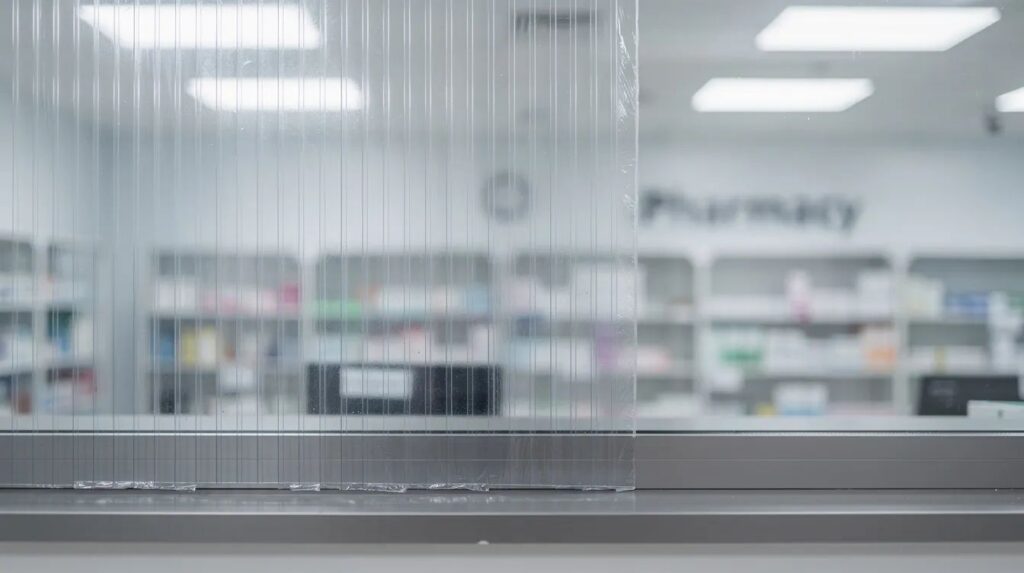
Residential window frosting is a type of window film that scatters light passing through glass, blurring the view while still allowing natural light into a room. Frosted window film diffuses light while obscuring visibility, producing an effect similar to sandblasted or acid-etched glass. Frosting can enhance the appearance of ordinary glass without replacement, and it installs directly onto existing windows, doors, sidelights, and interior partitions.
Homeowners in 2026 are choosing frosted film for bathrooms, street-facing living rooms, home offices, entry doors, and glass shower enclosures. Frosted window film enhances privacy without heavy curtains or blinds, keeping interiors bright and uncluttered. Compared to standard window tint, which reduces visible light and often adds reflectivity, frosting prioritizes privacy control and light diffusion. Compared to traditional blinds or shades, it requires no adjustment, collects no dust, and never tangles.

Key Benefits of Residential Window Frosting
Frosted window film delivers privacy, comfort, UV protection, and style in a single retrofit solution. Here is what homeowners can expect from a quality installation.
Frosted window film blocks views from outside while maintaining daylight, and it provides a clean modern look for interiors. Privacy films allow natural light while blocking outside views, so rooms stay bright rather than cave-like. Frosted window film maintains bright indoor spaces with visible light transmission ranging from 60% to 87% depending on pattern and opacity. Frosted films can reduce glare from sunlight indoors; for example, Madico’s Frost Matte film transmits roughly 67% of visible light while cutting glare by about 25%.
Frosted window film can stop up to 99% of ultraviolet light in the 300–380 nm spectrum. Frosted window film filters harmful UV rays, and window films protect interiors from fading due to sun exposure on floors, fabrics, and artwork. Window films enhance energy efficiency by reducing heat transfer through glass; when paired with solar control films, cooling energy demand has dropped by roughly 29% in moderate-climate case studies, with net annual savings around 16%.
Frosted window film also acts as reinforcement for shattered glass, holding broken pieces together and preventing flying shards. For a homeowner who replaced south-facing drapes with solar control film in 2025, the result was an immediate drop in afternoon glare and discomfort during dinner hours. Compared to stained glass, which trades heavy color saturation for reduced light, or blackout film, which eliminates daylight entirely, frosting offers a middle ground: privacy and light in balance.
Types of Frosted Window Films for Homes
Not all window film looks or performs the same. Homeowners can choose from several categories based on the level of privacy, the pattern, and the construction method.
Classic sandblasted and etched look films use a uniform matte finish to replicate the appearance of etched glass. Frosted window film can mimic the appearance of etched glass at a fraction of the cost of factory-treated panels. Tempered glass can be replaced with factory-frosted alternatives, but film achieves a similar result without swapping out the pane.
Gradient and banded frosting applies the frosted effect to only a portion of the glass; the top or bottom remains transparent, preserving the view or overhead light where needed. This pattern works well in offices and living rooms where partial privacy is enough.
Patterned decorative films include stripes, dots, geometric shapes, and organic nature-inspired designs. Decorative window films include designs like stained glass and etched patterns. LLumar’s “Frosted Leaves” film transmits about 60% of visible light; “Pebbled Ice” transmits roughly 87%, trading some privacy for a brighter room.
Colored and stained glass style films add tinted frost in bronze, gray, or other hues to beautify interiors while filtering light. Privacy window films are available in transparent and opaque types, so homeowners can pick the density that fits each room.
For construction, self-adhesive film bonds directly to glass for a permanent hold and typically lasts 10 to 15 years. Static cling window films do not require adhesives for installation, making them ideal for renters or temporary use, though they tend to last 3 to 5 years under low UV exposure.
Best Rooms & Glass Areas for Residential Window Frosting
Frosted film works on almost any flat glass surface in a home, from exterior windows to interior partitions. The right placement depends on each room’s privacy and light challenges.
Bathrooms. Windows over tubs, showers, and toilet areas are the most common residential frosting targets. Steam and humidity make static cling risky; adhesive PET films perform better in wet spaces. Frosted shower doors and enclosures let daylight pass through while keeping the space private, and they eliminate the need for a shower curtain.
Bedrooms. Street-facing or neighbor-facing windows benefit from high-opacity frosting. At night, interior light can reveal outlines through lighter films, so bedrooms often pair frosting with simple shades for complete privacy.
Home offices. Daytime privacy from sidewalk views matters during video calls, yet natural light keeps the room comfortable and reduces eye strain. Banded frosting that blocks the lower sightline while leaving the upper portion clear is a practical solution for offices.
Entry doors and sidelights. Front door glass, transoms, and sidelights combine aesthetics with security. Frosting adds decorative accents to an entryway while preventing passersby from seeing inside.
Kitchens and dining areas. Patio doors, glass cabinet doors, and breakfast nooks benefit from frosting that cuts glare and protects furnishings from fading. Privacy films allow natural light while blocking outside views, keeping the kitchen bright without hot spots from direct sun.
Interior partitions. Glass home office walls, loft railings, and stair balustrades gain visual separation with frosting while preserving the open feel of a space.
Privacy Control: Daytime Privacy vs Nighttime Reality
Frosting improves privacy both day and night, but lighting conditions determine how well it works. Understanding this distinction helps homeowners set realistic expectations.
During the day, outdoor light is brighter than indoor light. Frosted film scatters incoming light, preventing anyone outside from seeing clear shapes or details inside. This daytime privacy effect is strong and reliable.
At night, the equation reverses. If interior lights are on and the outside is dark, people outside may see silhouettes or movement through lighter-opacity films. Frosted film generally obscures views in both directions, but a high-contrast light difference can reveal outlines. For bedrooms and bathrooms, choose higher-opacity privacy film. Combining frosting with curtains or shades at night provides complete privacy when needed. Banded or partial frosting can block specific sightlines, like a neighbor’s view from a second-story window, without covering the entire pane.
Comparing Frosted Film to Other Privacy Options
Homeowners often weigh frosting against blinds, curtains, textured glass, and stained glass before choosing a solution. Here is how they compare on factors that matter.
Frosted film vs. blinds, sheers, and drapes. Blinds and curtains require regular cleaning, can block light when closed, and add visual bulk to a room. Frosted film obscures views while allowing natural light to enter, stays flush with the glass, and needs only occasional wiping.
Frosted film vs. factory-etched or acid-etched glass. Glass etching involves a chemical process to create a frosted look permanently in the glass itself. Replacing a window with etched glass means removing the existing pane, ordering custom glass, and paying for a full installation. Frosted window treatment can be a cost-effective alternative to sandblasted glass; film installs over existing glass in a single afternoon.
Frosted film vs. stained glass. Stained glass delivers strong aesthetic impact but offers no UV protection or heat reduction. Decorative films with stained glass patterns achieve a similar look with better light control and UV blocking.
Frosted film vs. solar window tint. Standard window tint is designed for heat and glare reduction, often darkening the room and adding mirror-like reflectivity. Frosting is designed for privacy and light diffusion. Frosted glass spray paint is another option that applies a frosted coating over glass, but spray coatings lack the UV rejection, uniformity, and removability of professional-grade film.
DIY vs Professional Installation of Window Frosting
Homeowners can buy DIY kits or hire a professional. Both approaches work, but the results differ.
DIY installation requires a spray bottle with soapy water, a squeegee, a utility knife, and a tape measure. Custom window film kits are available in six standard widths, and lengths for custom window films start at 12 inches and go up to 180 inches. Custom window films can be cut to specific window measurements. Add one inch to window measurements for trimming to ensure full coverage. Installation of window films is straightforward and residue-free, and installation takes less than 30 minutes for most windows.
Common DIY mistakes include trapped dust under the film, air bubbles, crooked cuts, and light gaps at edges. DIY makes sense for small sidelights, temporary rentals, or simple patterns on a single pane.
Professional installation includes a site assessment, glass measurement, and film selection matched to each window’s glass type and sun exposure. Installers prep surfaces to minimize dust contamination, use precision cutting and edge finishing, and follow manufacturer guidelines that keep warranties intact. Pro-grade films from brands like 3M outperform discount big-box films in adhesion, clarity, and UV rejection. For larger projects (full glass walls, multiple rooms, high or hard-to-reach windows), professional help reduces risk and delivers a longer-lasting result.
Cost, Lifespan & Maintenance of Frosted Window Films
Pricing for residential window frosting in 2026 depends on film quality, glass type, and project size.
| Category | Price per sq ft | Notes |
|---|---|---|
| DIY material only | $1–$2 | Basic frost; premium kits $3–$5 |
| Professional install (standard frost) | $7–$10 | Includes labor and material |
| Premium decorative or solar-enhanced | $15–$20+ | High-cost regions, specialty films |
A typical home project runs $317 to $943 total depending on window count and film grade. Window privacy films can last several years with proper care, and most window films can last several years with proper care. Quality adhesive films installed by a professional commonly perform for 10 to 15 years indoors. Static-cling films last 3 to 5 years under low UV but degrade faster in direct sun or high humidity.
For maintenance, wait the manufacturer’s recommended curing time (often 7 to 30 days) before cleaning. Use mild, ammonia-free cleaner with a soft cloth. Avoid razor blades, abrasive pads, and harsh chemicals. Many manufacturers offer residential lifetime warranties on adhesive films for issues like delamination or yellowing, but incorrect cleaning or DIY installation can void those warranties.
How Residential Frosting Works with Solar & Security Window Films
Frosting can be combined with solar control and security glazing films for a multi-benefit solution on a single pane.
Pairing frosted film with solar control window tint adds heat reduction, extra protection from glare, and UV protection beyond what frosting alone provides. “All-in-one” decorative solar films that combine frost aesthetics with infrared and UV rejection are now sold by multiple manufacturers. The ComforTech Ceramic Series window films come in five performance shades and pair well with decorative overlays, though ComforTech film is not approved for windows over 40 square feet due to thermal stress limits.
Frosted or decorative films layered with safety and security films hold glass together on impact, adding both privacy and shatter resistance. Before combining films on double-pane, laminated, or tempered glass, confirm compatibility with the film manufacturer’s guidelines. Thermal stress on large insulated units can crack glass if the wrong film is applied.
One example: a homeowner with a street-facing home office in a 2025 build combined frosted privacy film with a solar control layer on west-facing windows, cutting both outside visibility and afternoon heat while keeping the room bright enough for video calls.
Common Mistakes Homeowners Should Avoid
Avoiding a few pitfalls saves time, money, and frustration.
- Wrong opacity. Choosing a film that is too light leaves the room exposed; too dark makes the space feel closed off. Test your choice first; window film samples can be ordered to view at home before committing.
- Ignoring nighttime privacy. Daytime privacy and nighttime privacy are different. A film that works well at noon may reveal silhouettes after dark.
- Incompatible glass. Applying film to certain low-E double-pane units without checking the manufacturer’s film-to-glass compatibility chart can cause thermal stress and crack the glass.
- Skipping surface prep. Dust, grit, or leftover coatings trapped under the film lead to bubbles and edges that lift within weeks.
- Choosing on looks alone. Ask installers about UV rejection percentage, visible light transmission, haze rating, and warranty terms before selecting a film based on pattern or style alone.
Frequently Asked Questions About Residential Window Frosting
These are the questions homeowners ask most often during consultations.
How long does residential window frosting typically last?
Quality interior window films commonly last 10 to 15 years on residential glass when installed correctly. Factors that shorten lifespan include direct sun, high humidity, and abrasive cleaning. Static-cling films may last only 3 to 5 years but are fully removable and sometimes reusable. Most professional-grade films include multi-year manufacturer warranties when installed according to guidelines.
Will frosted window film damage my windows or void the warranty?
Reputable window films are designed to be glass-safe when matched to the correct glass type. Thermal stress concerns apply to large double-pane or tinted units, which is why film-to-glass compatibility checks matter. Professional installers follow industry standards and manufacturer charts to avoid conflicts. Removal, when done correctly, does not etch or scratch glass, and any adhesive residue cleans off with appropriate solvents.
Does frosted film block UV and help with fading?
Window films block up to 99.9% of UV rays, reducing fading of floors, fabrics, and artwork. Visible light and heat also contribute to fading, so combining frosting with solar control films provides maximum protection. Ask for specific UV protection ratings when choosing a decorative or frosted film. UV protection is beneficial even on north-facing or shaded windows.
Can I see out through frosted windows, and can people see in?
Standard frosted films blur shapes and details on both sides, preventing a clear view while still sacrificing natural light only minimally. From inside, homeowners perceive movement and light changes outside but not sharp images. Higher-opacity films offer stronger privacy but reduce visibility of outlines and filter more light. Testing small samples at different times of day confirms whether privacy levels meet expectations.
Is residential window frosting removable if I change my mind?
Most residential window films can be removed without permanent damage. Static cling films require no adhesives for installation and peel off cleanly. Adhesive films require heat and cleaning to remove residue, but the glass remains unharmed. Professional installers handle removal for large panes or multi-layer systems, and removable films are popular among renters and homeowners planning future remodels.
How do I clean windows after frosting has been applied?
Wait the manufacturer-recommended curing time (often 7 to 30 days) before cleaning a newly installed film. Use mild, ammonia-free glass cleaner or diluted dish soap with a soft cloth or squeegee. Avoid abrasive pads, razor blades, and harsh chemicals that can scratch or cloud the film surface. With proper cleaning, frosted window film stays clear and attractive for many years.
Why Choose Window Film Depot for Residential Window Frosting
Window Film Depot has operated in the window film industry since 1992. As a family-owned company based in Marietta, Georgia, we install and supply professional-grade privacy film, decorative films, solar control window tint, and security glazing for both residential and commercial properties nationwide.
Our team provides turnkey service: consultation, film selection from a wide variety of approved products (including 3M films), precision installation, and aftercare. We handle complex projects including large glass walls, specialty glass types, and combination privacy and security film systems. Every installation is performed in occupied homes with protection of furnishings and thorough cleanup. Reviews from homeowners confirm that our installers treat each home with care.
Next Steps: Schedule Your Residential Window Frosting Consultation
If you are dealing with privacy, glare, or UV issues on any window in your home, the next step is straightforward.
- Reach out by phone, online form, or email.
- Schedule a consultation at home or virtually to review your glass areas and goals.
- Receive custom film recommendations and a clear written quote with no hidden costs.
- Installation day is typically completed in a single day for most homes.
Consultations are low-pressure and designed to help you understand your options for privacy control, heat reduction, and style. Gather your window measurements or snap a few photos of each glass area in advance to help us streamline the quoting process.
Contact Window Film Depot to request a quote or schedule your on-site assessment.