Table of Contents:
- Decoding the Client Request for ‘One Way Window Tint’
- The Science of Privacy: How Light Differentials Create the Effect
- The Nighttime Reversal: Managing Expectations and Solving the 24/7 Privacy Challenge
- More Than Privacy: The Added Benefits of 3M Commercial Window Films
- Why Partnering with a National Installer Reduces Project Risk
- Conclusion: Mastering Light for Project Success
- Frequently Asked Questions
- Related Posts from Window Film Depot
Decoding the Client Request for ‘One Way Window Tint’
As a project manager, you’ve likely heard the request for a “one way window tint.” Clients envision a solution for their commercial space that provides complete daytime privacy from the outside while maintaining a clear, unobstructed view from the inside, similar to the effect of one-sided glass, often assuming a simple tint film for windows can achieve this result. They often use the “interrogation room” analogy, where one party can observe without being seen.
Your role is to translate this functional requirement into a viable technical specification. This starts with understanding that the client’s goal is conditional privacy, not an absolute, 24-hour state. They want to prevent passersby from seeing into sensitive areas, like ground-floor offices or conference rooms, during business hours. The project’s success hinges on correctly managing this expectation from the outset.
It’s also important to make an early distinction for your team and the client between two products. Laminated one-way mirror glass is a permanent, structural glazing unit specified during new construction, not a retrofit option.
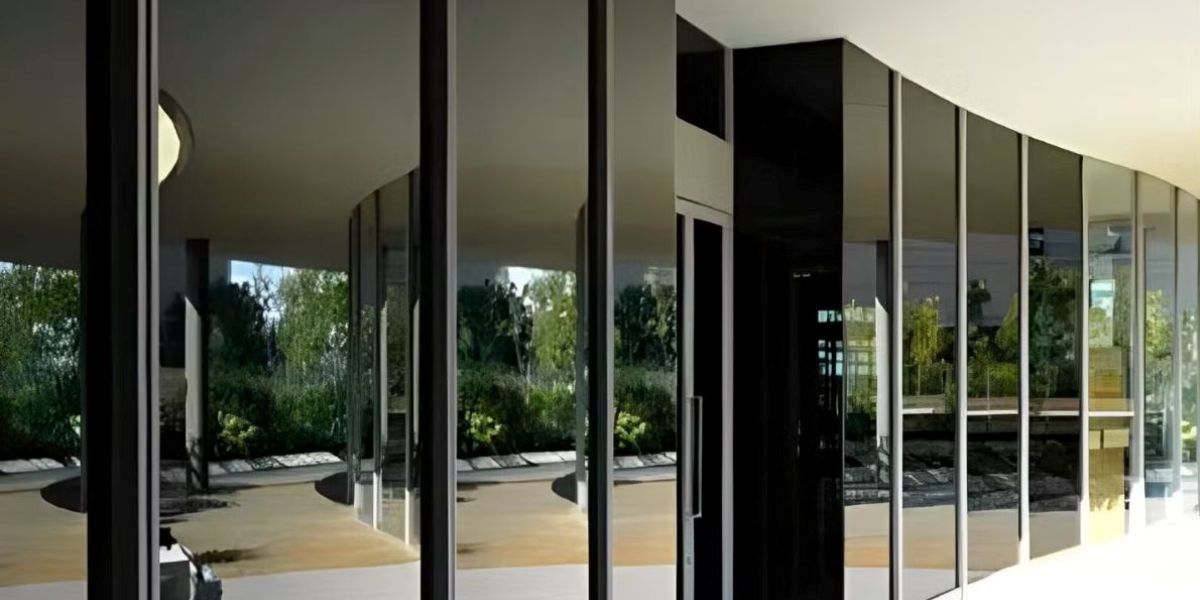
For most tenant improvements and building upgrades, we are exclusively concerned with high-reflectivity architectural window films. This is the product category relevant to most commercial retrofit projects. Clarifying this ensures the conversation focuses on realistic, budget-appropriate solutions like a commercial privacy window film applied to existing glass.
For projects where a mirrored exterior is not desirable, non-reflective window film provides an alternative approach to managing light and performance. Unlike high-reflectivity films used for one-way privacy, non-reflective window film focuses on reducing glare, blocking UV rays, and improving energy efficiency without creating a reflective appearance. This makes it a strong option for buildings that prioritize aesthetics while still requiring solar control and occupant comfort.
The Core Principle: It’s About Light, Not Magic
The ‘one-way’ privacy effect is not an inherent property of the film itself. The effect is governed by one immutable principle: a significant differential in visible light. The film will always appear as a mirror on the side with more light and as tinted glass from the side with less light. The film simply enhances this natural phenomenon through its reflective properties. Internalizing this concept is the most critical step in preventing specification errors and managing your client’s expectations, particularly regarding how the windows will perform after sunset.
The Science of Privacy: How Light Differentials Create the Effect
To properly specify a one way window tint, we need to move beyond the client’s request and into the foundational metrics of film performance. The entire system is a balance between the film’s properties and the environment’s lighting conditions.
Understanding Visible Light Transmission (VLT) and Reflectivity
Every solar control window film is rated with several performance indicators, but for privacy applications, two are paramount:
- Visible Light Transmission (VLT): This is the percentage of visible light that passes directly through the filmed glass. A lower VLT number means a darker tint and less light entering the space. A film with a 15% VLT, for example, allows only 15% of exterior light to pass through.
- Visible Light Reflectance (VLR): This is the percentage of visible light reflected by the filmed glass. A higher VLR number means the surface is more mirror-like. This is the primary driver of the privacy effect.
To create strong daylight privacy, you need a film with a high exterior VLR and a low VLT. The high reflectivity creates the mirror on the outside, while the low light transmission darkens the interior, contributing to the necessary light imbalance.
The Physics of the Light Differential
The one way mirror film for business effect is a simple matter of competing light sources. Whichever side is brighter is the side that will see a reflection.
Think of the filmed window as a gatekeeper for light. During the day, bright exterior sunlight strikes the window. The film reflects a large portion of this light back outside because of its high VLR, creating a mirror for anyone looking in. From the inside, an observer’s eyes receive two signals, the dim reflection of their own interior and the much brighter light being transmitted from outside. The human eye prioritizes the significantly brighter signal, allowing the person inside to see out clearly while their own reflection is barely noticeable.
This principle directly explains why the privacy effect works during the day and reverses at night.
- Daytime Conditions: The sun makes the exterior significantly brighter than a typical office interior. A general rule is that a light ratio of at least 3:1 (bright side to dim side) is needed for a noticeable effect. Reflective films excel in this scenario.
- Nighttime Conditions: After sunset, the situation inverts. The exterior is dark, and the interior is lit by artificial lighting. The film, obeying the laws of physics, will now appear as a mirror to those inside the building. From the outside, a person can now see into the illuminated space, completely reversing the daytime privacy effect.
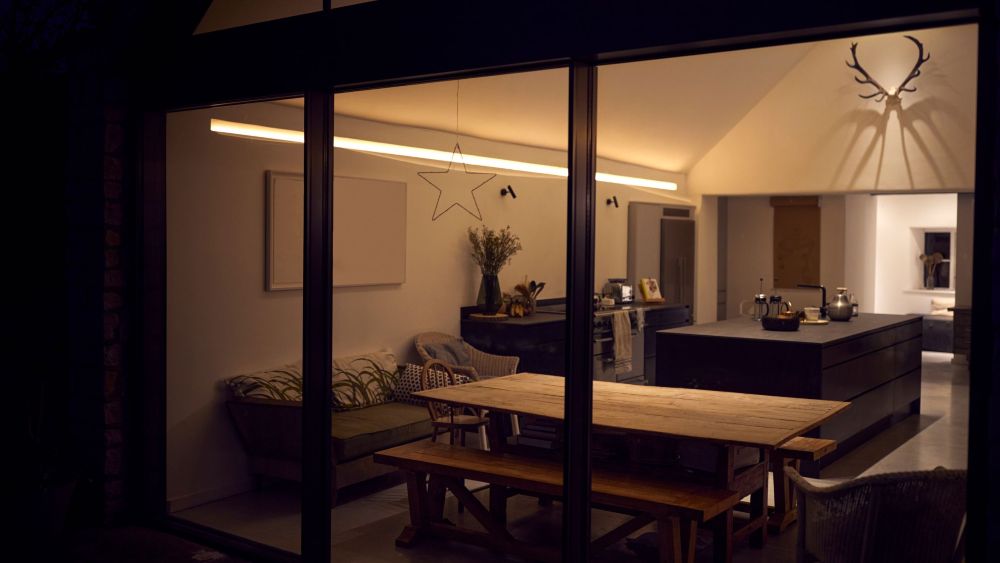
This nighttime reversal is not a product failure. It is the predictable and correct performance of the film based on the lighting conditions. Communicating this to clients is essential so they can plan for nighttime privacy needs, such as blinds or curtains.
Sputtered vs. Dyed Film Construction
The manufacturing process of the film directly impacts its performance, durability, and optical clarity. The two primary methods are dyeing and sputtering. Dyed films achieve their color by impregnating the polyester base with dye. They primarily absorb solar energy and are less effective for creating a strong mirror effect.
Sputtering is a superior process where multiple, micro-thin layers of metals are deposited onto the film’s surface in a vacuum chamber. This allows for precise control over the film’s properties.
- Performance: Sputtered films, like those in the 3M Night Vision Series, are engineered with high visible light reflectance and excellent optical clarity. This is the key to a powerful one-way effect without distorting the view from inside.
- Durability: Because the metals are embedded in the film, they are stable and not prone to fading, ensuring consistent performance for the product’s life.
For any project where daylight privacy and a clear view are non-negotiable, specifying a high-quality sputtered film is the superior technical choice.
The Nighttime Reversal: Managing Expectations and Solving the 24/7 Privacy Challenge
This is the single most critical concept to master when specifying reflective privacy films. A client who expects “one-way glass” will be frustrated when their office becomes a brightly lit display case after sunset. Addressing this phenomenon proactively is a fundamental part of a successful project specification.
Explaining Why the “One-Way” Effect Inverts
The privacy effect is a direct result of a light imbalance. The film’s mirrored surface reflects light, and the side with the most light is the side that will see a reflection. During daylight, the exterior of a building is brighter, so the film reflects outdoor light, creating a mirror for anyone looking in. After sunset, the interior is much brighter than the dark exterior. The same film now mirrors the brighter interior light back into the room, allowing people outside to see in.
Proactive Communication Strategies
Managing expectations around the nighttime reversal begins with the first project conversation. Frame this not as a product flaw but as a principle of physics to establish your credibility and build trust.
Your primary tool should be a simple explanation of the light differential. Avoid technical jargon and focus on the concept, “The film creates privacy by reflecting the brighter side. During the day, that’s the outside. At night, it’s the inside.” To make this tangible, use these strategies:
- Visual Demonstrations: Prepare a portfolio with high-quality day and night photographs of the same building with the proposed film installed.
- On-Site Sample Application: Apply a large sample of the recommended film to a window in the client’s space. Encourage them to observe it over a 24-hour period so they can see the daytime privacy, the view from inside, and the nighttime reversal firsthand.
Introducing Advanced Solutions: The Role of 3M Night Vision Film
While no reflective film can defy physics, advanced engineering can mitigate the negative aspects of the nighttime reversal. This is where specifying a premium product like 3M night vision film becomes a strategic advantage. The key innovation in the 3M Night Vision Series is its patented construction, which features low interior reflectivity. While the exterior side remains highly reflective for daytime privacy, the interior-facing side is far less mirror-like.
For the client, this means that while privacy is still compromised at night without other measures, the interior experience is vastly improved. Instead of a harsh internal reflection, occupants enjoy a clearer, more natural view out. This reduces the “fishbowl” feeling and makes the space more comfortable after dark, a critical factor for offices where employees work late.
Combining Film with Lighting and Coverings for Complete Privacy
For applications demanding absolute, 24/7 privacy, film is only one component of a layered solution. Guiding your client toward an integrated system demonstrates a comprehensive understanding of their needs. Consider a multi-faceted approach combining privacy film with traditional window coverings. The film provides excellent daytime privacy and heat rejection, while blinds or shades can be drawn for guaranteed privacy at night. This combination delivers the best of both worlds without compromise.
More Than Privacy: The Added Benefits of 3M Commercial Window Films
While achieving daytime privacy is often the primary driver for specifying a reflective film, selecting a high-performance product like a 3M solar control film provides a suite of additional benefits. As a project manager, framing these advantages for your client demonstrates a comprehensive approach to problem-solving and enhancing the overall performance of their building.
- Enhanced Building Security: 3M Safety & Security Window Film holds shattered glass fragments together, reducing the risk of injury from spontaneous breakage, severe weather, forced entry, or accidental impact. This application moves the conversation from simple privacy to life safety and business continuity.
- Significant Glare Reduction: The reflective nature of privacy films is exceptionally effective at reducing glare. This improves occupant comfort and productivity by reducing eye strain, a common complaint in office environments with large windows and computer screens.
- UV Ray Rejection: 3M window films can reject up to 99.9% of the sun’s harmful UV rays, the leading cause of fading in fabrics, flooring, and artwork. For your client, this is a direct asset protection measure, extending the life of their interior furnishings.
- Improved Energy Efficiency: A reflective window film is also a powerful tool for solar heat management. It rejects a significant amount of infrared radiation, reducing the load on the HVAC system. This benefit has a direct impact on the client’s bottom line through lower energy costs.
Why Partnering with a National Installer Reduces Project Risk
Once you have specified the correct 3M film solution, project success shifts to the quality of the installation. For a project manager overseeing multiple sites or a large-scale property, installer selection is a critical risk management decision. Partnering with a national installer network, particularly a 3M Premier Partner, provides assurance that local contractors cannot match.
A national partner provides a single point of contact and a standardized protocol, ensuring specification consistency and quality control across all locations. A certified partner in 3M’s Premier Network possesses a deep understanding of the entire product catalog and can consult on the optimal solution, preventing costly specification errors. They also guarantee the installation meets all manufacturer requirements, so 3M’s comprehensive warranty is not voided. This centralized management model dramatically simplifies logistics, reduces administrative overhead, and allows you to focus on other critical project responsibilities.

Conclusion: Mastering Light for Project Success
Successfully delivering on a client’s privacy requirements begins with a firm grasp of the core principles of light. Specifying the correct one-way window tint film is less about finding a magical product and more about strategically managing light.
- Privacy is a function of light imbalance. The mirror effect only occurs when one side is significantly brighter than the other.
- The nighttime reversal is inevitable. When interior lights are on at night, the light imbalance reverses, and so does the privacy effect.
- Proactive client education is paramount. Clearly communicating how these films work, including the nighttime reversal, prevents mismatched expectations.
- Comprehensive privacy requires a layered strategy. For 24/7 privacy, combine window film with other solutions like blinds or strategic lighting.
Understanding the physics is the first step. The second is selecting a tool engineered with precision. The consistency of a 3M film ensures that the specified VLT and reflectance values are precisely what get delivered. The breadth of the 3M window films portfolio allows you to engineer a solution, not just install a product.
Your Next Steps for Specification
Armed with this technical understanding, you can approach your next privacy film project with a clear, methodical process.
- Conduct a Site and Lighting Analysis. Document window orientations and how the space is used and lit during the day and at night.
- Lead an Expectation-Setting Conversation. Walk your client through the principles of light imbalance, demonstrate the effect with a sample, and discuss the nighttime reversal.
- Partner with a Certified 3M Installer. Engage a professional early to confirm your analysis and recommend the optimal film.
- Specify Based on Performance Metrics. Use data like VLT, VLR, and Total Solar Energy Rejected (TSER) to define your requirements and ensure the film can create the necessary light differential.
Partner with Window Film Depot to specify and install one-way window film that delivers reliable daytime privacy and long-term performance.
Frequently Asked Questions
Can you get a window film that is one-way 24/7?
No, a truly 24/7 one-way effect is not possible with a standard reflective window film. The ‘one-way’ mirror effect is created by a light imbalance. The film will always appear as a mirror on the brighter side. At night, when interior lights are on, the inside of your building becomes the brighter side, and the privacy effect reverses.
What is the best one way window tint for daytime privacy?
The most effective films for daytime privacy have a high exterior Visible Light Reflectance (VLR) and a low Visible Light Transmission (VLT). A high-quality sputtered film, which uses micro-thin layers of metal, will provide the strongest mirror effect on the outside while maintaining good optical clarity from the inside.
How do I maintain privacy at night with a reflective window film?
The most reliable solution for 24-hour privacy is a layered approach. The reflective film provides excellent privacy and solar control benefits during the day. For guaranteed nighttime privacy, you should supplement the film with traditional window coverings like blinds or curtains that can be closed after dark.
Does one way mirror film for business offer benefits besides privacy?
Yes, absolutely. High-performance commercial privacy window film also provides significant glare reduction for improved employee comfort, blocks up to 99.9% of UV rays to prevent fading of interiors, and rejects solar heat to lower energy costs by reducing the load on your HVAC system. Many films also enhance building security by holding shattered glass together.