Table of Contents:
- Beyond Privacy: The Science Behind One-Way Mirror Film
- Translating Film Specs into Project ROI: A Guide to Key Metrics
- Specifying for Success: Commercial vs. Consumer-Grade Film
- Strategic Applications: Where Mirror Film Delivers Maximum Value
- Why 3M™ Film is the Standard for Performance and Reliability
- From Specification to Installation: Managing a National Rollout
- Conclusion: Justifying Mirror Film as a Strategic Upgrade
- Frequently Asked Questions
- Related Posts from Window Film Depot
Beyond Privacy: The Science Behind One-Way Mirror Film
While a client’s primary request might be for privacy, the mechanism that creates the one-way mirror effect is also responsible for the film’s significant energy performance benefits. Understanding this science allows you to shift the conversation from a simple visual barrier to a high-performance building envelope upgrade.
How Lighting Creates the “Mirror” Effect
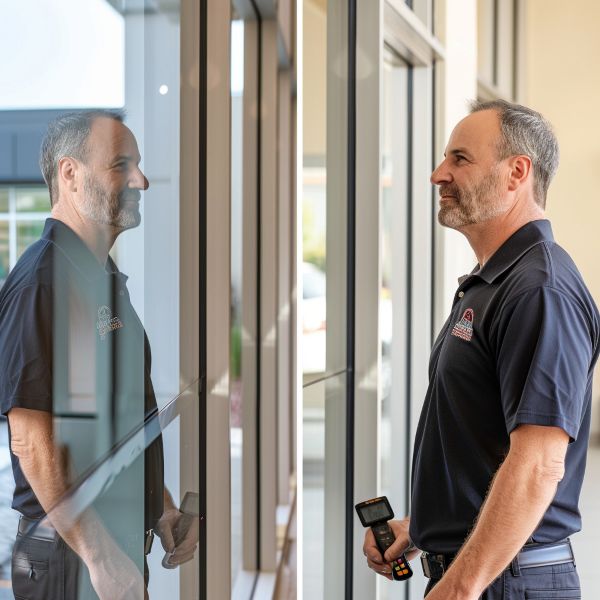
The “one-way” mirror effect is not a feature of the film itself but a result of its interaction with light. The film is engineered to reflect more light than it allows to pass through. The mirror effect appears on whichever side of the glass has more light.
During the day, the bright exterior makes the window appear as a mirror to those outside, providing daytime privacy for occupants. From the inside, where it is darker, an individual can see out clearly. At night, the effect reverses. When interior lights are on, the inside becomes brighter than the outside, making the window transparent to onlookers.
It is crucial to manage client expectations by explaining this predictable physical property. For spaces requiring 24-hour privacy, this film would need to be paired with another solution, such as blinds or curtains.
The Reflective Properties of Metallized Film
Professional-grade mirror films contain an ultra-thin, vapor-coated layer of metal particles applied through a process called sputtering. This metallized layer gives the film its reflective properties and is engineered to be highly effective at reflecting solar radiation across a wide spectrum.
This is where key performance metrics come into play. The metallized layer is directly responsible for the film’s Total Solar Energy Rejection (TSER), which can be 60% or higher. It simultaneously controls the Visible Light Transmission (VLT), or the amount of daylight allowed through. By reflecting solar energy, the film reduces heat gain, which lessens the load on HVAC systems and contributes directly to energy savings.
Translating Film Specs into Project ROI: A Guide to Key Metrics
The true value of architectural film is found in its technical specifications. For a project manager, understanding these metrics is essential for justifying the investment to stakeholders and accurately forecasting performance. These are not abstract numbers. They are direct inputs for calculating energy savings, tenant comfort, and long-term asset protection.
Visible Light Transmission (VLT)
Visible Light Transmission measures the percentage of visible light that passes through the filmed glass. This metric directly correlates with the level of privacy and the amount of natural light entering a space. A lower VLT percentage indicates a more reflective, mirror-like appearance from the exterior and thus higher daytime privacy. A very low VLT film (e.g., 15%) offers maximum privacy but will also noticeably reduce interior light. For spaces where daylighting is a priority, a film with a moderate VLT (e.g., 30-35%) may be a better choice, striking a balance between privacy and a naturally lit environment.
Total Solar Energy Rejected (TSER)
TSER is the most critical performance metric for evaluating a film’s energy-saving capabilities. It represents the percentage of total solar energy, including infrared, visible light, and ultraviolet, that is rejected by the window system. A higher TSER value means more solar energy is blocked from entering the building. This directly translates to a reduced load on the building’s HVAC system, especially during peak cooling seasons. When comparing products, TSER provides the most holistic view of a film’s ability to improve a building’s energy performance.
Solar Heat Gain Coefficient (SHGC)
The Solar Heat Gain Coefficient is a related metric that measures the fraction of solar radiation admitted through a window. The value, expressed as a number between 0 and 1, accounts for energy transmitted directly and energy that is absorbed and then radiated into the space. A lower SHGC indicates superior heat-blocking performance. For projects in cooling-dominated climates, specifying a low SHGC is crucial for managing heat gain. Professional-grade films significantly lower a window’s existing SHGC, which can help a project meet or exceed local energy codes.
Glare Reduction and UV Rejection
Beyond energy metrics, reflective window film offers significant benefits for occupant well-being and asset preservation.
- Glare Reduction: By lowering VLT, the film cuts down on intense glare. For office environments, this means reduced eye strain and improved screen visibility, leading to a more comfortable and productive workspace.
- UV Rejection: Most high-quality commercial mirror films block over 99% of harmful ultraviolet radiation. This protects building occupants from UV exposure and drastically slows the fading and degradation of interior assets like flooring, furniture, and artwork, extending their life and reducing replacement costs.
Specifying for Success: Commercial vs. Consumer-Grade Film
With the physics and metrics understood, the next step is selecting a film engineered to perform reliably for the life of the project. The performance gap between professional commercial-grade films, such as those from 3M, and lower-quality consumer films is significant. The difference lies not just in reflective technology but in the components that ensure longevity and clarity.
The Critical Difference in Adhesives and Durability
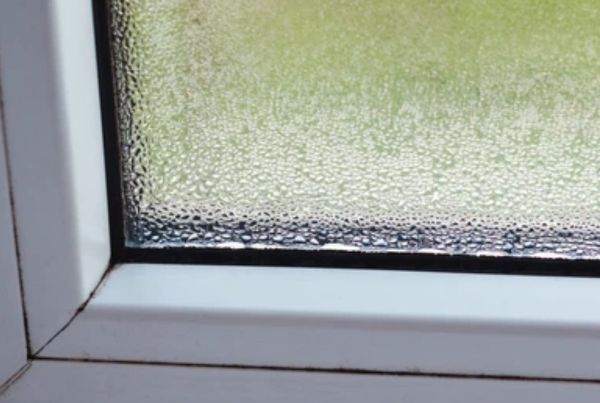
The single greatest point of failure for inferior films is the adhesive system. Consumer-grade films often use pressure-sensitive adhesives that are susceptible to failure from thermal stress, the constant expansion and contraction of glass. This leads to bubbling, peeling, and delamination within a few years.
In contrast, professional commercial films use advanced adhesives designed for a durable, chemical bond with the glass. These systems are formulated to remain optically clear and stable when exposed to decades of direct sun and temperature fluctuations. This ensures a distortion-free view and a clean aesthetic that won’t degrade over time.
Film Lifespan and Warranty Implications
The initial cost of a professional film is higher, but the total cost of ownership provides a clear return on investment. A typical DIY-grade film may offer a warranty of one to three years, and it is not uncommon to see visible failure even sooner. This creates a cycle of replacement and re-installation costs that quickly outpaces the initial savings.
A professionally installed, commercial-grade product is backed by a comprehensive manufacturer’s warranty, often for 10 to 15 years. This warranty covers not just the film but also labor, guaranteeing against issues like cracking, crazing, and discoloration. For a project manager, this long-term guarantee is a powerful tool for justifying the initial specification and de-risking the investment.
Strategic Applications: Where Mirror Film Delivers Maximum Value
Understanding the performance metrics allows you to apply mirror film strategically where it can deliver the greatest impact. These applications go far beyond simple privacy, addressing common challenges in commercial building management.
Enhancing Exterior Facades and Spandrel Glass Uniformity
One of the most powerful aesthetic applications of commercial reflective window film is creating a uniform, modern exterior. Applying a consistent film across all vision glass can mask the visual clutter of varied interior layouts, presenting a clean, cohesive look. This is particularly effective for opacifying spandrel glass, the non-vision panels between floors. Matching the spandrel area to the vision glass with mirror film creates a seamless facade, offering a cost-effective alternative to replacing panels during a renovation.
Securing Lobbies and Ground-Floor Offices
For street-level spaces, a one-way window film for business is an ideal solution for enhancing security and privacy. During the day, it prevents passersby from seeing into sensitive areas like lobbies or security stations, deterring casual observation. Crucially, it achieves this without blocking the view from the inside out, allowing occupants to maintain situational awareness.
Optimizing Conference Rooms and Internal Partitions
In modern offices, interior glass walls are used to promote an open feel but can create a lack of privacy for sensitive meetings. Applying mirror film to conference room glass provides a solution. When the area outside the room is more brightly lit than the inside, the film creates a one-way privacy effect, shielding the meeting from view without resorting to blinds that segment the office and block light.
Improving the Customer Experience in Retail and Hospitality
In customer-facing environments, comfort is paramount. Large storefront or restaurant windows can create significant heat and glare, making areas near the glass uncomfortable. Mirror film effectively mitigates these issues by rejecting a high amount of solar energy and reducing glare. It also provides 99% UV rejection, protecting valuable merchandise from fading and ensuring guests can enjoy the view without discomfort.
Why 3M™ Film is the Standard for Performance and Reliability
When specifying materials for a large-scale project, consistency and predictable performance are paramount. Professional-grade solutions are engineered to deliver quantifiable results that contribute directly to a building’s operational efficiency and asset value. For project managers, selecting a brand like 3M mitigates risk and provides the performance data necessary to justify the investment.
The Data-Backed Advantage of 3M™ Sun Control Window Film
The primary differentiator for commercial-grade films is their verifiable performance data. Unlike generic alternatives, 3M Sun Control Window Films are accompanied by detailed technical specifications that allow you to model their impact on a building’s energy consumption. When evaluating a film, focus on these key indicators:
- Total Solar Energy Rejected (TSER): This is the most critical metric for energy efficiency. Some high-performance films can reject up to 79% of total solar energy, directly reducing the load on HVAC systems.
- Visible Light Transmitted (VLT): This indicates the percentage of visible light passing through the glass. The goal is to find the right balance between glare control, privacy, and maintaining a bright, welcoming interior.
- UV Rejection: Professional films block up to 99.9% of harmful ultraviolet radiation. This is a critical benefit for protecting valuable interior assets and providing a healthier environment for occupants.
Quality Control for Multi-Site Projects
For a national retail chain or a corporate campus, brand consistency is non-negotiable. The color, reflectivity, and performance of the window film must be identical across all locations. 3M’s global manufacturing standards and stringent quality control processes ensure this level of uniformity from one roll of film to the next. This eliminates the costly variables and inconsistencies often found with lower-tier products, safeguarding the client’s brand image.
Superior Clarity and Longevity
The long-term performance of a window film is determined by its construction. Many 3M Sun Control Films use a patented, multi-layer optical film technology that is metal-free. This advanced construction provides high heat rejection without the risk of corrosion in coastal environments or interference with mobile phone signals. The adhesives are engineered for exceptional optical clarity and a durable bond that resists bubbling, peeling, or blistering over time, backed by one of the industry’s most comprehensive warranties.
From Specification to Installation: Managing a National Rollout
Executing a window film project across a regional or national portfolio presents unique logistical challenges. Centralizing this process with a single, experienced partner is the key to achieving efficiency, consistency, and scale.
The Importance of a Professional Site Survey
A successful project begins with a professional site survey. This is a consultative process designed to align the film’s capabilities with the specific goals of each facility. A consultant will assess factors like building orientation, existing glazing type, local climate, and interior space usage. They will discuss specific pain points with facility managers, such as afternoon glare or high energy bills. This detailed analysis ensures the correct film is specified to solve the right problems.
Coordinating Installation with a Single Partner
Managing dozens of individual installers across different states is a significant administrative burden. Partnering with a national provider who can manage the entire rollout through a single point of contact streamlines the process. This centralized project management handles all coordination, from scheduling to logistics and progress reporting. This means fewer vendors to manage, simplified communication, and a consistent standard of work at every site.
Partnering with a Certified 3M Mirror Film Installer
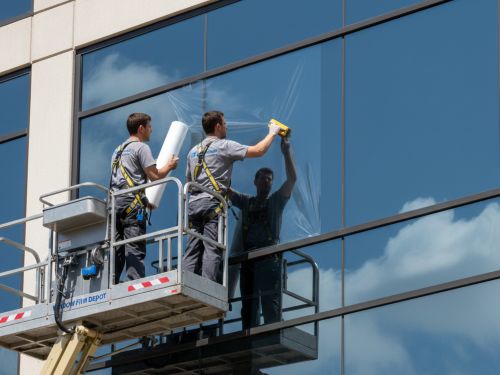
The performance of the film is only as good as its installation. To become certified, a 3M mirror film installer must complete a rigorous training and accreditation program, ensuring they have mastered the proper techniques.
Working with a certified installer guarantees that the installation will be performed to the manufacturer’s exact specifications, which is a requirement for activating the comprehensive 3M warranty.
This protects your client’s investment against potential issues like peeling, bubbling, or contamination.
Conclusion: Justifying Mirror Film as a Strategic Upgrade
As a project manager, your role extends beyond material procurement to delivering lasting value. While one-way mirror film is often specified for its privacy and aesthetic benefits, its most significant contributions are measured in performance metrics that impact a building’s budget and occupant well-being for years.
The conversation about mirror film for windows should focus on its measurable effect on the building’s internal environment. The primary benefits to emphasize are:
- Energy Efficiency: A high TSER value directly translates to a reduced cooling load on HVAC systems and lower monthly energy expenditures.
- UV Radiation Control: By blocking over 99% of UV rays, these films act as a powerful safeguard for interior assets, extending their life and reducing long-term replacement costs.
- Glare Reduction: Mirror films effectively diffuse harsh sunlight, improving visual comfort for tenants in offices, retail environments, and residential units.
Justifying a premium product requires shifting the discussion from initial cost to long-term return on investment. The ROI is a collection of direct and indirect financial gains. First, there are the direct operational savings from reduced energy consumption. Second, consider the savings related to asset preservation and lower maintenance costs. Finally, a building that offers superior comfort and lower utility costs is inherently more attractive to prospective tenants.
By championing a high-performance film, you are not just selecting a material. You are implementing an engineered solution that enhances building performance, improves the tenant experience, and delivers a clear, quantifiable return for stakeholders.
At Window Film Depot, we tailor our window film solutions to your property’s unique needs — combining incredible communication with hands-on installation from one of our experienced team members. Contact us today to start the process of finding the film that suits your business requirements.
Frequently Asked Questions
Why does my one-way window film stop working at night?
The “one-way” effect of mirror film is created by a difference in light levels. The film appears as a mirror on whichever side is brighter. During the day, the bright exterior provides privacy. At night, when interior lights are on, the inside becomes brighter than the outside, and the effect reverses. This is a predictable property of the material, not a defect. For nighttime privacy, you will still need blinds or curtains.
Is professional mirror film for windows a good investment?
Yes, for most commercial projects, it provides a strong return on investment. The ROI comes from three main areas: direct energy savings from reduced HVAC use, asset preservation by blocking 99% of UV rays that cause fading, and increased tenant comfort and retention. While the initial cost is higher than consumer-grade films, the long lifespan, comprehensive warranty, and consistent performance deliver superior long-term value.
Will reflective window film make my building too dark inside?
Not necessarily. Reflective films are available in a range of Visible Light Transmission (VLT) levels. A film with a very low VLT (e.g., 15%) will offer maximum privacy but will noticeably darken a room. A film with a moderate VLT (e.g., 35%) can strike an excellent balance, reducing significant glare and adding privacy while still allowing plenty of natural light to enter. The key is to select a VLT that matches the needs of the space.
How do I find a certified 3M mirror film installer?
The best way to ensure a quality installation is to work with a 3M Certified Installer. These professionals have been trained and accredited by 3M to install films according to manufacturer specifications, which is essential for activating the comprehensive warranty. You can find local certified installers through 3M’s official website or by working with a national partner who manages a network of these certified professionals for multi-site projects.