Table of Contents:
- Beyond Aesthetics: The Functional Role of Glazing in Commercial Security
- A Spectrum of Protection: Understanding Security Solutions for Commercial Glazing
- The Science of Security: How 3M Security Window Film Elevates Protection
- Strategic Implementation: Specifying the Right Security Film for Your Project
- Beyond the Product: The Indispensable Role of Expert Installation for National Rollouts
- Conclusion: Elevating Building Security with Advanced Film Technology
- Frequently Asked Questions
- Related Posts from Window Film Depot
Beyond Aesthetics: The Functional Role of Glazing in Commercial Security
For commercial and public facilities, glazing systems often represent a significant architectural feature, contributing to natural light, aesthetic appeal, and energy efficiency. However, beyond these obvious benefits, glass serves a critical, often underestimated, functional role in a building’s security envelope. Standard annealed or tempered glass meets basic building codes for thermal performance and wind loads, but it offers minimal resistance to intentional or accidental impacts.
By its very nature, glass is the weakest link in a building’s perimeter defense. It provides a direct and easily accessible point of failure for intruders or environmental hazards. Understanding how to secure glass doors and windows is fundamental to a comprehensive protection strategy. Relying solely on standard glass leaves a property vulnerable to forced entry, debris impact, and accidental breakage. Upgrading these vulnerable points is the first step in hardening a building’s envelope.
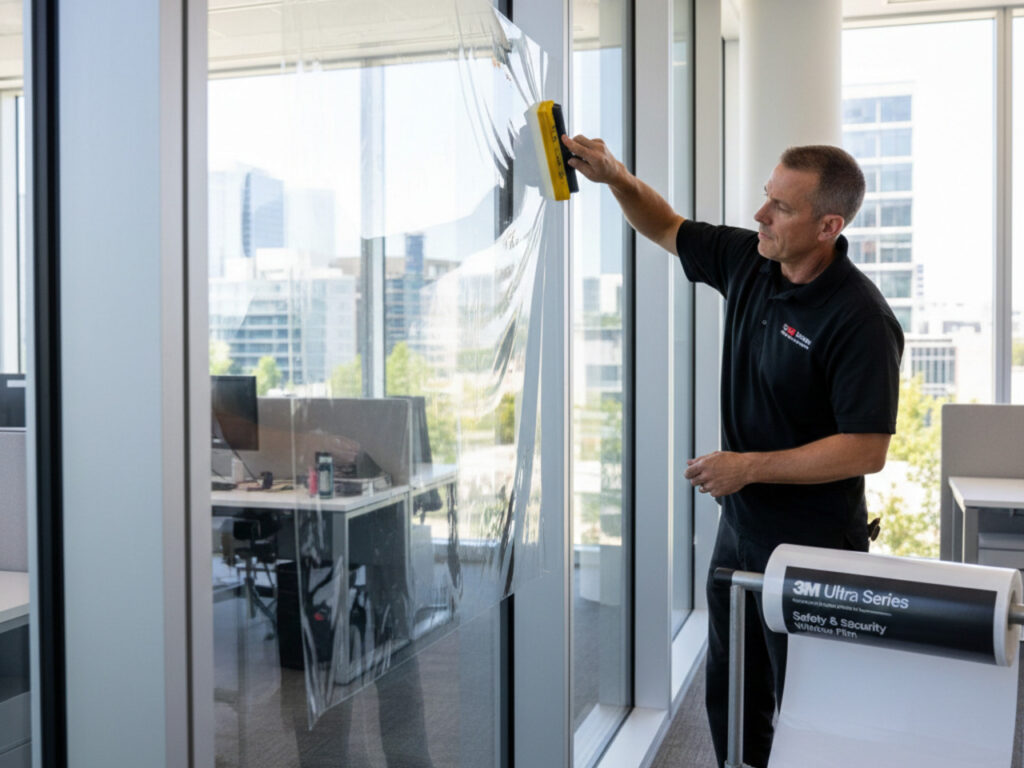
The Dynamics of Forced Entry: Common Threats and Attack Vectors
The ease with which standard glass can be compromised makes it a primary target for various threat actors. In a forced entry scenario, the objective is often swift access. Plain glass shatters almost instantaneously upon impact from a blunt object, a rock, or even a simple crowbar. This creates immediate, unobstructed access for intruders. Attack vectors are diverse, ranging from smash-and-grab retail incidents to more deliberate breaches targeting data centers or corporate offices. The vulnerability is not just about the glass breaking, but the speed at which entry is gained, often leaving insufficient time for security personnel to respond effectively.
Mitigating Broader Risks: From Natural Disasters to Blast Events
Standard glass fragility exposes commercial properties to unpredictable risks beyond intentional forced entry. Natural disasters can transform windows into dangerous, cascading shards. These fragments cause severe injuries and extensive internal damage from wind or debris. In blast events, unprotected glass becomes a primary source of high-velocity shrapnel. Such explosions turn containable events into catastrophic injury hazards. Effective mitigation must address these complex dynamics to secure glass doors and windows properly.
The Hidden Costs of Compromised Glass: Disruptions and Liabilities
The repercussions of compromised glass extend far beyond immediate repair costs. For commercial operations, a breach or failure can trigger a cascade of hidden expenses and liabilities. Consider the operational downtime following a security incident or a weather event. Business interruption, lost revenue, and the logistical nightmare of securing a facility with shattered windows can quickly outweigh the cost of proactive measures. Furthermore, incidents involving broken glass can lead to significant liability claims from injured employees or customers, reputational damage, and potential loss of sensitive assets or data. Project managers must factor in these broader implications, understanding that upfront investment in robust glazing solutions is a hedge against far greater long-term financial and operational costs.
A Spectrum of Protection: Understanding Security Solutions for Commercial Glazing
Deterrence vs. Delay vs. Containment: Defining Your Security Objectives
Effective commercial glass security begins with a clear understanding of your specific objectives, which can generally be categorized into deterrence, delay, and containment.
- Deterrence aims to discourage an attack altogether. This often involves visible security measures that signal a facility is a difficult target.
- Delay focuses on extending the time it takes for an intruder to gain entry, providing critical minutes for security personnel or law enforcement to respond. This is paramount in high-value or high-risk environments where rapid access could lead to significant loss.
- Containment prioritizes preventing the dangerous dispersal of glass fragments upon impact or blast, protecting occupants from injury and maintaining the building envelope against environmental ingress. This is particularly crucial in areas susceptible to severe weather or targeted threats. Defining these objectives is the first step in selecting the appropriate security solution for how to secure glass doors and windows.
Exploring Traditional Approaches: Laminated Glass vs. Full Replacement
For decades, traditional approaches to enhancing glass security have centered on either installing laminated glass or undertaking full glass replacement. Laminated glass, comprised of two or more panes bonded by a polyvinyl butyral (PVB) interlayer, is designed to remain intact when shattered, holding fragments together. While offering inherent security and acoustic benefits, its implementation often involves significant material cost and a complex installation process, especially when retrofitting existing structures.
Full glass replacement involves installing new tempered or factory-laminated units. While comprehensive, it carries a high price tag for materials, labor, and disposal. These projects are highly disruptive, requiring long lead times and impacting daily operations. For managers overseeing multi-site rollouts, the logistical complexity and downtime are often prohibitive. While the goal is to provide forced entry-resistant glass, traditional replacement methods present substantial financial and operational hurdles.
The Retrofit Advantage: Why Advanced Film Technology Stands Apart
In contrast to the disruption and expense of traditional methods, advanced security window film technology offers a compelling retrofit advantage. This innovative solution applies directly to existing glass, transforming its performance characteristics without the need for removal or extensive frame modification. The process is significantly less invasive, minimizing operational interruptions and allowing businesses to maintain continuity.
Modern security films, particularly those from leading manufacturers like 3M, are engineered with proprietary micro-layering technology. This dramatically enhances the glass’s tear resistance and tensile strength, causing it to hold together even after severe impact. This “retrofit advantage” means a project manager can implement a robust security upgrade across multiple facilities with unparalleled efficiency and cost-effectiveness, sidestepping the logistical bottlenecks associated with full glass replacement. This directly addresses the critical question of how to secure glass doors and windows effectively and efficiently.
The Core Argument: Effectiveness, Efficiency, and Cost-Benefits of Security Film
Advanced security film offers a superior blend of effectiveness, efficiency, and cost-benefits for commercial projects. These films reinforce glass integrity to significantly delay forced entry attempts. This critical delay allows security protocols to engage and respond effectively. For blast mitigation, the film prevents dangerous glass fragmentation. It contains shards within the frame to safeguard occupants from injury. Standard glazing often fails to provide this essential level of containment.
3M security window film offers exceptional efficiency for commercial projects. Installation is quick, clean, and allows businesses to remain fully operational. Rapid deployment is perfect for large-scale, multi-location projects requiring consistent quality. A single expert installer ensures uniform performance across all your national sites.
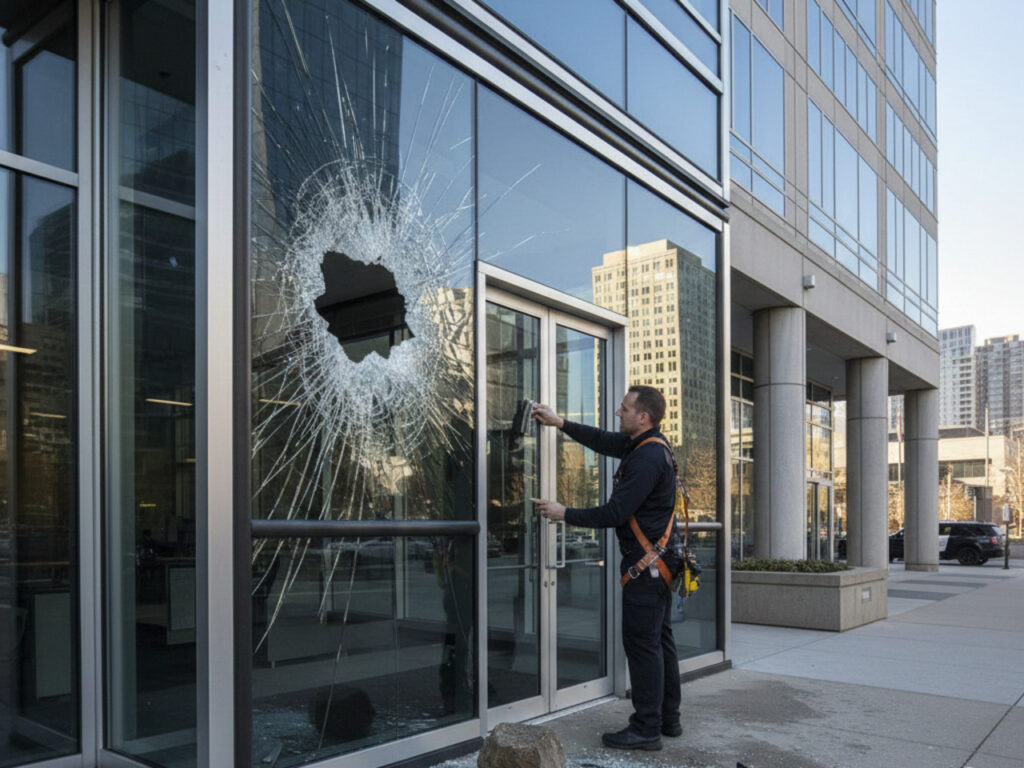
Financially, the cost-benefits of high-performance security film are substantial. Retrofitting costs a fraction of full glass replacement. It eliminates expensive new units, heavy labor, and waste disposal fees. This approach minimizes downtime and liability while maximizing your return on investment. It is the most strategic choice for enhancing commercial glass resilience.
The Science of Security: How 3M Security Window Film Elevates Protection
Implementing effective glass security for commercial properties demands a deep understanding of the underlying technology and its performance characteristics. Far beyond simple plastic sheeting, professional-grade security window films, particularly 3M solutions, are engineered composites designed to withstand significant impacts and pressures. Their efficacy stems from advanced material science, precisely formulated to enhance the resilience of existing glazing without requiring structural overhauls.
Proprietary Micro-Layer Technology: Engineering for Strength with 3M Ultra Safety & Security Window Film
3M’s superior performance stems from its proprietary micro-layer technology. Unlike conventional films that rely on thickness for strength, the 3M Ultra Series utilizes dozens of micro-thin layers. This innovative construction results in a film that is thinner yet stronger and more tear-resistant than thick, single-layer alternatives.
For project managers, this means a high-performance solution that integrates seamlessly with existing windows. It maintains clear visibility and aesthetic integrity while providing unparalleled protection against various threats. This technology offers a cutting-edge method for securing glass doors and windows without the bulk of traditional security materials.
The Mechanics of Resistance: Tensile Strength, Tear Resistance, and Impact Absorption
Security film uses tensile strength, tear resistance, and impact absorption to hold shattered glass within the frame. These films prevent punctures from spreading during forced entry attempts. They dissipate energy from blunt impacts, explosions, or ballistic events. Broken shards adhere to the film, creating a flexible, protective membrane. This persistent barrier delays intruders and effectively achieves forced entry resistance.
Enhancing Performance: The Role of Attachment Systems in Building Envelope Security
While security film significantly upgrades glass integrity, achieving comprehensive building envelope security often requires the integration of an attachment system. These systems mechanically or chemically bond the film-reinforced glass to the window frame, preventing the entire film-glass unit from being dislodged under extreme force.
Common attachment systems include:
- Wet Glaze (Sealant-Based) A structural silicone sealant is applied around the perimeter of the filmed glass, bonding the film directly to the frame. This creates a continuous, flexible barrier that absorbs shock and maintains the integrity of the opening.
- Mechanical Attachment This system uses metal batons or plates secured to the window frame, clamping the film-edge and creating a robust physical barrier.
The choice of attachment system is critical and depends on the specific threat assessment and the window’s construction. For high-risk applications such as blast mitigation or extreme forced entry resistance, an integrated attachment system is often mandatory to ensure the film performs to its maximum potential.
Independent Validation: Adherence to ASTM Standards and GSA Testing Protocols for Forced Entry and Blast Mitigation
For commercial-scale projects, performance claims must be backed by rigorous, independent testing. 3M security window films are subjected to and meet stringent industry standards, providing project managers with validated performance data. Key standards include:
- ASTM F1642: This standard evaluates the performance of window systems under explosive blast loading, categorizing protection levels based on standoff distances and blast overpressures.
- ASTM F1233: This test method assesses the forced-entry resistance of window systems, simulating various attack scenarios with different tools and durations.
- GSA Testing Protocols: For government and critical infrastructure projects, films often need to meet specific General Services Administration (GSA) standards, which are among the most demanding for blast and forced-entry protection.
Adherence to these protocols ensures that the specified film provides a predictable and documented level of protection, moving beyond anecdotal assurances to deliver certified security for large-scale deployments. This objective validation is crucial for managing risk and ensuring compliance in complex projects.
Strategic Implementation: Specifying the Right Security Film for Your Project
Selecting and implementing the appropriate security film is a nuanced process that extends beyond simply choosing a product. It involves a strategic assessment of threats, existing infrastructure, and project-specific constraints to deliver a tailored, cost-effective solution. This consultative approach is essential for large-scale commercial, retail, and educational environments looking to enhance their commercial glass security.
Assessing Risk Profiles: Tailoring Solutions for Commercial, Retail, and Education Environments
Effective security begins with a precise understanding of the potential threats and vulnerabilities unique to each property type. A retail establishment might prioritize deterring smash-and-grab theft and protecting valuable merchandise, requiring a film that significantly delays access. Educational facilities, conversely, might focus on containing threats during active assailant events, necessitating a solution that delays entry into classrooms and creates safe zones. Commercial offices and data centers may require advanced blast mitigation in addition to forced entry resistance. A detailed risk assessment informs the film specification, ensuring that resources are allocated to address the most pertinent security challenges.
Matching Film to Threat: Selecting Appropriate Thicknesses and Technologies for Commercial Glass Security
Security films come in various thicknesses, typically measured in mils. Common options include 4 mil, 7 mil, 8 mil, 12 mil, and 14 mil. Thickness correlates directly with the level of resistance against specific threats. A 4 mil film provides basic shard retention and minor entry delay. Thicker films like 14 mil offer robust forced entry and blast mitigation. Some films include solar control or anti-graffiti properties for multi-functional benefits. These technologies address broader building performance goals alongside critical security needs.
Integration with Existing Infrastructure: Considering Fenestration and Glazing Types
One of the significant advantages of retrofitting with security film is its compatibility with diverse existing infrastructure. Unlike full glass replacement, which necessitates new frames and structural considerations, film can be applied to most standard glass types, including annealed, tempered, and laminated glazing. However, the existing fenestration type, frame material, and the overall condition of the window system must be carefully evaluated. An experienced installer will assess factors like frame integrity, glass thickness, and sealant conditions to ensure optimal film performance and proper adhesion. This detailed assessment ensures that the retrofit solution is not only effective but also seamlessly integrated, avoiding costly and time-consuming replacements. This pragmatic approach is key to understanding how to secure glass doors and windows in diverse settings.
Navigating Project Timelines and Budgetary Constraints: A Manager’s Perspective
Project managers must navigate strict timelines and budgetary constraints effectively. 3M security film offers faster deployment compared to full glass replacement. Installation involves minimal disruption to ongoing operations and avoids demolition. This method eliminates the logistical challenges of sourcing new glazing units. Using a single national installer ensures consistent quality and streamlined management. This centralized approach simplifies vendor coordination across multiple locations. It guarantees a uniform security posture while meeting critical budget parameters.
Beyond the Product: The Indispensable Role of Expert Installation for National Rollouts
While the selection of a high-performance material like 3M security window film is foundational, its efficacy is inextricably linked to the quality and precision of its application. For large-scale commercial projects and national rollouts, the installation phase is not merely an afterthought. It is a critical determinant of the system’s overall performance, longevity, and return on investment. The advanced engineering of security films demands an equally advanced approach to deployment, particularly when consistent protection across multiple geographically dispersed sites is paramount for building envelope security.
Ensuring Consistent Performance: The Criticality of Manufacturer-Certified Installation
The sophisticated multi-layer construction of 3M security films, designed to absorb impact and hold shattered glass together, relies heavily on meticulous installation techniques. Manufacturer-certified installers undergo rigorous training programs that cover specific application methodologies, proper surface preparation, precise film cutting, and adherence to environmental conditions. This certification ensures that every installation meets the stringent performance specifications required to effectively mitigate risks from forced entry attempts or blast events. Deviations from these standards, common with uncertified or inexperienced applicators, can compromise the film’s adhesive bond, lead to premature delamination, or reduce its capacity to perform under stress, ultimately undermining the project’s security objectives. This is crucial for maximizing the effectiveness of forced entry resistant glass solutions.
Streamlining Logistics: The Value of a Single, National Partner for Multi-Site Projects
For project managers overseeing national or multi-site rollouts, coordinating multiple local installers introduces significant logistical complexities and inconsistencies. A single, national installation partner offers a streamlined approach, centralizing project management, communication, and resource allocation. This model ensures uniform quality control, standardized scheduling, and consistent pricing across all locations, significantly reducing administrative burden and potential delays. This is key to addressing the challenge of how to secure glass doors and windows across a broad portfolio.
Key advantages of a national partner include:
- Centralized Project Management: A single point of contact for planning, execution, and reporting across all sites.
- Consistent Quality Control: Adherence to uniform installation standards and protocols, regardless of location.
- Simplified Invoicing and Budgeting: Consolidated billing and predictable costs across the entire project scope.
- Scalability and Resource Mobilization: Efficient deployment of specialized teams and equipment to multiple sites simultaneously or sequentially.
This integrated approach directly addresses the challenge of sourcing reliable, specialized vendors by providing a proven, cohesive solution for commercial glass security.
Quality Assurance and Warranty Adherence: Protecting Your Investment in Building Envelope Security
The integrity of a security film installation is not only about immediate performance but also about long-term reliability and adherence to warranty terms. 3M offers comprehensive warranties covering both the product and, crucially, the installation when performed by certified professionals. Engaging an uncertified installer can inadvertently void these warranties, leaving the client exposed to potential costs for repairs or re-installation should defects arise. A reputable national partner incorporates robust quality assurance protocols throughout the installation process, from initial site assessment to final inspection. This commitment to quality ensures that the investment in building envelope security is protected over its entire lifecycle, guaranteeing the specified level of protection for years to come.
Unmatched Experience and Authority: Partnering with the #1 U.S. 3M Window Film Installer
The intricacies of large-scale security film deployments demand more than just technical skill. They require extensive experience and a deep understanding of commercial project dynamics. Partnering with the #1 U.S. 3M Window Film Installer offers an unparalleled advantage. This level of authority is built on years of successfully navigating complex logistical challenges, adhering to strict timelines, and delivering consistent, high-quality results across diverse building types and operational environments. Such a partner brings a wealth of institutional knowledge, proven methodologies, and a track record of reliability that is essential for ensuring successful project outcomes for demanding commercial, retail, and educational facilities. Their expertise translates into minimized disruption, optimized installation efficiency, and guaranteed performance that aligns with the highest industry standards.
Conclusion: Elevating Building Security with Advanced Film Technology
Recapping the Strategic Advantages of 3M Security Window Film
Retrofitting existing glazing with advanced 3M security window film stands as a strategically superior solution for enhancing building security in commercial, retail, and educational sectors. This approach provides a cost-effective alternative to full glass replacement, significantly reducing project timelines and operational disruptions. It delivers robust protection against forced entry, mitigates blast hazards, and offers ancillary benefits like UV radiation blockage and energy efficiency improvements. The combination of cutting-edge material science and precise, manufacturer-certified installation ensures that these protective properties are fully realized and consistently maintained across all deployment scales. It truly represents the most effective answer to how to secure glass doors and windows.
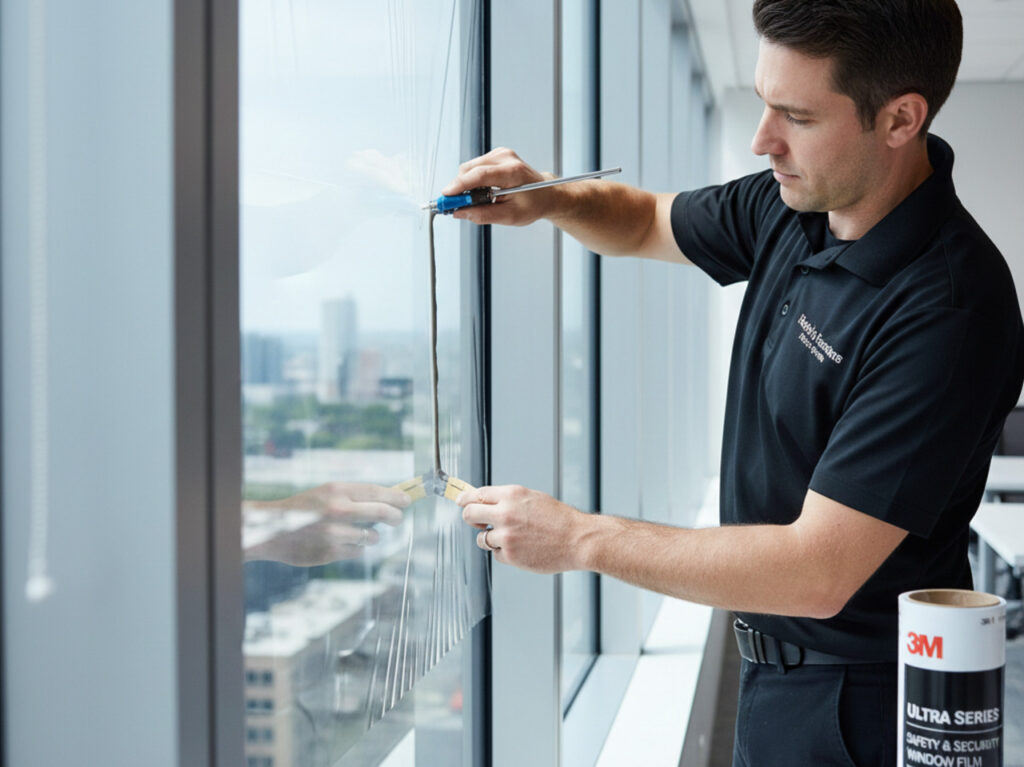
Future-Proofing Your Assets: A Proactive Approach to Risk Mitigation
In an evolving threat landscape, the ability to proactively secure assets and protect occupants is paramount. Implementing 3M security window film represents a forward-thinking investment in resilience, adapting existing infrastructure to meet contemporary security challenges. This proactive stance not only enhances safety but also contributes to business continuity, potentially reducing insurance liabilities and safeguarding long-term asset value. It ensures that facilities are prepared for unforeseen events, reinforcing a strong commitment to safety and operational integrity.
Taking the Next Step: Engaging with Specialized Security Glazing Experts
Construction and renovation managers should engage with specialized security glazing experts for their next upgrade. Professionals conduct thorough site assessments using a deep understanding of 3M film technology. They provide tailored recommendations and detailed project planning for large-scale execution. Seamless installation services ensure your investment in building security is optimized. Consulting with a proven national partner guarantees access to expert product knowledge. This partnership provides the logistical support necessary for the successful deployment of films. Your commercial glass security will be handled with the utmost professionalism.
Frequently Asked Questions
What is the most effective way to secure glass doors and windows?
The most effective way to secure glass doors and windows without full replacement is by retrofitting existing glazing with advanced security window film, such as 3M security window film, often combined with an attachment system. This enhances resistance to forced entry, blast impacts, and natural disasters.
How does security window film compare to traditional glass replacement in terms of security?
Security window film offers a more cost-effective, less disruptive, and faster solution than full glass replacement. It transforms existing glazing performance, providing similar or superior forced entry resistant glass properties at a fraction of the cost and with minimal operational downtime.
What are the key benefits of using 3M security window film for commercial properties?
Key benefits include significant delay against forced entry, blast mitigation (preventing dangerous glass fragmentation), protection against smash-and-grab incidents, UV protection, and enhanced security of the building envelope. Its proprietary micro-layer technology provides superior strength without excessive thickness.
Do I need an attachment system with security window film?
For high-risk applications, such as significant blast mitigation or extreme forced entry resistance, an attachment system is often mandatory. This system mechanically or chemically bonds the film-reinforced glass to the window frame, preventing the entire unit from being dislodged under extreme force and ensuring the film performs to its maximum potential.
Why is a national installer important for multi-site security film projects?
A single, national installer provides consistent quality control, standardized scheduling, uniform pricing, and centralized project management across all locations. This streamlines logistics, reduces administrative burden, and ensures a cohesive security posture, directly addressing the challenges of sourcing reliable, specialized vendors for large-scale rollouts.