Table of Contents:
- The Reality of One-Way Mirrors
- How a One-Way Mirror Works: The Science of Light
- Why the Light Differential Is Critical for Project Success
- The Superior Solution: High-Performance Reflective Window Film
- Specifying the Right Film for Your Project
- Practical Applications and Getting It Right
- Empowering Your Projects with Smart Film Solutions
- Frequently Asked Questions
- Related Posts from Window Film Depot
The Reality of One-Way Mirrors
As a project manager, you are the crucial link between a client’s architectural vision and the on-the-ground reality of construction. When a client requests “one-way glass,” a concept popularized by film and television, your role is to translate this request into a functional, budget-conscious specification that performs reliably. This means moving the conversation away from “magic glass” and toward the predictable science of light management.
When stakeholders specify one-way glass, they are typically seeking a specific set of outcomes: daytime privacy, enhanced building security, and a sleek, modern aesthetic. They envision a space where occupants can see out clearly while preventing outsiders from seeing in. Understanding this underlying intent opens the door to more versatile and cost-effective solutions that deliver the desired performance without the limitations of traditional specialty glass.
Proceeding without a clear understanding of the physics involved introduces significant project risks. Specifying and procuring true laminated one-way mirror glass is a costly, long-lead-time endeavor. More importantly, if the environmental lighting conditions are not precisely controlled, the product will fail to perform as expected. This leads to a dissatisfied client and potential rework.
Key project risks include:
- Budget Overruns: Specialty mirrored glass is substantially more expensive than standard glazing and can strain material budgets.
- Client Dissatisfaction: At night, when interior lights are on, the “one-way” effect reverses. Occupants become visible from the outside, defeating the primary goal of privacy and creating a serious performance complaint.
- Reduced Design Flexibility: Heavy, specialized glass can limit architectural options and may require structural modifications to the fenestration or framing system.
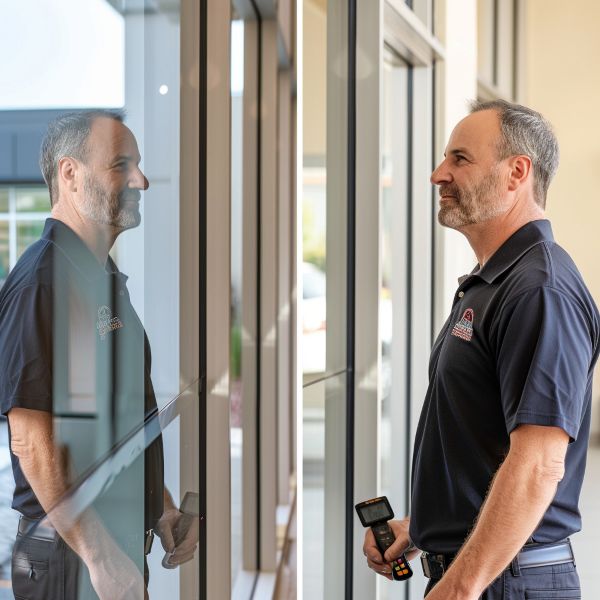
By understanding the physics at play, you can proactively manage client expectations and guide them toward a solution that works predictably.
How a One-Way Mirror Works: The Science of Light
The key to successfully meeting this client request is to reframe the solution. The “one-way mirror” is not an inherent property of a material, but a visual illusion created by a significant difference in brightness, or luminance, between two spaces. Once your team and client grasp this principle, the challenge is no longer about sourcing a mythical type of glass. It becomes a straightforward exercise in controlling how light is reflected and transmitted through the building envelope.
The effect is governed by the behavior of light as it interacts with a semi-transparent mirror. This is any surface that partially reflects light and partially allows it to pass through. From a physics standpoint, a truly one-way mirror does not exist. Light passes through the glass in both directions.
The illusion occurs when one side of the glass is brightly lit and the other is dark. The small amount of light from the dark side is overwhelmed by the high-volume reflection from the bright side. Observers on the bright side see their own reflection, while observers on the dark side can easily see through the glass into the illuminated space.
To specify a solution, two properties are fundamental:
- Visible Light Transmission (VLT): The percentage of visible light that passes directly through the glass. A higher VLT means a clearer, less tinted window.
- Visible Light Reflectance (VLR): The percentage of visible light that is reflected away from the glass. A higher VLR means a more mirror-like appearance.
The one-way effect is achieved when a surface has a significantly higher VLR than VLT. This highly reflective surface, combined with a strong light imbalance, is what creates the illusion. This ratio is precisely what advanced reflective window film is engineered to control.
Why the Light Differential Is Critical for Project Success
The most common point of failure in a “one-way mirror” project is not the product selected, but a misunderstanding of the physics. The effect’s success hinges entirely on a principle known as the light differential. For a project manager, mastering this concept is the key to setting accurate client expectations and ensuring the final installation performs as specified.
The light differential is the measured difference in brightness between the areas separated by the glass. For a reflective surface to act as a mirror, the “public” side must be significantly brighter than the “private” side. As a practical guideline, a light ratio of at least 5:1 (five times brighter on the exterior than the interior) is typically required for a noticeable privacy effect. For a strong, nearly opaque mirror effect that meets most security specifications, a ratio closer to 10:1 is the target.
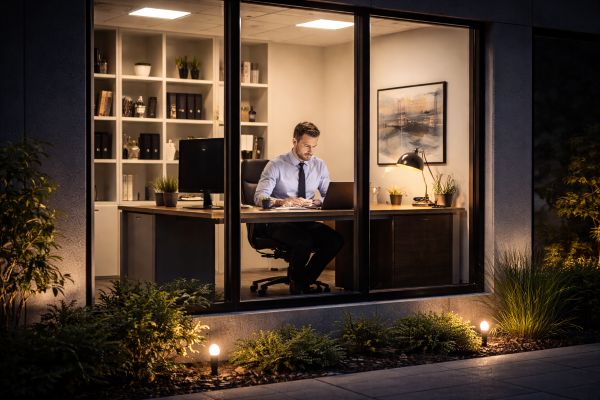
The single most important conversation to have with a client is about the nighttime reversal effect. The mirror illusion is dependent on the light differential, so the effect will reverse when the lighting conditions flip.
At night, when it is dark outside and lights are on inside, the interior becomes the brighter space. The reflective glass that provided daytime privacy will now allow outsiders to see in clearly. This is not a product failure. Managing this expectation upfront prevents client dissatisfaction and change orders.
The solution often involves incorporating secondary privacy measures like blinds or curtains for after-hours use, a factor that must be included in the project scope and budget.
The Superior Solution: High-Performance Reflective Window Film
Once the role of the light differential is understood, the choice of material becomes a strategic project decision. Advanced architectural film is a more practical and versatile solution than expensive, factory-produced specialty glass.
Specialty one-way mirror glass is a permanent, single-purpose building material. It is expensive, has long lead times, and requires the complete replacement of existing windows. This process is disruptive, labor-intensive, and locks the project into a solution that cannot be easily adapted.
Reflective window film, on the other hand, is a retrofit solution applied directly to new or existing glass. This approach provides several distinct advantages:
- Budget Control: Film is a fraction of the cost of glass replacement, freeing up capital for other priorities.
- Schedule Acceleration: Film installation is significantly faster and less disruptive than a full glazing replacement.
- Project Flexibility: If a client’s needs change or a space is repurposed, the film can be professionally removed and replaced with a different product.
The high performance of products like 3M Sun Control Window Film comes from a sophisticated manufacturing process called sputtering. During this process, multiple microscopic layers of metals are bonded to a durable polyester film in a vacuum chamber. This precise layering gives the metallized film its high exterior reflectivity, which is essential for the one-way mirror effect, while allowing for excellent optical clarity from the inside.
When evaluating solutions for a privacy specification, the operational advantages of one way mirror film are clear. For the project manager responsible for delivering on time and on budget, the comparison is straightforward. The total installed cost of a quality privacy window film for commercial buildings is typically 60-80% less than the cost of removing and replacing glass.
Specifying the Right Film for Your Project
Selecting the right reflective film becomes a matter of technical specification. By mastering a few key metrics, you can precisely tailor the solution to meet the project’s exact privacy, aesthetic, and performance goals.
For a successful privacy application, you must specify a film with a high enough VLR to create a mirror effect on the brighter side and a low enough VLT to help obscure the view into the darker, occupied space.
Achieving maximum privacy is not the only goal. The selected film must also support a comfortable interior environment. A film with a very low VLT delivers exceptional privacy but may make the interior feel dim, increasing reliance on artificial lighting. You must balance the need for privacy with the desire for natural light. Highly reflective films also significantly alter a building’s façade, creating a sleek, uniform appearance. This requires careful alignment with the architect’s vision.
A key advantage of advanced architectural film is its ability to solve multiple problems with a single application. For energy efficiency, reflective films dramatically reduce solar heat gain. This lessens the load on HVAC systems, leading to verified energy savings and helping the project meet energy codes or achieve points toward certifications like LEED.
From a security perspective, standard reflective films provide visual security, but they can also be specified as part of a comprehensive security film system. Thicker, more robust safety and security film that incorporates a reflective layer offers both visual denial and glass fragment retention, mitigating hazards and delaying intruders.
Practical Applications and Getting It Right
With a clear understanding of the technical specifications, we can see how this technology is applied to solve real-world challenges.
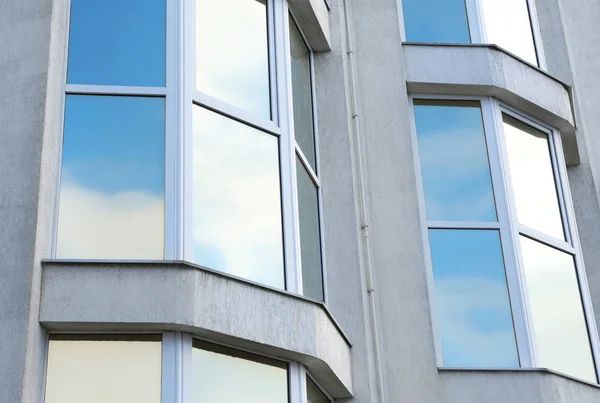
- Corporate Offices: Applying reflective film to glass-walled conference rooms is an effective solution. During work hours, the brightly lit open-plan office makes the exterior of the filmed glass reflective, shielding occupants from view.
- Ground-Floor Retail: For businesses at street level, reflective window film provides excellent daylight privacy, preventing passersby from easily seeing into the premises while blocking up to 99% of UV radiation, protecting merchandise from fading.
- Secure Facilities: In high-security environments like data centers or guard houses, a film with a very high VLR and low VLT is optimal. The goal is to completely prevent any view into the sensitive area. For this to be effective, it is an operational requirement that the interior of the secure post remains significantly darker than the exterior area under surveillance.
Empowering Your Projects with Smart Film Solutions
Successfully managing a client’s request for “one-way glass” is about expertly controlling the physics of light. By understanding this, you can move past the limitations and high costs of specialty glass and leverage a more versatile, budget-conscious, and reliable solution.
The one-way mirror effect is an illusion created by a significant lighting imbalance. The side with more light sees a reflection, while the side with less light sees through. Internalizing this fact is the key to setting realistic client expectations.
Advanced reflective film is the superior tool for this job. For a fraction of the cost of replacing glass, these films can be retrofitted to existing windows or integrated into new builds, drastically reducing material expenses and installation timelines. With the knowledge that this effect is a system of light and reflectivity, the next step is to select the correct film. Factors like window orientation, daylight exposure, and interior lighting design all influence performance. Engaging with a certified window film specialist is the most efficient way to guarantee project success, ensuring the solution you specify will deliver reliable, predictable results.
Frequently Asked Questions
Can one way mirror film work at night?
No, the effect reverses at night. A one way mirror film works because it is highly reflective on one side. The “mirror” effect only appears on the side that is more brightly lit. During the day, the bright exterior makes the window a mirror to people outside. At night, when interior lights are on and it’s dark outside, the interior becomes the brighter side. People outside will be able to see in, while people inside will see their own reflection.
What is the difference between VLT and VLR in window film?
VLT stands for Visible Light Transmission and measures the percentage of visible light that passes through the film. A lower VLT means a darker tint. VLR stands for Visible Light Reflectance and measures the percentage of light reflected by the film. A higher VLR means a more mirror-like appearance. For a strong daytime privacy effect, you need a film with a high VLR and a relatively low VLT.
Is reflective window film a better choice than specialty mirror glass?
For most commercial projects, reflective window film is a more practical and cost-effective solution. It costs significantly less than specialty glass, can be installed much faster with less disruption, and can be applied to existing windows. This provides greater control over project budgets and timelines. Film can also be removed or replaced if building needs change, offering flexibility that permanent specialty glass does not.
Does reflective film offer other benefits besides privacy?
Yes. High-performance reflective films are multifunctional. They are excellent at solar control, rejecting a large amount of solar heat to reduce a building’s cooling costs and improve occupant comfort. They also block up to 99% of harmful UV rays, which helps protect furniture, flooring, and merchandise from fading. When specified as a security film, it can also increase safety by holding shattered glass fragments together.