If you manage or own a commercial property-whether it is an office tower, a retail storefront, a medical practice, or a school campus-you have likely felt the squeeze of rising electricity costs and increasing occupant complaints about glare and uneven temperatures. Finding the right commercial window tinting companies near me starts with understanding what separates a qualified commercial installer from a general shop, and which film products actually deliver measurable results for your building.
This article draws on years of hands-on experience with commercial window tinting projects to walk you through every decision point: film types, company evaluation criteria, energy savings data, and the installation process itself. By the end, you will know exactly how to compare commercial window tinting services, ask the right questions, and request a fast, free quote with confidence.
Table of Contents:
- How Commercial Window Tinting Helps Local Businesses Right Now
- Types of Commercial Window Film and Where They Work Best
- How to Compare Commercial Window Tinting Companies Near You
- Energy Efficiency, Comfort, and Real Savings on Energy Costs
- Our Commercial Window Tinting Process: From Free Quote to Final Walkthrough
- Frequently Asked Questions About Commercial Window Tinting
- Next Steps: Get Your Free Quote for Commercial Window Tinting Today
How Commercial Window Tinting Helps Local Businesses Right Now
Extreme heat waves in 2024 and 2025 drove HVAC-related energy bills up 10–20% for many commercial spaces in warmer climates. At the same time, updated building energy codes are pushing property owners toward passive cooling solutions. Commercial window tinting addresses both pressures at once.
Core benefits for your business:
- Comfort: Window films help balance indoor temperatures throughout buildings, eliminating hot spots and reducing glare in offices, lobbies, and conference rooms.
- Protection: Window film blocks over 99% of harmful UV rays, slowing the fading of merchandise, flooring, furniture, and artwork.
- Privacy: Films let you add privacy to medical offices, banks, and storefronts while maintaining natural light and visibility from the interior.
- Aesthetics: A cleaner, more modern appearance for any commercial window or glass doors-no full renovation required.
In a 2025 mid-rise office retrofit covering roughly 20,000 square feet of glass, solar control film on west- and south-facing windows reduced perimeter temperature swings by approximately 15°F and cut cooling energy consumption by about 11%. That kind of result scales from a single suite to a multi-location franchise rollout, and professional crews can often schedule window tinting installation during evenings or weekends to avoid disrupting your business.
Types of Commercial Window Film and Where They Work Best
Not every pane of glass in your building needs the same solution. High-performance commercial window films include solar control films and security/safety films, but the full product range also covers decorative, privacy, and specialty options. LLumar architectural films, for instance, improve comfort and aesthetics across a range of building types. Below is a breakdown to help you match the right film to each area of your property.
Solar & Energy-Saving Commercial Window Tinting
Solar window film is the most common starting point for commercial projects. These solar films reduce solar heat gain through existing glass, cut glare, and reject up to 99% of UV rays-all without replacing your windows.
Key performance facts:
- Solar control window film can save 5–15% on energy costs annually, depending on your building’s glazing ratio and climate.
- Panorama Solar films block 99% of UV rays and reduce energy costs while preserving daylight.
- Panorama Solar films reduce solar heat gain and UV rays, letting your HVAC system run at lower capacity.
- Film options range from nearly invisible (70–80% visible light transmission) to darker tints, so you can meet both aesthetic goals and energy efficiency targets.
Solar films are ideal for south- and west-facing walls, curtain-wall buildings, and any space where solar heat creates uncomfortable conditions.
Decorative Window Film and Branded Decorative Films
Decorative window films enhance commercial spaces with unique designs-frosted glass patterns, gradients, custom-printed logos, and wayfinding graphics. Decorative films enhance aesthetics and provide privacy in commercial spaces without permanent etching or structural changes.
Common applications include conference rooms, reception areas, private offices, and interior glass partitions. Frosted films provide privacy while maintaining a modern look. Window films can also block unattractive views and hide clutter behind glass surfaces.
Because decorative film is removable, it is easy to update when tenants change or a brand refreshes its identity-far more cost effective than replacing glazed partitions. Decorative window features can also be layered with solar or privacy films on exterior-facing glass for combined performance.
Safety, Security, and Anti Graffiti Window Film
Security window film is a thicker, reinforced commercial window film designed to hold shattered glass in place during impacts. Safety film protects against break ins and vandalism by increasing resistance to forced entry-giving occupants critical time to react and deterring opportunistic criminals.
Notable products and capabilities:
- DefenseLite can resist up to 40 minutes of attack, offering an extra layer of protection for high-risk storefronts and pharmacies.
- Armorcoat is used in military and government facilities worldwide and protects against break ins and natural disasters.
- Security films are installed on schools, data centers, and governmental buildings where safety security is a top priority.
Anti graffiti window film works as a sacrificial layer on glass surfaces, mirrors, or metal panels. Once scratched, painted, or etched, the overlay is peeled off and replaced-without touching the underlying glass. Graffiti Protection films allow easy replacement after damage, making them ideal for transit stations, elevators, and street-facing retail where graffiti is an ongoing concern.
Specialty Films: Privacy, Glare Control, and Interior Finishes
Privacy films let you control visibility without sacrificing natural light-views out remain clear while limiting views inward. Reflective films obscure interior views during daylight, making them a practical choice for medical offices, banks, and upper floors facing neighboring buildings.
Glare control films help reduce glare and screen reflections in call centers, design studios, and dense-monitor workspaces. Interior surface films that mimic stone, metal, or wood can refresh doors, columns, and casework without full replacement, keeping renovation downtime minimal. In 2024, a dental practice updated its reception glass partitions with decorative and privacy films-gaining patient confidentiality and a polished look at a fraction of the cost of new glass.
How to Compare Commercial Window Tinting Companies Near You
Not all commercial window tinting companies offer the same quality, product range, or warranty protection. Choosing wisely protects your long-term ROI. Evaluate every prospective installer on these criteria:
- Experience: Number of commercial projects completed recently, building types served, familiarity with local codes.
- Film brands and data: Reputable commercial window film manufacturers with published performance specs.
- Warranties: Reputable building tint companies should offer a solid 10 to 15-year commercial warranty covering defects. Certified installers keep the product’s factory warranty valid-confirm authorization.
- Licensing and insurance: Always ask the company to confirm they are fully licensed, bonded, and insured for projects. Verify that the installer holds a current license specifically valid for commercial structures. Comprehensive insurance isolates businesses from liability regarding worker injuries or building damage.
- Certifications: Commercial window tinting companies should hold top tier certifications and warranties from major film manufacturers.
- Proposals: Itemized quotes should separate material costs, waste factor adjustments, and labor fees. Avoid vague phone-only estimates.
Look for recent project photos, verified reviews, and case studies from the last two to three years. Budget bids using low-quality film often lead to peeling, bubbles, and discoloration-costing far more over a building’s life than a proper installation.
Questions to Ask Before You Hire a Commercial Window Tinting Company
Bring these questions to every consultation:
- How many commercial projects have you completed in the last 12 months?
- Which commercial window film types do you recommend for my building, and why?
- Can you provide performance data-solar heat gain coefficient, visible light transmission, UV blocking?
- What is the expected lifespan in my climate and exposure conditions?
- What does your warranty cover, and how are claims handled?
- How will you minimize disruption to tenants, customers, or staff during installation?
- Can you provide references or photos from similar recent projects?
Verify that the installer understands regional visible light transmission and reflectivity limits. Highly reflective tints should comply with local regulations to avoid blinding adjacent buildings or drivers. Prioritize companies that offer on-site evaluations, and collect at least two written proposals to compare.
Energy Efficiency, Comfort, and Real Savings on Energy Costs
Many businesses now treat commercial window tinting as one of the most cost effective upgrades for energy efficiency rather than a cosmetic afterthought. Consider that 75% of existing windows aren’t energy efficient-making them one of the largest sources of wasted cooling energy.
Solar control films contribute to measurable energy efficiency by reducing solar heat gain through south- and west-facing glass, allowing your HVAC system to run less and at lower capacity, and helping stabilize perimeter zone temperatures. Window film reduces HVAC workload by blocking solar heat gain before it enters the space. Realistic savings range from 5–15% on annual cooling-related energy bills, depending on building type and film selection.
These upgrades can also support sustainability goals-lower carbon emissions, improved building performance metrics-and some regions offer utility rebates or incentives for energy efficient window improvements. Ask during your consultation.
How to Estimate Payback and ROI for Commercial Window Film
Payback period is straightforward: divide total project cost by estimated annual energy savings. Installed commercial window film typically costs $5–$15 per square foot, with solar control near the lower end and security or custom-printed options at the higher end. Most projects see payback in three to seven years.
Use your most recent 12-month utility bills as a baseline, then model improvements with the performance data your tinting company provides. Comfort and productivity gains-fewer temperature complaints, better screen visibility-are real but harder to quantify. Include reduced replacement costs for sun-damaged furniture, flooring, and merchandise as part of the long-term value. Larger facilities should consider phased installation, prioritizing the highest-heat facades first for the fastest return.
Our Commercial Window Tinting Process: From Free Quote to Final Walkthrough
A professional, structured process ensures predictable scheduling, clean results, and long-term performance. Here is what the process typically looks like:
- Free quote request: Submit basic details online or by phone-building type, approximate glass area, and main concerns (heat, glare, privacy, security).
- On-site survey: Ensure that installers conduct an on-site window cleanliness and glass-type evaluation before installation. The team assesses exposure direction, existing glass composition, thermal stress risks, and any building management requirements.
- Proposal and film selection: You receive a detailed, itemized estimate with film types, performance specs, timeline, and warranty terms.
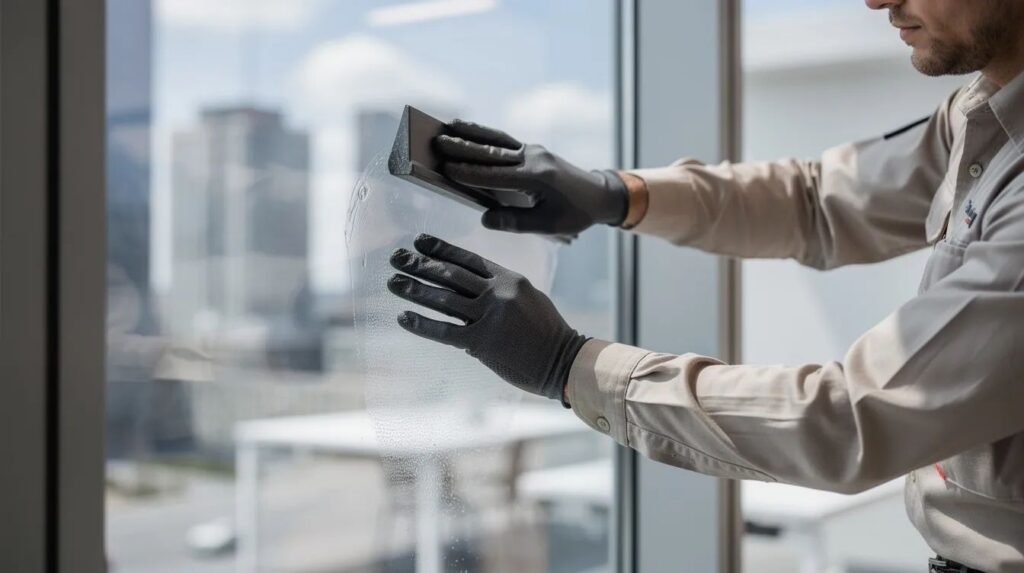
- Installation: Crews clean each pane, precision-cut the film, apply it with slip solution, and squeegee out moisture. A two-person crew typically covers 500–1,000 square feet per day. Request an operational plan detailing how disruptions during installation will be minimized.
- Final walkthrough and warranty review: The project lead walks through completed work with you, confirming quality and reviewing care instructions.
What to Expect During and After Installation
Small office suites can often be completed in a single day; multi-story buildings may require phased scheduling over several days. Some minor haziness or small water pockets are normal immediately after expert installation-most films fully cure within 30–60 days as trapped moisture evaporates.
Care tips for new film: wait at least 30 days before cleaning, use soft cloths and non-ammonia solutions, and avoid abrasive pads or razor blades on film surfaces. Maintenance is minimal after that-routine glass cleaning keeps the film clear and attractive for years.
Why Choose Window Film Depot for Your Commercial Window Tinting Project
When you are evaluating commercial window tinting companies, Window Film Depot stands out as a locally based partner with deep experience across the full range of commercial projects-offices, retail centers, medical facilities, and schools.
What sets the team apart:
- Specialization in solar control, decorative film, safety security, and anti graffiti window film for commercial buildings.
- Use of high-performance films from reputable manufacturers with strong warranties and proven track records.
- A locally based crew that understands regional climate, building types, and common energy challenges.
- Transparent, written estimates with no surprise fees and flexible scheduling-including evenings and weekends-to protect your daily operations.
- Clean, respectful installers who protect property, furnishings, and leave work areas tidy.
Ready to see what the right film can do for your space? Request a free quote or schedule an on-site consultation below.
Frequently Asked Questions About Commercial Window Tinting
How long does commercial window film last on office or storefront glass?
Interior solar and safety films typically last 10–15 years; premium ceramic films can exceed 15–20 years. Exterior films generally last 3–10 years due to direct weather exposure.
Will window tint make my building too dark inside?
No. Spectrally selective films allow 70–80% of visible light through while rejecting infrared heat. Your windows stay bright, and your space stays cooler.
Can commercial window tinting really lower my energy bills?
Yes. Solar control window film can lower energy costs by 5–15% annually for buildings with significant sun-exposed glazing.
What is the difference between decorative window film and privacy film?
Decorative film focuses on aesthetics-patterns, branding, frosted glass effects. Privacy films prioritize controlling who can see in. Some products combine both functions.
Is security window film enough to stop a break-in?
Security film increases resistance and holds shattered glass together, slowing forced entry and giving occupants time to respond. It is not bulletproof glass, but it is a strong deterrent.
How much does commercial window tinting cost per square foot?
Installed costs typically range from $5 to $15 per square foot. Solar control films sit near the lower end; security, decorative, and window graphics projects tend toward the higher end.
Will window film void my glass or window warranty?
It can, if the film is incompatible with your glazing. A qualified installer will audit your glass type and consult manufacturer compatibility charts before recommending a product.
What about anti graffiti film-how does replacement work?
Anti graffiti window film is a sacrificial layer. Once damaged by scratching, paint, or etching, the overlay is peeled off and a fresh layer is applied. The underlying glass stays untouched.
What should I expect in the first days after installation?
Minor haziness or small water pockets may appear. These are normal and clear as the film cures over 30–60 days. Avoid cleaning the film during this period.
Next Steps: Get Your Free Quote for Commercial Window Tinting Today
The right commercial window film turns your glass into a working asset-cutting energy costs, strengthening security, increasing privacy, and upgrading the appearance of your property. Whether your priority is reducing heat in a sun-baked office or adding an extra layer of protection to a street-facing storefront, the process starts with a single conversation.
Contact Window Film Depot today for a personalized, obligation-free assessment of your commercial building. Provide your building type, approximate glass area, and main concerns-heat, glare, privacy, or security-and the team will deliver a detailed proposal tailored to your goals and budget. Schedule your on-site evaluation now and start lowering your energy bills this season.