Table of Contents:
- Why Window Tinting Matters in Charlotte, NC
- Types of Window Tint & Legal Limits in North Carolina
- Commercial & Institutional Window Tinting in Charlotte
- Automotive & Fleet Car Window Tinting in Charlotte
- Why Choose Window Film Depot for Window Tinting in Charlotte, NC
- Frequently Asked Questions About Window Tinting in Charlotte
- Schedule Your Window Tinting Project in Charlotte
Why Window Tinting Matters in Charlotte, NC
Charlotte’s humid subtropical climate delivers punishing summer heat, with average daily highs around 90°F and roughly 44 days per year crossing that mark. If you manage a glass-heavy office in Uptown or South End, own a home in Ballantyne, or drive a fleet on I-77, heat control is a primary reason for installing window film in Charlotte’s climate. Window tinting improves energy efficiency by lowering cooling costs during the long June-through-September cooling season when untreated glass turns any building or vehicle into a greenhouse.
Professional window tint does more than reduce interior temperatures. Tinting reduces glare from sunlight and headlights, making screens and work surfaces usable without closing blinds. Window tinting blocks harmful UV rays and reduces heat, protecting skin from damage and keeping furnishings, flooring, and dashboards from fading prematurely. Throughout this article, window tinting refers to both automotive car window tinting and architectural film for commercial buildings, schools, government facilities, and homes across Charlotte and greater North Carolina.
Types of Window Tint & Legal Limits in North Carolina
Not all tint is created equal. Different types of window tinting films include ceramic, carbon, dyed, and metalized, and choosing the right film for window tinting can improve comfort and energy efficiency in hot climates like Charlotte’s. Window tinting shades are measured by VLT percentage, or visible light transmission: a lower number means darker film with more privacy but less natural light. Understanding this trade-off helps you find the right tint for your situation.
Dyed films are the entry-level option. Dyed window film absorbs solar heat and light while providing aesthetic improvements, but heat rejection is modest and colors can fade or turn purple after several years of strong sun exposure. Carbon window film offers sun glare reduction and does not fade over time, making it a durable mid-range choice. Metalized window film reflects solar energy and enhances daytime privacy through metallic particles, delivering better heat rejection than dyed films but potentially interfering with cell signals, Wi-Fi, and Bluetooth. Ceramic films represent the premium tier. Ceramic window tinting can reduce heat by up to 98 percent and blocks up to 99 percent of UV rays. Many ceramic window films have a six-layer composition for performance, such as Kepler’s ceramic tinting, which features a six-layer composition, and Kepler IR+ offers up to 98 percent infrared heat reduction. Ceramic window tinting offers a lifetime warranty on many residential product lines, making it the go-to for Charlotte’s high-sun environment.
North Carolina law requires front-side windows to allow at least 35 percent light through. Rear side and rear windows share the same 35 percent VLT minimum for passenger vehicles. The windshield may only be tinted along the top five inches or the AS-1 line, aside from clear UV-blocking film. Reflectance cannot exceed 20 percent, and red, yellow, or amber tint colors are restricted. Architectural window film on buildings is not governed by these automotive VLT rules, though building owners must still consider local code, safety glazing standards, and historic district guidelines in areas like parts of Uptown and Plaza Midwood.
Commercial & Institutional Window Tinting in Charlotte
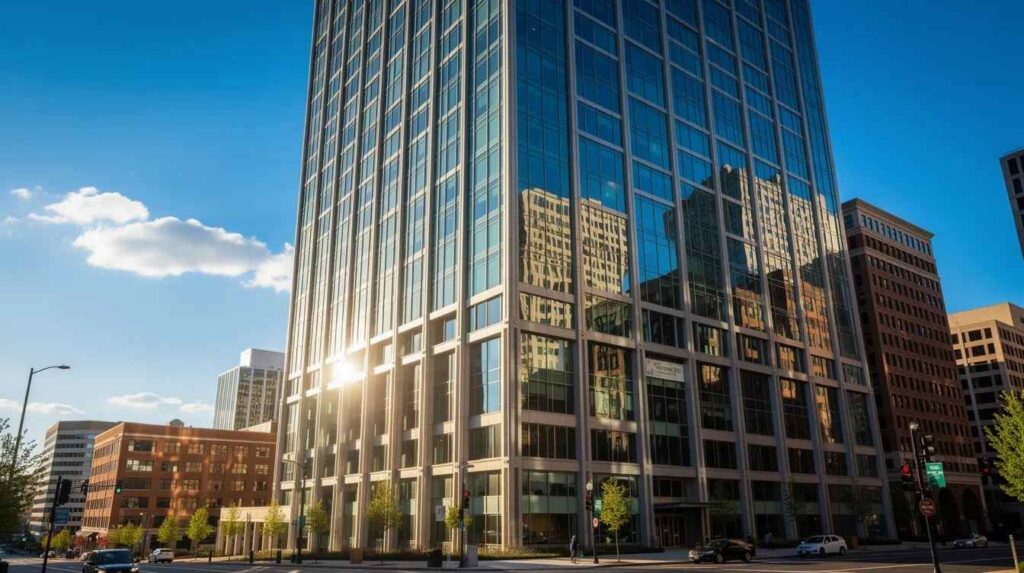
Facility managers, property owners, and architects across Charlotte are looking for ways to cut energy costs and improve occupant comfort without replacing expensive glass. High-performance films help maintain cooler interior temperatures in buildings by rejecting solar heat before it reaches the interior. In Charlotte’s Park Seneca Building, upgrading deteriorated south-facing film was part of energy conservation measures that reduced annual energy use by 29 percent, all without replacing a single pane. The Ritz-Carlton Charlotte adopted ceramic solar control films and reported improved guest comfort, lower utility expenses, and preserved views from every floor.
Solar control film reduces screen glare in open offices, call centers, bank branches, and classrooms, which directly supports productivity and attention to detail. Blocking up to 99 percent of UV rays protects retail merchandise, lobby artwork, interior finishes, and furnishings from fading. For Charlotte institutions such as banks, schools, and government buildings, security glazing films add resistance to forced entry and smash-and-grab incidents, helping glass stay in place under impact and buying critical response time.
Window Film Depot takes a turnkey approach to commercial window tinting in Charlotte: site survey and glass audit, product recommendation with energy modeling, professional installation scheduled around business hours, and nationwide capabilities for companies with locations beyond North Carolina.
Residential Window Tinting for Charlotte Homes
If your bonus room over the garage turns into an oven every summer, your hardwood floors are losing color near south-facing windows, or afternoon glare washes out your TV during Carolina game days, you are not alone. Homeowners across Ballantyne, SouthPark, Huntersville, and Concord deal with these exact issues. Residential window films can reduce solar heat gain during summer months, balancing temperatures room to room and protecting wood floors, rugs, artwork, and furnishings from UV-related fading.
Window tinting enhances privacy by making it difficult for outsiders to see inside a vehicle or home, a welcome benefit for street-facing windows without dramatically darkening the interior. Modern ceramic and spectrally selective films are light, neutral, and preserve views of Lake Norman or wooded lots while still rejecting heat. Decorative and privacy films in frosted or custom patterns fit bathrooms, sidelights, and interior glass doors in today’s Charlotte interiors, and storefronts can benefit from retail window film solutions that enhance comfort and security.
A typical residential install with Window Film Depot starts with an on-site consultation to measure glass and recommend film types. For a 2,500 to 3,000 square foot home, installation usually takes one to two days, with drop cloths to protect floors and minimal disruption. Aftercare is straightforward: allow a curing period before heavy cleaning, use non-abrasive cleaners, and retain your warranty documentation.

Automotive & Fleet Car Window Tinting in Charlotte
Window Film Depot’s core expertise is architectural and commercial film, but the same technologies apply to automotive and fleet glass for business customers in Charlotte. Company car fleets, service vans, and trucks that log hours on I-77, I-85, and the Beltway benefit from ceramic films that keep cabins cooler in July and August. Ceramic window tinting enhances vehicle appearance and comfort while providing 99 percent UV blocking for skin protection on long commutes. Because ceramic films are non-metallic, they avoid interference with GPS, Bluetooth, and onboard telematics common in modern fleet vehicles. Window tinting enhances vehicle appearance and provides privacy, and branded trucks and SUV fleets gain protection for visible tools, equipment, and inventory.
Standard tinting takes about 1.5 hours for a 4-door car, and computer-cut window tinting ensures accurate film application across every vehicle in a fleet, especially when coordinated through our Charlotte-based window film installation services. Several shops across the market, including competitors like Tint World, offer computer-cut window tinting for accuracy, and Tint World offers four popular tint packages for comparison. Each window tinting package from leading providers typically includes a nationwide warranty. Regardless of where you go, North Carolina’s tint laws must be followed for all car window tinting. Reputable installers measure film with calibrated meters and provide documentation for compliance. Drivers should always be prepared to roll down the driver’s side window during law enforcement stops.
Why Choose Window Film Depot for Window Tinting in Charlotte, NC
Window Film Depot is a family-owned company founded in 1992, with a national footprint and a strong presence serving Charlotte and surrounding North Carolina communities. Our professional team specializes in 3M window films and architectural surface solutions, delivering exceptional quality across commercial, institutional, government, and residential projects, including complex work in markets such as Washington, DC.
Our commitment to turnkey project management sets us apart: from survey and specification support to energy modeling, installation, and post-project documentation. We offer a full portfolio covering solar control, security glazing, privacy, decorative, anti-graffiti, and specialty films, plus architectural surface finishes for doors, walls, and casework, with similar capabilities supporting clients in Fort Myers, Cape Coral, and Naples, FL. For trade partners in the Charlotte area, including glass shops, glaziers, and general contractors, we provide wholesale window film supply and technical guidance on complex jobs.
We take pride in professionalism, safety, and minimal disruption. Our crews are background-checked and properly insured, and we schedule around occupied buildings, schools, healthcare facilities, and tenant schedules so your operations keep running.
Frequently Asked Questions About Window Tinting in Charlotte
Here are common questions from Charlotte-area building owners, facility managers, and homeowners.
Does UV window film really block 99% of UV rays?
Yes. Quality films used by Window Film Depot, including 3M UV and solar control films, are tested to block 99%+ of UVA and UVB radiation. The Skin Cancer Foundation recognizes certain window films as effective UV protection products. Clear UV window film blocks 99% of UV rays – a reference point confirmed across multiple product data sheets.
How much does window tinting cost in Charlotte, NC?
Price varies by glass type, access, film performance level, and project size. Commercial projects with large glass areas are quoted per square foot after a site survey. Residential and automotive price points differ based on the number of windows and film grade chosen. Contact us for a detailed estimate tailored to your location and needs.
How long does window film last on Charlotte homes and commercial buildings?
Quality ceramic and spectrally selective films typically last 15 to 20 or more years. Commercial warranties from manufacturers like 3M often run 10 to 15 years, while certain residential product lines carry lifetime coverage for the original homeowner.
Will window film make my office or home too dark?
Modern spectrally selective and ceramic films cut heat and UV rays while remaining relatively clear. You can choose films with high VLT values that preserve natural light and views while still rejecting the majority of infrared energy.
Can window tint help lower my energy bills in North Carolina or in similarly sunny markets like Los Angeles, CA?
Yes. Impact varies by building orientation, glass area, and existing HVAC efficiency, but case studies in the Charlotte market show cooling load reductions of 29 to 50 percent when quality film is applied to sun-exposed glass.
Is window tint installed on the inside or outside of the glass?
Most architectural and automotive films are applied to the interior surface. Specialty exterior films are available for certain commercial projects where interior access is limited or performance requirements differ.
How do I clean and maintain window film after installation?
Wait the recommended curing period, typically 7 to 30 days depending on the film. After that, clean with a soft cloth and mild, non-abrasive cleaner. Avoid razor blades and harsh chemicals to protect the film surface and maintain your warranty.
Can Window Film Depot handle multi-location projects across North Carolina and the Southeast?
Absolutely. We manage national rollouts with central project coordination, standardized products, and consistent installation quality across every location, from Columbus, Ohio, to Charlotte and beyond.
Schedule Your Window Tinting Project in Charlotte
If you are ready to schedule a consultation or site survey for your building, campus, home, or fleet, Window Film Depot is glad to walk you through options and help you find the right fit. Send floor plans or photos for preliminary recommendations, or inquire about wholesale film supply if you are a trade partner or installer. Planning ahead of peak summer months helps secure preferred appointment dates and ensures your spaces are covered before the worst of the heat arrives.
Cooler, more comfortable interiors, protected finishes, and upgraded security start with professionally installed window film tailored to Charlotte’s demanding climate. Contact our team today and let us show you what the right window tinting solution can do.