Table of Contents:
- The Science Behind the Mirror Effect: How Light Differentials Create Privacy
- Key Film Specifications for Project Managers: VLT, Reflectivity, and Performance Data
- Ideal Commercial Applications: When and Where to Deploy One-Way Privacy Film Effectively
- Common Specification Pitfalls: Why One-Way Film Fails and How to Avoid Costly Rework
- Partnering for Success: Ensuring Flawless Installation on Large-Scale Projects
- Conclusion: Empowering Project Managers for Informed Privacy Film Decisions
- Frequently Asked Questions
- Related Posts from Window Film Depot
Understanding the True Nature of Daytime Privacy Film
The perceived “one-way” effect of privacy window film during daylight hours is a sophisticated optical illusion, not an inherent property of the material itself. This phenomenon relies entirely on a significant light differential between the two sides of the glass. When the exterior environment is considerably brighter than the interior space, the film’s highly reflective outer layer effectively mirrors the brighter side. This reflection prevents observation from the outside while allowing clear visibility from the dimmer interior.
Films engineered for this purpose typically feature low Visible Light Transmittance (VLT) and high exterior reflectivity. A lower VLT means less light passes through the film, further enhancing the contrast. For project managers, understanding these technical specifications is crucial. It allows for precise selection of films that will achieve the desired daytime privacy effect given specific ambient light conditions and client requirements, ensuring functional performance rather than aesthetic disappointment.
Addressing the Common Misconception: Nighttime Performance Realities
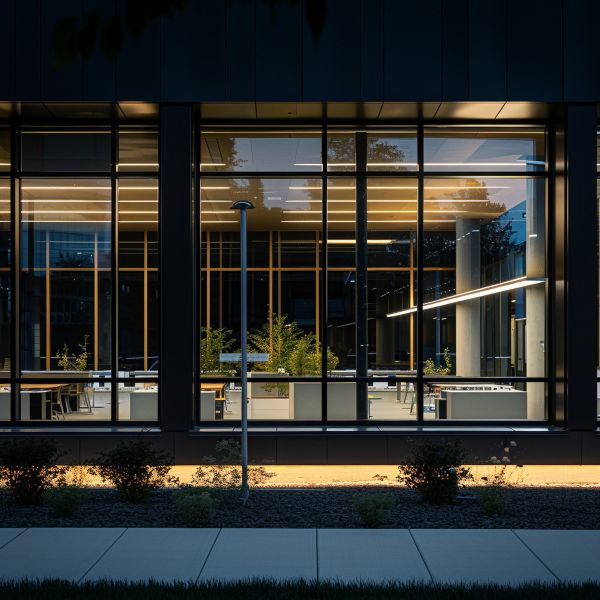
The common misconception among clients is that “one-way privacy” is a constant, 24/7 feature of the film. This is fundamentally untrue. As the light differential reverses—meaning the interior space becomes brighter than the exterior environment, such as after sunset when interior lights are on—the one-way effect diminishes and ultimately flips. When interior lighting is dominant, the film’s reflective properties shift to the inside.
From the exterior, the film becomes largely transparent, allowing full visibility into the brightly lit interior. From the interior, the film now acts as a mirror, reflecting the room’s light back at occupants and obstructing their view outside. This complete reversal of the privacy effect is a critical factor that, if not clearly communicated, leads to significant client dissatisfaction and potential rework. It is not a flaw in the film but a predictable outcome governed by the laws of physics and light dynamics.
The Imperative of Transparent Communication with Clients
Successfully deploying one-way privacy reflective window film necessitates a proactive approach to client education and expectation management. Project managers must move beyond merely installing the specified product and instead serve as expert consultants, translating technical realities into understandable terms. This involves explaining the light differential principle in simple language, demonstrating how the film performs under varying light conditions throughout a 24-hour cycle.
Effective communication includes explicitly addressing the nighttime performance reality. Rather than allowing clients to discover this limitation post-installation, present it as an integral part of the film’s operational characteristics. This transparency builds trust and positions you as a knowledgeable partner. Furthermore, it opens a dialogue for discussing complementary solutions, such as integrating interior blinds or drapes, to maintain privacy during hours when the film’s one-way effect is inactive. This consultative approach minimizes project risks and prevents costly amendments after the fact.
The Science Behind the Mirror Effect: How Light Differentials Create Privacy
The Fundamental Role of Light Balance in Privacy Film Functionality
The effectiveness of one-way reflective window film is not an inherent property of the film itself, but rather a direct consequence of light dynamics. Its functionality relies entirely on a significant differential in visible light levels between two spaces. For a successful one-way privacy effect, one side of the glass must be considerably brighter than the other. When this light balance is correctly managed, the film acts as a mirror to the brighter side, obscuring vision, while allowing a clearer view from the darker side. Understanding this critical relationship between light and film performance is paramount for project managers to set accurate client expectations and avoid specification pitfalls.
Unpacking Reflectivity: How Surfaces and Light Interact
At its core, one-way window film privacy operates by leveraging reflectivity. The film incorporates microscopic metallic or ceramic particles that reflect a portion of the incoming visible light. When the exterior is significantly brighter than the interior, the film reflects enough external light to create a mirror-like appearance to an outside observer. This reflection overwhelms the comparatively dim light transmitted from the interior, thus rendering the inside view opaque. Conversely, from the darker interior, less light is reflected internally, allowing the observer to see through to the brighter exterior. This dynamic ensures that the “mirror” effect is always on the side with the greater light intensity.
Exploring Film Technologies: Metallized vs. Sputtered for Enhanced Performance
The reflective properties central to privacy film are achieved through distinct manufacturing processes, primarily metallization and sputtering. Both methods embed metallic elements into the film layers, but they differ in their application and resulting performance characteristics.
- Metallized Films: These films are manufactured by vacuum-coating layers with various metals, such as aluminum, stainless steel, or titanium. This process typically results in a highly reflective, mirror-like appearance and excellent solar heat rejection capabilities. While effective for daytime privacy, the high reflectivity can sometimes lead to a noticeable mirror effect on the interior at night when indoor lights are on, potentially impacting the view out.
- Sputtered Films: This advanced technique applies microscopic, optically pure metal particles in a more uniform and controlled manner. Sputtered films often achieve comparable solar performance to metallized films but can offer improved durability and a more neutral, less mirror-like aesthetic. Critically, some sputtered films are engineered to reduce internal reflectivity, providing a clearer view from the inside, particularly during lower light conditions, while maintaining external privacy during the day. This technological distinction is crucial when considering the critical nighttime performance of one-way privacy applications.
Introducing Visible Light Transmission (VLT) and Its Impact on Privacy Perception
Visible Light Transmission, or VLT, is a fundamental specification for any window film. It represents the percentage of visible light that passes directly through the film and glass system. A lower VLT means less light is transmitted through the film, making the interior appear darker from the outside and thereby enhancing the privacy effect during the day. For example, a film with 10% VLT allows only one-tenth of the visible light to pass through, contributing to a stronger light differential compared to a film with 30% VLT. This metric directly influences how opaque the film appears from the brighter side, and understanding its implications is key to selecting the right film for specific project requirements.
Key Film Specifications for Project Managers: VLT, Reflectivity, and Performance Data
For project managers, specifying one-way privacy film or blackout window film requires a deep dive into its technical data. Relying solely on aesthetic appeal or general descriptions risks client dissatisfaction. A thorough understanding of key performance indicators ensures the chosen film meets both privacy and broader performance objectives.
Deconstructing Visible Light Transmission (VLT) for Optimal Selection
As established, VLT is a critical parameter. For privacy applications, lower VLT values (e.g., 5-15%) typically offer maximum daytime privacy, as they create a significant light differential by allowing minimal light to pass through. However, this also means a darker interior, which might require increased artificial lighting. Conversely, films with higher VLT (e.g., 20-35%) offer a brighter interior but provide less robust privacy, especially in scenarios with marginal light differentials. Selecting the optimal VLT involves balancing the client’s desire for privacy with their need for interior daylight and an unobstructed view from the inside. This decision should always be informed by the specific lighting conditions of the installation site.
Interpreting External and Internal Reflectivity Values
Beyond VLT, understanding reflectivity values is essential. Manufacturers provide two key metrics:
- External Reflectivity: This figure indicates the percentage of visible light reflected away from the exterior of the glass. A higher external reflectivity (e.g., 30-60%) directly correlates with a stronger mirror effect seen from the outside, enhancing daytime privacy. This is the primary driver of the “one-way” illusion.
- Internal Reflectivity: This measures the percentage of visible light reflected back into the interior space. While a certain level of internal reflectivity is necessary for overall solar performance, excessively high internal reflectivity can cause a noticeable mirror effect on the interior surface of the glass at night when indoor lights are on, and it is dark outside. This phenomenon compromises the view out and can lead to significant client disappointment. Project managers must balance the need for external privacy with acceptable internal visibility, especially during evening hours.
Comprehensive Analysis of Manufacturer Performance Data Sheets
Successful film specification is rooted in the meticulous review of manufacturer performance data sheets. These documents are the authoritative source for a film’s capabilities and should be scrutinized for more than just VLT and reflectivity. Key metrics to evaluate include:
- Visible Light Transmission (VLT): As discussed, the percentage of visible light passing through.
- Visible Light Reflectance (VLR): Often broken down into Exterior (VLR-E) and Interior (VLR-I), these values quantify the mirror effect.
- Total Solar Energy Rejected (TSER): The total percentage of solar energy (UV, visible light, infrared) rejected by the film, indicating its energy efficiency.
- UV Rejection: The percentage of harmful ultraviolet rays blocked, crucial for fade protection.
- Glare Reduction: The percentage reduction in visible light intensity improves visual comfort.
These data points allow project managers to objectively compare films, justify selections to clients, and ensure the film performs as expected under varied conditions.
Beyond Privacy: Understanding UV Rejection, Glare Reduction, and Energy Efficiency
While privacy is often the primary driver for these film installations, modern window films offer a suite of additional benefits that contribute to a project’s overall success and building occupants’ comfort.
- UV Rejection: Most quality window films block 99% or more of harmful UVA and UVB rays. This is critical for protecting interior furnishings, artwork, and flooring from fading and contributing to occupant health by reducing exposure to skin-damaging radiation.
- Glare Reduction: Films significantly reduce glare, which can improve visual comfort, reduce eye strain, and enhance productivity in workspaces. This is particularly valuable in settings with excessive natural light or screen reflections.
- Energy Efficiency: By rejecting a substantial portion of solar heat, window films can dramatically reduce cooling loads in commercial and residential buildings. This translates into lower energy consumption, reduced HVAC operating costs, and a more comfortable interior environment, offering a measurable return on investment for clients.
These multifaceted benefits underscore the value proposition of integrating advanced window film privacy into a project, extending beyond the immediate privacy requirement.
Leveraging Advanced 3M Film Technologies: Insights into the Night Vision™ Series
Addressing the critical challenge of nighttime performance for one-way privacy applications, advanced film technologies like 3M’s Night Vision™ Series offer innovative solutions. These films are engineered with a proprietary construction that strategically manages reflectivity. They maintain high external reflectivity during the day to ensure robust privacy, but crucially, they feature lower internal reflectivity. This design choice minimizes the mirror effect on the interior side when internal lights are on at night, preserving a clearer, less obstructed view to the outside. For project managers, understanding and leveraging such specialized films can be pivotal in managing client expectations and delivering a comprehensive solution that performs effectively across all lighting conditions, directly addressing the common pain point of diminished nighttime visibility with traditional reflective films.
Ideal Commercial Applications: When and Where to Deploy One-Way Privacy Film Effectively
Deploying one-way privacy film effectively requires a clear understanding of its operational principles, primarily the necessity of a significant light differential to achieve the desired effect. When specified correctly, this film offers a versatile solution for numerous commercial applications where daytime visual privacy is paramount.
Strategic Placement for Daytime Privacy in Diverse Commercial Environments
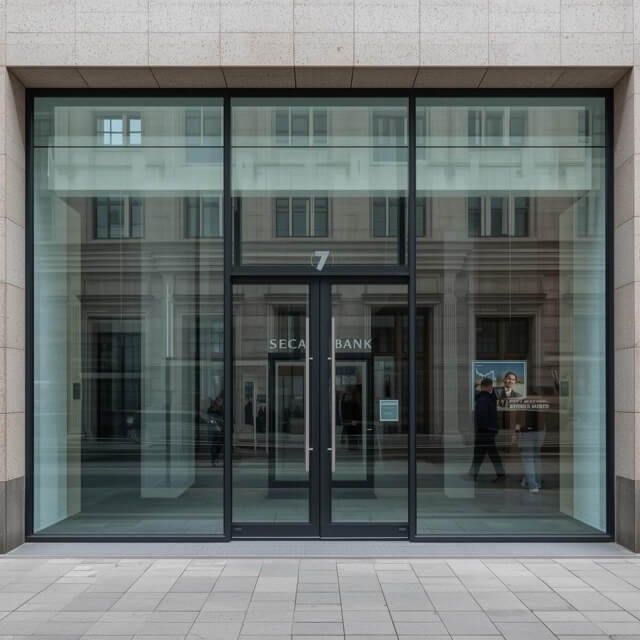
The core utility of one-way privacy film lies in its ability to create visual obscurity from the brighter side of a pane of glass while allowing relatively clear outward visibility from the darker side. This characteristic makes it ideal for environments that benefit from enhanced daytime privacy without fully obstructing views or natural light.
Balancing Natural Light Needs with Desired Privacy Levels
Project managers must carefully balance the client’s need for privacy with their desire for natural light transmission. One-way privacy films are available with varying levels of Visible Light Transmittance (VLT) and reflectivity. A higher VLT allows more light into the space but may offer slightly less privacy, while a lower VLT increases privacy but can make interiors feel darker. The specification process should involve analyzing the existing interior light conditions and exterior light exposure to recommend a film that achieves the optimal balance. This ensures occupants benefit from natural light and outdoor views without compromising the required level of daytime discretion.
Tailoring Solutions for Specific Spaces: Storefronts, Office Partitions, and Data Centers
The application of one-way privacy film can be highly tailored to the specific functional and aesthetic requirements of different commercial spaces:
- Storefronts: For retail back-of-house areas or sensitive product displays, the film can obscure views into operational zones while allowing staff to monitor the storefront. It deters theft and provides security without the need for blinds or curtains that block natural light entirely.
- Office Partitions: When applied to interior glass partitions, it can create private meeting rooms or executive offices within an open-plan environment. Here, the light differential principle still applies, but the “exterior” is the brighter general office space, and the “interior” is the meeting room. Careful consideration of internal lighting is crucial in these scenarios.
- Data Centers and Server Rooms: Privacy film offers a critical security layer by preventing unauthorized visual access to sensitive equipment. Beyond privacy, certain reflective films can also contribute to thermal management by reducing solar heat gain, thus lowering cooling costs.
Considerations for Different Building Types and Architectural Styles
The choice of one-way privacy film must also account for the building’s architectural style and existing glazing. For buildings with large glass facades, a uniform film application can maintain a sleek, modern aesthetic while providing consistent privacy. In historical buildings, the film must complement the existing architecture without altering the building’s exterior appearance negatively, often requiring films with specific reflective properties or tints. Adherence to local building codes, homeowner association regulations, and historical preservation guidelines is also a critical part of the specification process.
Integrating Security Film Features for Enhanced Protection
Beyond visual privacy, many one-way films can be combined with security features, offering a multi-faceted solution. Laminated privacy films provide an additional layer of protection against forced entry, smash-and-grab theft, and even natural disasters by holding shattered glass together. This integration allows project managers to address both privacy and safety concerns with a single installation, optimizing budget and minimizing disruption.
One Way Privacy Window Film Reviews: How to Avoid Costly Rework
While one-way privacy film offers significant benefits, its misapplication is a common source of client dissatisfaction and costly project failures. The primary reason for these failures stems from a fundamental misunderstanding of the film’s core operating principle: light differential.
The Peril of Misunderstanding Nighttime Privacy Expectations
The most frequent and critical pitfall is the client’s misconception regarding nighttime privacy. One-way privacy film only works when the exterior is significantly brighter than the interior. As daylight fades and interior lights are switched on, this light differential reverses. The interior becomes brighter than the exterior, and consequently, the “one-way” effect reverses. What was once a reflective surface from the outside becomes transparent, allowing clear visibility into the building from the exterior. Failing to clearly communicate this fundamental limitation during the specification phase inevitably leads to client disappointment and the perception that the product has failed to deliver on its promise. Project managers must proactively address this scenario to set realistic expectations and prevent rework.
Incorrect Film Selection Based on Site-Specific Light Conditions
Not all “one-way” privacy films are identical in their performance characteristics. Films vary significantly in their VLT, reflectivity, and color. An incorrect film selection, made without a thorough site-specific light audit, can lead to inadequate privacy or an unacceptably dark interior. Factors such as adjacent buildings, urban light pollution, landscaping, and the direction of sun exposure all influence the effective light differential. Specifying a film based solely on a generic “one-way” label without considering these nuanced environmental conditions is a recipe for an underperforming installation.
Overlooking Internal Lighting Scenarios During the Specification Phase
The internal lighting environment plays an equally crucial role as external conditions. Bright interior office lighting, strategic display lighting in retail, or even standard overhead fixtures can drastically reduce the film’s daytime privacy effectiveness if the exterior light differential is marginal. For interior glass partitions, the balance of light between adjacent rooms dictates the film’s performance. Neglecting to analyze and account for these internal light sources during the initial specification review can lead to situations where the film fails to provide the intended privacy even during daylight hours, or worse, completely reverses at night.
The High Cost of Client Dissatisfaction and Project Failures
The consequences of these specification pitfalls extend far beyond a simple aesthetic issue. Client dissatisfaction can lead to demands for rework, necessitating the costly removal and reinstallation of alternative solutions, often at the project’s expense. Beyond the direct financial impact of labor and materials, there’s the intangible cost of reputational damage, strained client relationships, and potential delays to project completion. For a project manager, such failures erode trust and can negatively impact future business opportunities.
Implementing Proactive Strategies to Mitigate Rework and Budget Overruns
Avoiding these common pitfalls requires a proactive, educated approach to film specification and client communication.
Thorough Site Assessment and Light Audits
Before any film recommendation, conduct a comprehensive site survey. This includes documenting existing light conditions, taking precise lux readings both inside and outside the proposed glazing areas, and noting any environmental factors (e.g., surrounding buildings, potential for glare). This data forms the objective basis for film selection.
Realistic Client Education and Expectation Setting
This is arguably the most critical step. Clearly and transparently explain the principles of light differential and the limitations of one-way privacy film, especially regarding its nighttime performance. Use simple analogies or even visual aids to demonstrate how the “mirror effect” reverses when interior lights are on. Emphasize that for true 24/7 privacy, supplemental solutions like blinds or drapes will be necessary.
Mock-ups and Testing
When feasible, install a small mock-up section of the proposed film in a representative location. Encourage the client to observe its performance during various times of day and night. This provides a tangible demonstration of the film’s characteristics and helps solidify understanding of its limitations before full deployment.
Comprehensive Specification Documentation
Ensure all project documentation clearly outlines the performance characteristics of the selected film, including its VLT, reflectivity, and, crucially, its operational limitations under different lighting conditions. Obtain explicit client sign-off acknowledging their understanding of these parameters, particularly the nighttime privacy aspect. This protects both the client and the project manager from future misunderstandings.
Need More Info?
The Window Film Depot team is happy to help.
Partnering for Success: Ensuring Flawless Installation on Large-Scale Projects
The Value of Expert Consultation in the Specification Phase
Successful deployment of one-way privacy film commences long before installation, specifically during the critical specification phase. Engaging expert consultation at this stage allows project managers to thoroughly evaluate site-specific conditions, such as ambient light levels, internal lighting designs, and the exact architectural context. This early collaboration is crucial for validating the film’s intended performance against the scientific principles of light differential and ensuring the chosen solution aligns precisely with client expectations and project budget, thereby mitigating potential specification errors and costly revisions down the line. An expert partner helps translate complex technical data, such as Visible Light Transmission (VLT) and exterior reflectivity, into practical, predictable outcomes.
The Critical Role of Professional Installation Teams for Optimal Performance
The finest film specified can underperform without flawless installation. Professional installation teams are not merely applicators; they are trained technicians who understand the nuances of film adhesion, substrate compatibility, and environmental factors that affect performance and longevity. Their expertise ensures meticulous surface preparation, precise cutting and alignment, and strict adherence to manufacturer-recommended curing processes. This level of professional execution is paramount for achieving the specified optical clarity, durability, and uniform aesthetic that clients expect, directly impacting the film’s intended privacy function and overall project quality.
Mastering Logistics for National Rollouts and Multi-Location Deployments
For large-scale or multi-location projects, the logistical complexities extend far beyond individual installations. A partner with proven national rollout capabilities brings invaluable experience in centralized project management, standardized procurement, and coordinated scheduling across diverse geographical regions. This expertise ensures consistent product quality, uniform application standards, and streamlined communication, all of which are critical for maintaining project timelines and budgets. Such a comprehensive approach minimizes operational bottlenecks and guarantees that every facility receives the same high standard of material and workmanship, delivering predictable results across the entire portfolio.
Leveraging Deep Product Knowledge and Manufacturer Certifications
Selecting the correct one-way privacy film from a vast array of options demands deep product knowledge, extending beyond basic VLT percentages to include nuanced performance characteristics like solar heat rejection, glare reduction, and UV protection. A certified partner, such as the #1 U.S. 3M Window Film Installer, offers an unparalleled advantage. This certification signifies rigorous training, adherence to stringent quality control standards, and direct access to manufacturer-backed technical support and warranties. This level of expertise ensures that the chosen film not only meets the privacy requirement but also optimizes energy efficiency and occupant comfort, all while being installed by technicians who fully understand the material’s properties and application requirements.
The Window Film Depot Advantage: From Specification to Seamless Execution
Partnering with a specialized firm like Window Film Depot provides project managers with a comprehensive solution that spans the entire project lifecycle. This integrated approach begins with expert consultation to validate specifications against light dynamics and client expectations, extends through precise, certified installation by national teams, and concludes with robust logistical management for multi-site deployments. This singular accountability mitigates risks, streamlines project workflows, and ensures that the technical complexities of one-way privacy film are expertly managed, allowing project managers to deliver exceptional results consistently and confidently.
Conclusion: Empowering Project Managers for Informed Privacy Film Decisions
Recap of Core Principles: Light Dynamics as the Foundation of Successful Deployment
The efficacy of one-way privacy film is fundamentally governed by the principles of light dynamics, particularly the difference in illumination levels between the observer and the observed. As we have explored, understanding how factors like Visible Light Transmittance (VLT), exterior reflectivity, and the balance of interior versus exterior light dictate the film’s performance is not merely technical minutiae; it is the cornerstone of successful specification and client satisfaction. Project managers who grasp these core principles are better equipped to set accurate expectations and prevent costly misunderstandings, especially regarding nighttime privacy.

Reaffirming the Importance of Expert Partnership and Client Education
Successfully deploying advanced film technologies like one-way privacy film necessitates more than just selecting a product; it requires a strategic partnership. Collaborating with an experienced, technically proficient partner empowers project managers to navigate complex performance data, anticipate potential challenges, and proactively educate clients on the film’s operational parameters. This collaborative, educational approach is crucial for translating technical specifications into tangible, predictable outcomes, fostering trust, and ensuring that the final installation meets precise project requirements.
Achieving Project Excellence: Minimizing Risk and Maximizing Client Satisfaction
Ultimately, the goal of every project manager is to achieve excellence—minimizing risks, adhering to budgets, and maximizing client satisfaction. By integrating a deep understanding of light dynamics with expert specification and professional installation, project managers can confidently deliver one-way privacy film solutions that perform as expected, where expected. This strategic foresight prevents common pitfalls, such as unexpected transparency at night, thereby safeguarding project integrity and reinforcing a reputation for meticulous execution.
Your Trusted Resource for Advanced Commercial Privacy Film Solutions
For construction and renovation managers seeking to deploy advanced commercial one-day privacy window film solutions with unwavering confidence, Window Film Depot stands as a trusted national resource. Our expertise, rooted in scientific understanding of film performance and extensive project management experience, ensures that every specification is precise, every installation is flawless, and every client expectation is met through informed, collaborative planning. We are committed to empowering project managers with the knowledge and support necessary to achieve superior results on every unique project.
Frequently Asked Questions
Does one-way privacy film provide privacy at night?
No. The “one-way” effect is an optical illusion created by a light differential, not a permanent state of the glass. The film reflects the side with the most light. During the day, the sun makes the exterior brighter, creating a mirror effect. At night, when interior lights are on and it is dark outside, the effect reverses: the film becomes transparent from the outside, and occupants inside see a mirror reflection of their own interior.
What is VLT, and how does it affect my privacy?
Visible Light Transmittance (VLT) is the percentage of light that passes through the film.
Low VLT (5-15%): These films are darker and create a stronger light differential, providing the highest level of daytime privacy.
High VLT (20-35%): these allow more natural light into the building but provide less privacy, especially on overcast days or in areas where the exterior isn’t significantly brighter than the interior.
Will this film make my office too dark?
While lower VLT films do reduce incoming light, modern films like the 3M™ Night Vision™ Series are engineered to provide privacy without making a space feel “cave-like.” However, because these films work by blocking and reflecting light, there is always a trade-off. A professional site audit can help determine the right VLT to balance your need for natural light with your privacy requirements.
What is the difference between metallized and sputtered films?
Both use metals to reflect light, but the technology differs:
Metallized Films: Use a vacuum-coating process. They are generally more affordable and offer great heat rejection but can have a very high “shiny” mirror look on the interior at night.
Sputtered Films: Use an advanced process to apply metal particles more uniformly. They often have a more neutral appearance and can be engineered with lower internal reflectivity, which helps maintain a better view of the outside during the evening.
Can I use this film on interior glass partitions?
Yes, but with caution. For the film to work on an interior partition (like a conference room wall), one side of the glass must be consistently brighter than the other. If the hallway is bright and the meeting room is dim, the film will work. If both rooms have equal lighting, the privacy effect will be lost. Lighting design must be considered part of the installation strategy for interior glass.