Table of Contents:
- The Project Manager’s Imperative: Elevating Glass Safety and Security in Modern Construction
- Understanding the Foundations: The Two Primary Types of Safety Glass
- The Project Manager’s Challenge: When Full Glass Replacement Isn’t the Optimal Solution
- The Modern Alternative: Transforming Existing Glass with Advanced Security Film Technology
- Strategic Project Planning: Film vs. Full Replacement for Enhanced Safety and Security
- Delivering Value: Meeting Safety and Security Demands On Budget and On Time with Expert Solutions
- Conclusion: Smart Solutions for Modern Safety and Security Challenges
- Frequently Asked Questions
- Related Posts from Window Film Depot
The Project Manager’s Imperative: Elevating Glass Safety and Security in Modern Construction
In contemporary building projects, specifying and implementing appropriate glass safety and security measures transcends mere code compliance. It is a fundamental aspect of occupant well-being, asset protection, and structural integrity. Project managers are increasingly tasked with balancing these critical considerations against budget constraints, aesthetic demands, and aggressive timelines.
A thorough understanding of glass types and their performance characteristics is essential for making informed decisions. This empowers managers to proactively address vulnerabilities and integrate solutions that offer long-term value and peace of mind. For construction and renovation managers, understanding what safety glass is made of is less important than knowing the most efficient way to achieve safety specifications. Often, the answer isn’t replacing the glass, but upgrading it with advanced security film.
Understanding the Foundations: The Two Primary Types of Safety Glass
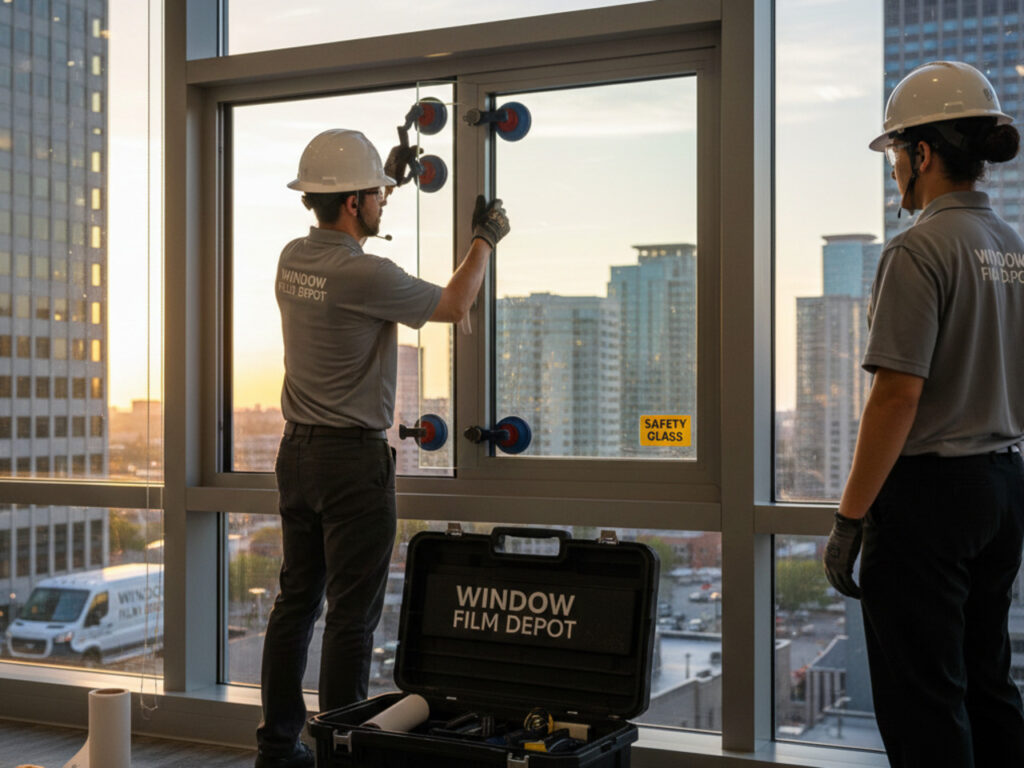
Safety glass is engineered to reduce the risk of injury when broken. Unlike standard annealed glass, it does not shatter into dangerous, sharp fragments. Project managers must understand the two primary categories: tempered and window laminate. Each type achieves safety through a distinct manufacturing process. These different methods result in unique performance characteristics. Selecting the right type depends on the specific needs of the application. Understanding these differences is essential for ensuring building safety and compliance.
Tempered Glass: The Thermal and Chemical Transformation Process
Tempered glass undergoes specialized thermal or chemical treatments to enhance its strength. During thermal tempering, annealed glass is heated to over 1,100°F (600°C). Technicians then rapidly cool the glass to alter its physical properties. This process causes the outer surfaces to solidify faster than the interior. This creates high compressive stress on the surface and tensile stress in the core. These internal stresses significantly increase resistance to impact and thermal shock. The resulting glass is much stronger and more durable than standard annealed glass.
Tempered glass releases stored energy when it breaks, shattering into small, dull fragments. These cube-like pieces reduce the risk of serious lacerations compared to annealed glass. Standard glass produces large, sharp shards that pose a much higher danger. Common applications for tempered glass include shower doors and automobile side windows. It is also essential for building entrances where impact resistance is paramount. Using tempered glass helps minimize injuries during a breakage event.
Laminated Glass: The Power of the Polyvinyl Butyral (PVB) Interlayer
Laminated glass achieves safety through integration rather than just strength. It consists of two or more glass panes bonded together. These panes surround a flexible, transparent interlayer, usually polyvinyl butyral (PVB). Technicians subject this multi-layered construction to intense heat and pressure. This autoclave process creates a strong, permanent bond between the materials. The result is a unified system that stays together even when damaged.
The polyvinyl butyral (PVB) interlayer is the critical component for safety. When laminated glass breaks, fragments adhere firmly to this interlayer. They do not shatter into dangerous pieces or fall from the frame. This reduces the risk of injury and maintains the integrity of the opening. The interlayer also provides a barrier against intrusion or fall-through hazards. Beyond safety, PVB offers sound insulation and reduced UV light transmission. It is frequently specified for storefronts, skylights, and automobile windshields. These areas require advanced security or superior acoustic performance.
Comparing ‘Safety’: Laminated Glass vs. Tempered in Practical Application
Tempered and laminated glass are both safety glass but offer distinct benefits. Their unique properties dictate different practical applications on construction sites. Project managers must understand these differences to specify the correct materials. Choosing the wrong type can compromise safety or fail to meet building codes.
Here is a comparison of their key attributes:
Fracture Pattern and Retention:
- Tempered Glass: Breaks into numerous small, blunt pieces. The entire pane shatters, and the glass loses its structural integrity, leaving an open void. It provides safety by reducing injury risk from sharp shards.
- Laminated Glass: Fractures, but the glass fragments remain bonded to the interlayer, largely retaining the pane’s overall shape and maintaining a barrier. It provides safety by reducing injury risk, preventing penetration, and maintaining the enclosure.
Resistance to Penetration and Forced Entry:
- Tempered Glass: While stronger than annealed glass, once broken, it offers no resistance to penetration. An assailant can easily step through the opening.
- Laminated Glass: The interlayer significantly impedes penetration, even after the glass panes themselves are broken. This provides a measurable delay against forced entry, allowing time for response.
Sound and UV Control:
- Tempered Glass: Offers minimal additional sound or UV reduction beyond what a standard glass pane would provide.
- Laminated Glass: The polyvinyl butyral (PVB) interlayer naturally dampens sound waves and blocks a high percentage of harmful UV radiation, contributing to occupant comfort and interior protection.
Cost and Application:
- Tempered Glass: Generally less expensive than laminated glass and used where preventing large, sharp shards is the primary concern, such as frameless shower enclosures or certain vehicle windows.
- Laminated Glass: Higher in initial cost but justified for applications requiring higher security, sound attenuation, UV protection, or where maintaining the integrity of the opening after breakage is critical, such as storefronts, schools, or historical buildings.
When evaluating glass specifications for a project, the choice between tempered and laminated glass hinges on the specific safety, security, and performance objectives. Both serve vital roles, but neither is a universal solution for all potential threats or requirements.
The Project Manager’s Challenge: When Full Glass Replacement Isn’t the Optimal Solution
While specifying traditional safety glass in new construction projects is straightforward, the landscape shifts dramatically when dealing with existing structures. Project managers frequently face situations where current building codes or client demands necessitate an upgrade to glass safety and security. In these scenarios, the instinct to replace existing glass with new safety glass often introduces a cascade of complexities that can derail project timelines and budgets.
The Economic Burden and Unforeseen Project Disruptions
Full glass replacement incurs significant economic costs, even for a limited scope. Beyond the price of new units, expenses arise for demolition and debris removal. Structural modifications may also be needed to accommodate different framing systems. These direct costs are compounded by facility downtime and business interruptions. Unforeseen issues, like discovering hazardous materials, can quickly inflate budgets. Manufacturing delays for custom glass often push completion dates beyond projections. Project managers must account for these risks when choosing replacement over retrofit.
Logistical Complexities of Demolition and New Glass Installation
The logistical demands of a full glass replacement are extensive and challenging. This process typically requires:
- Extensive Site Preparation: Securing work areas, erecting scaffolding, and implementing stringent safety protocols for demolition and installation.
- Specialized Equipment: Cranes or lifts may be necessary for maneuvering large or heavy glass units, particularly on higher floors.
- Waste Management: Disposal of old glass requires specific handling to comply with environmental regulations, adding another layer of complexity and cost.
- Operational Disruptions: Noise, dust, and restricted access impact building occupants, staff, or tenants, leading to potential complaints and operational inefficiencies.
- Weather Dependencies: Exterior glass removal and installation are highly susceptible to weather conditions, leading to potential delays and increased labor costs.
Each of these factors contributes to a complex project matrix, demanding meticulous planning and extensive coordination to minimize impact and ensure safety.
Bridging the Gap: The Need for Adaptable and Efficient Solutions
Project managers require agile solutions to avoid the economic hurdles of glass replacement. The core challenge is meeting safety standards without disruptive and costly methods. An ideal approach enables swift compliance while integrating seamlessly with existing infrastructure. This method must minimize the impact on ongoing business operations. The gap between needed performance and replacement costs highlights a need for alternatives. Alternative technologies provide the necessary upgrades without the impracticalities of traditional methods.
The Modern Alternative: Transforming Existing Glass with Advanced Security Film Technology
Advanced security film technology presents a compelling, modern solution that directly addresses the challenges of upgrading existing glass. Instead of replacing an entire window system, this approach focuses on reinforcing the glass in place, offering a pragmatic and effective pathway to enhanced safety and security specifications. This is an efficient way to achieve shatter-resistant glass.
Beyond Basic: How to Make Glass Shatterproof with Advanced Security Film
In advanced security film, “shatterproof” means holding glass fragments together after impact. It does not mean the glass is absolutely indestructible. Security film mitigates hazards like flying shards and large, dangerous openings. The film forms a robust, invisible barrier on existing glass. This significantly increases resistance to impacts, blasts, and forced entry attempts. Its primary function is to contain broken glass within the frame. This maintains the integrity of the window opening and protects occupants.
The Science of Resilience: How Security Film Reinforces Glass Integrity
At its core, advanced security film leverages sophisticated material science to impart superior resilience to ordinary glass. These films are typically constructed from multiple layers of high-tensile polyester, combined with proprietary, aggressive adhesive systems. When impact occurs, the film absorbs and distributes the energy across a wider surface area, preventing localized failure. The high tensile strength and tear resistance of the film layers work in concert with the adhesive to:
- Contain Fragments: The film holds broken glass shards firmly in place, significantly reducing the risk of injury from flying debris.
- Deter Entry: It creates a strong membrane that resists penetration, requiring sustained effort and specialized tools to breach, thereby delaying intruders and allowing for response time.
- Mitigate Blast Effects: In the event of an explosion, the film helps maintain the glass in the frame, preventing hazardous glass projectiles from traveling into occupied spaces. This is also known as blast mitigation film.
This scientific approach effectively transforms standard glass into a robust, protective barrier without altering its original appearance.
Versatility in Application: Upgrading Various Glass Types for Enhanced Security
One of the most significant advantages of advanced security film is its exceptional versatility. It can be applied to virtually any existing glass surface, regardless of its original specification or age, making it an adaptable solution for a wide range of projects. This includes:
- Annealed Glass: The most common type of glass, found in many older buildings.
- Tempered Glass: Often used where safety glazing is required, such as doors and near walkways, but still susceptible to breaking into small pieces.
- Laminated Glass: While already offering some security benefits, film can enhance its performance against more severe threats.
- Insulated Glass Units (IGUs): Film can be applied to either surface of multi-pane windows without compromising their thermal properties.
This adaptability extends to various applications, from storefronts and commercial buildings to schools, government facilities, and residential properties, enabling project managers to meet diverse security requirements efficiently and without the need for extensive structural modifications.
The 3M Advantage: Leading Innovations in Film Performance and Durability
3M stands at the forefront of advanced security film technology, offering products that represent significant innovations in performance and durability. Their extensive research and development have led to proprietary technologies, most notably their micro-layered film construction. This unique design involves layering hundreds of ultra-thin, tear-resistant layers into a single film, creating a product with exceptional strength and impact resistance far surpassing conventional films of similar thickness. Key aspects of the 3M advantage include:
- Micro-Layered Technology: This patented construction dramatically enhances tear and puncture resistance, providing superior protection against forced entry and blast events. Often found in the 3M Ultra Series.
- Advanced Adhesive Systems: 3M’s specialized adhesives are engineered for strong, long-lasting bonds with glass, ensuring consistent performance and clarity over the film’s lifespan.
- Proven Performance: 3M Security Films are rigorously tested to meet and often exceed stringent industry standards, including those for forced entry (e.g., UL 972), blast mitigation (e.g., GSA, ASTM E1642), and hurricane protection.
- Comprehensive Warranties: Backed by extensive warranties, these films offer peace of mind regarding their long-term durability and performance.
- Optical Clarity: Despite their multi-layered construction, 3M films maintain exceptional optical clarity, ensuring that views are unobstructed and the aesthetic integrity of the building is preserved.
By leveraging these innovations, 3M provides project managers with a reliable, high-performance solution that offers a powerful alternative to traditional glass replacement, enabling projects to achieve robust security and safety standards with greater efficiency and less disruption. This makes security window film for commercial buildings a highly attractive option.
Strategic Project Planning: Film vs. Full Replacement for Enhanced Safety and Security
For project managers tasked with upgrading existing structures, the choice between traditional glass replacement and advanced film application involves a critical strategic assessment. This decision impacts budgets, timelines, and the ultimate performance of the enhanced glazing. Understanding the distinct advantages of security film over full glass replacement and solutions like anti-glare window film is crucial for delivering optimal outcomes for building security.
Cost-Effectiveness: Maximizing Budget Without Compromising Safety Standards
One of the most compelling arguments for retrofitting existing windows with advanced security film is the significant cost advantage. Full glass replacement involves substantial expenses that extend beyond the material cost of new safety glass. These often include demolition and disposal of existing units, extensive labor for removal and installation, potential structural modifications, and specialized equipment. Security film, in contrast, applies directly to the existing glass, eliminating these ancillary costs. This allows project managers to achieve required safety and security specifications with a considerably lower capital outlay, freeing up budget for other project priorities without sacrificing performance.
Timeline Efficiency: Reducing Disruption and Accelerating Project Completion
Project timelines are a constant pressure point for every project manager. Security film installation dramatically reduces project duration compared to full glass replacement. Replacing windows involves a multi-stage process of ordering, manufacturing, and shipping. This labor-intensive task often disrupts building operations for extended periods. Film application is a much faster process requiring minimal downtime. It allows for continued occupancy or operation during the entire installation. Reduced labor hours and logistical complexity lead to much faster project completion. This efficiency minimizes disruption to tenants and accelerates the overall schedule.
Performance Specifications: Matching Needs with the Right Solution for Building Security
Advanced security films allow project managers to tailor solutions to specific threats. These specialized films provide enhanced protection against forced entry and ballistic impacts. They also offer significant mitigation against blast-related pressures. The film holds shattered glass together to prevent shards from becoming projectiles. This maintains the window opening as a barrier even after it breaks. Owners can achieve targeted security without installing heavy, expensive specialized glass units. This precision allows for high-level protection that meets explicit security specifications.
Need More Info?
The Window Film Depot team is happy to help.
Aesthetic and Operational Considerations: The Seamless Integration of Film in Commercial Renovation
Integrating new security measures into existing buildings often presents aesthetic and operational challenges. Security films offer a solution that preserves the building’s original architectural design while enhancing its safety profile. Many films are optically clear and virtually undetectable once installed, maintaining existing views and light transmission. Others offer privacy, decorative, or solar control benefits, adding further value. Operationally, the installation process is far less intrusive than glass replacement, avoiding the need for extensive scaffolding, removing window frames, or disturbing the building’s envelope. This ensures a seamless integration with minimal operational impact during a commercial renovation project.
Meeting Specific Demands: When Film Outperforms Traditional Methods for Impact and Blast Mitigation
In scenarios requiring advanced protection, advanced security films often outperform traditional safety glass options. While laminated glass resists impact, specialized films absorb and distribute shock. These films prevent the glass from breaching the opening entirely. For blast mitigation, installers typically use an anchoring system to bond the film to the window frame. This system allows the window to flex and absorb blast pressure more effectively than rigid glass. These features make film an exceptionally effective and preferred solution for critical infrastructure and high-security environments.
Delivering Value: Meeting Safety and Security Demands On Budget and On Time with Expert Solutions
Achieving critical safety and security enhancements within budgetary and timeline constraints is a hallmark of successful project management. Leveraging advanced film technology allows managers to deliver exceptional value by effectively addressing these demands.
Navigating Compliance: Achieving Glass Safety Standards (ANSI Z97.1, CPSC 16 CFR 1201) with Film
Project managers are responsible for ensuring that all installations comply with relevant building codes and safety standards. Advanced security films can be instrumental in bringing existing glazing up to modern glass safety standards, such as ANSI Z97.1 (Safety Glazing Materials Used in Buildings) and CPSC 16 CFR 1201 (Safety Standard for Architectural Glazing Materials). Certified security films, when properly applied, can upgrade ordinary annealed glass to meet these impact performance requirements, eliminating the need for costly and disruptive glass replacement. This compliance pathway offers a practical and efficient method for ensuring the safety of occupants in accordance with regulatory mandates.
Beyond Safety: Integrating Energy Efficiency and Aesthetic Demands with Advanced Films
The versatility of advanced films extends beyond security and impact protection. Many modern film solutions incorporate properties that address a range of building performance requirements. These include solar control films that reduce heat gain and glare, thereby improving energy efficiency and occupant comfort, and films that block a significant percentage of harmful UV rays to protect interiors. Furthermore, you can integrate decorative or privacy films to meet aesthetic demands. These films offer design flexibility and functional enhancements without the complexities of replacing entire glass units. This multi-functional capability allows project managers to achieve several objectives with a single, integrated solution.
Partnering with Expertise: The Value of Proven Project Management and Installation Excellence
Successful implementation of advanced film solutions hinges on partnering with experienced professionals. Expert project managers ensure teams meet the correct film specifications and handle logistical challenges efficiently. They also guarantee that installations adhere to the highest standards. Certified installers possess the specialized training and equipment necessary to apply films precisely, ensuring optimal performance and longevity. This professional collaboration guarantees that the films perform as intended, meet all specified requirements, and contribute positively to the overall project outcome, reinforcing the project manager’s commitment to quality and reliability.
From Specification to Installation: A Streamlined Approach for Large-Scale Rollouts
For large-scale projects or rollouts across multiple properties, the streamlined nature of film specification and installation offers significant advantages. The process typically begins with a comprehensive site assessment to identify specific needs and existing glass types. Based on this, appropriate film solutions are specified and then installed efficiently, often requiring less staging and site preparation than traditional window replacement. This standardized, yet customizable, approach allows for rapid deployment across numerous locations, ensuring consistent application of safety and security enhancements with minimal operational disruption and predictable project delivery.
Conclusion: Smart Solutions for Modern Safety and Security Challenges
Recap: Rethinking Traditional Approaches to Glass Safety and Building Security
Throughout this discussion, we’ve explored the fundamental characteristics of traditional safety glass, recognizing its essential role in meeting specific building codes and performance standards. However, the landscape of construction and renovation often presents unique challenges, particularly when existing structures require safety upgrades. While new construction typically specifies laminated glass or tempered glass, retrofitting older buildings with these materials can introduce significant project complexities.
The core insight for project managers lies in understanding that the objective is not always to install traditional safety glass, but rather to achieve safety specifications. This subtle distinction opens the door to more efficient, less disruptive, and often more cost-effective solutions. Modern advancements in material science, particularly in window film technology, offer a powerful alternative to full glass replacement when addressing safety and security requirements in existing fenestration. This offers a practical answer to the question of what safety glass is made of. It provides an effective means to achieve peak performance.
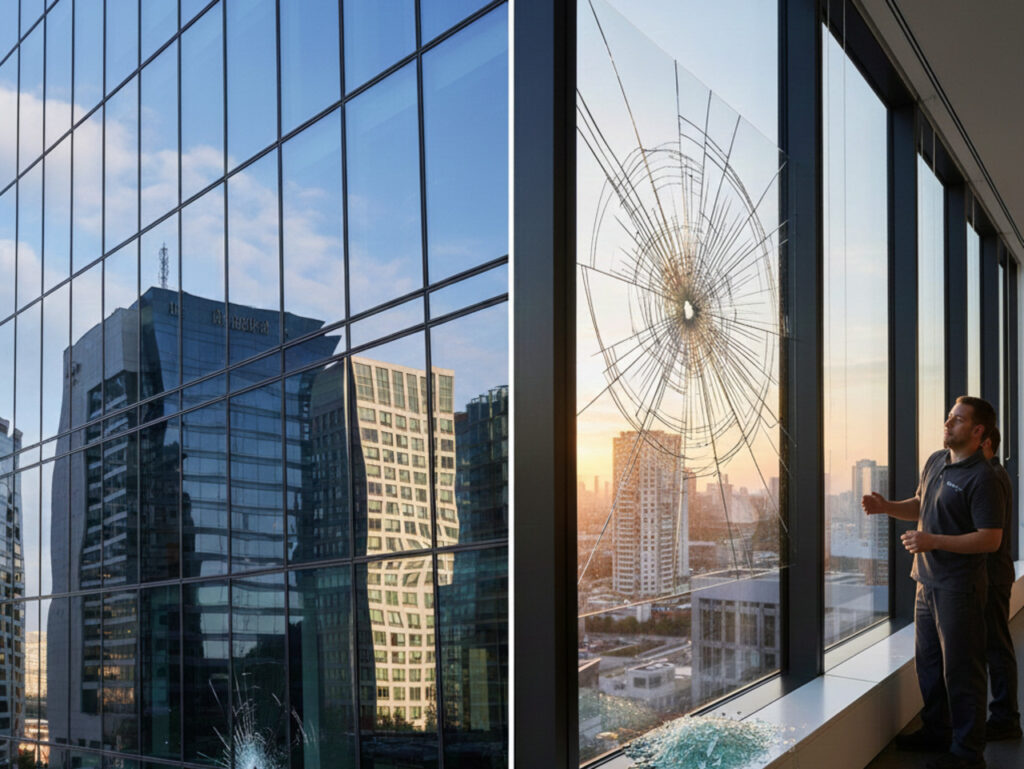
The Strategic Advantage of Advanced Window Film Technology for Project Managers
For project managers tasked with delivering secure and compliant buildings on time and within budget, advanced window film technology presents a strategic advantage. It directly addresses common pain points associated with traditional glass replacement, offering a superior path for upgrading existing glazing.
Consider the following benefits that advanced security films, such as those from 3M, bring to a project:
- Cost-Effectiveness: Implementing security film is typically a fraction of the cost of replacing existing windows with new safety glass, significantly impacting project budgets favorably.
- Reduced Disruption: Installation is far less invasive, avoiding the extensive demolition, debris, and associated labor required for full window replacement. This minimizes impact on building occupants and operations.
- Accelerated Timelines: The speed of film application drastically shortens project schedules compared to the procurement and installation cycles of new glass units.
- Enhanced Versatility: Modern films offer multi-functional benefits, simultaneously addressing building security, solar control, and sometimes even aesthetic concerns, all from a single application.
- Adaptability: Installers can apply security film to virtually any existing glass type. This offers a flexible solution for diverse building stock and architectural styles.
By leveraging advanced film technology, project managers can efficiently meet rigorous client demands for security and safety without the typical challenges of extensive construction. It positions them to deliver exceptional value by protecting assets, occupants, and ensuring regulatory compliance with minimal overhead.
Your Next Step: Consulting for Project-Specific Safety Upgrades and Solutions
Navigating the complexities of glass safety and security upgrades requires a nuanced understanding of both building requirements and available technologies. Every project possesses a unique set of variables, including threat assessment, building structure, budget constraints, and operational considerations. Therefore, a generic “one-size-fits-all” approach is rarely optimal.
We encourage project managers to engage in a specialized consultation for their needs. An expert partner can assess your existing glass and required safety standards. They will recommend the most appropriate and cost-efficient solution for your project. This collaborative process ensures the chosen method aligns perfectly with your specific objectives. Whether using security film or combined strategies, you guarantee high-level performance. Proper assessment leads to the highest level of protection for the property. This expert guidance secures the long-term success of your investment.
Frequently Asked Questions
What is safety glass made of, and why is it important for buildings?
Safety glass is specifically engineered to reduce injury risk upon breakage, unlike standard glass that shatters into sharp fragments. The two main types are tempered glass and laminated glass. Tempered glass undergoes heat treatment to break into small, dull pieces, while laminated glass uses a polyvinyl butyral (PVB) interlayer to hold broken fragments together. It’s crucial for protecting occupants, securing assets, and maintaining structural integrity in construction.
What is the difference between laminated glass vs tempered glass?
Laminated glass uses a plastic interlayer (like polyvinyl butyral or PVB) to bond multiple panes, so fragments stick to the film when broken, maintaining the opening’s integrity. Tempered glass is heat-treated to be much stronger than regular glass and shatters into small, relatively harmless cubes upon impact. Laminated glass offers better protection against forced entry and maintains a barrier, while tempered glass is primarily for reducing laceration risk.
How can I make existing commercial building glass shatterproof without full replacement?
To make existing glass shatter-resistant, advanced security window film for commercial buildings is an effective solution. This film, made from multiple layers of high-tensile polyester with strong adhesives, is applied directly to existing glass. It holds fragments together upon impact, preventing dangerous shards and deterring forced entry, effectively upgrading the glass’s security without the cost and disruption of full window replacement.
Can security window film help my commercial building meet safety standards?
Yes, certified advanced security films can help existing glazing meet stringent glass safety standards such as ANSI Z97.1 and CPSC 16 CFR 1201. When properly applied, these films upgrade ordinary annealed glass to achieve the required impact performance, providing a cost-effective and less disruptive alternative to replacing windows to comply with regulations.
What are the benefits of using security window film for commercial buildings compared to replacing windows?
Security window film offers significant advantages for commercial renovation projects, including:
- Cost-Effectiveness: Substantially lower cost than full glass replacement.
- Reduced Disruption: Minimal downtime and operational impact during installation.
- Accelerated Timelines: Faster project completion compared to new window procurement and installation.
- Enhanced Versatility: Provides multi-functional benefits like improved building security, UV protection, solar control, and aesthetic options.
- Adaptability: Applicable to various existing glass types, preserving architectural aesthetics. This makes it an ideal solution for upgrading building security efficiently.