Table of Contents:
- The Unseen Threat: The Invisible Impact of UV Radiation on Commercial Assets
- Decoding “UV Protection Screen for Windows”: Consumer Solutions vs. Professional-Grade Film Technology
- Essential Metrics: Evaluating True UV and Solar Control Performance for Commercial Applications
- The 3M Distinction: Why Professional Window Film Becomes a Project Specification
- UV Protection Screen for Windows. Unlocking the Advanced Solar Film Option
- Strategic Implementation: Navigating Large-Scale Commercial Window Film Projects
- Conclusion: Elevating Building Performance With Advanced Film Technology
- Frequently Asked Questions
- Related Posts from Window Film Depot
The Unseen Threat: The Invisible Impact of UV Radiation on Commercial Assets
Ultraviolet (UV) radiation, a ubiquitous component of natural sunlight, poses a significant, often underestimated, threat to commercial properties. Unlike the more immediate impact of heat or glare, UV’s destructive effects are insidious. It unfolds gradually, cumulatively compromising the integrity and appearance of interior assets long before damage becomes overtly apparent. This invisible assault penetrates standard glazing, initiating a relentless degradation process. For project managers, UV protection for windows is a critical consideration.
Recognizing Deterioration: Fading, Degradation, and Material Weakness
The pervasive nature of UV radiation manifests in several forms of material deterioration. In commercial and retail spaces, this includes the noticeable fading and discoloration of merchandise, display fixtures, carpets, furniture, and wall coverings. Beyond aesthetics, UV exposure leads to the degradation of polymer-based materials, weakening plastics, fabrics, and even certain sealants used in window frames. This contributes to premature material failure. Over time, these effects diminish the perceived quality and longevity of assets, necessitating costly repairs or replacements.
Understanding the Financial Ramifications for Commercial and Retail Spaces
The long-term financial ramifications of unchecked UV exposure are substantial. For retail environments, faded merchandise directly translates to markdown losses and reduced profitability, as damaged goods cannot command full price. Commercial offices and hospitality venues face accelerated depreciation of high-value interior furnishings, art, and flooring. This leads to increased capital expenditure for earlier-than-anticipated renovations. Furthermore, a deteriorated interior can negatively impact tenant satisfaction and retention, presenting a quantifiable risk to property managers and contributing to a higher total cost of ownership over a building’s lifecycle.
Proactive UV Mitigation as a Project Planning Essential
Given these hidden costs and the gradual, yet inevitable, damage UV radiation inflicts, integrating proactive UV mitigation strategies into project planning is not merely beneficial; it is essential. Addressing this challenge at the specification stage ensures the long-term preservation of interior assets, safeguards investment, and contributes to a more sustainable and aesthetically pleasing environment. For project managers, this foresight translates into delivering projects that meet stringent client demands for asset protection, energy efficiency, and enduring aesthetic quality, ultimately enhancing their professional reputation.
Decoding “UV Protection Screen for Windows”: Consumer Solutions vs. Professional-Grade Film Technology
Distinguishing Basic Filtration From Engineered UV Blocking Solutions
The term “UV protection screen for windows” is often used broadly, encompassing a spectrum of solutions with widely varying efficacies. Basic filtration, found in many common window treatments or generic tints, may offer some degree of UV attenuation. However, it typically lacks the precise engineering to comprehensively block the most damaging wavelengths. In contrast, engineered uv blocking film for buildings, like professional-grade window films, are designed with advanced material science to selectively reject harmful UVA and UVB radiation. UV window film often achieves 99% or greater UV rejection across the critical spectrum without significantly altering visible light transmission.
Limitations of Traditional Window Treatments and Generic Screens
Traditional window treatments such as blinds, curtains, or standard mesh screens present several limitations when considered for comprehensive UV mitigation in commercial settings. While they can block direct sunlight, their effectiveness in filtering UV is inconsistent and often incomplete. They frequently obstruct views, compromise natural light, and may contribute to a feeling of confinement. Furthermore, these solutions often lack measurable performance metrics, durability, and the robust warranties essential for commercial applications. They represent aesthetic accessories rather than integrated, high-performance building components.
Defining Professional-Grade UV Blocking Film for Architectural Applications
Professional-grade UV blocking film represents an advanced architectural solution engineered to transform standard glazing into a multi-functional asset. These films are distinguished by several key characteristics:
- Superior UV Rejection: Specifically designed to block over 99% of harmful UVA and UVB rays, providing unparalleled fading protection and degradation resistance.
- Optical Clarity: Maintains clear, unobstructed views and allows ample natural light penetration, avoiding the visual distortion or darkness associated with some tints.
- Integrated Performance: Many solar control film products also offer significant Total Solar Energy Rejected (TSER), reducing heat gain and contributing to energy efficiency by lowering HVAC loads.
- Durability and Warranty: Manufactured to stringent industry standards, professional films come with long-term, comprehensive warranties that reflect their engineered quality and expected lifespan, a critical factor for large-scale commercial projects.
- Seamless Integration: Applied directly to existing glass, these films offer a non-invasive, cost-effective upgrade without the need for window replacement.
How Advanced Film Technology Transforms Standard Glazing
By integrating professional-grade film technology, standard glazing is fundamentally transformed from a simple barrier into a sophisticated protective envelope. This advanced film creates a passive, continuous defense against the sun’s most damaging rays, safeguarding valuable interiors. It enhances occupant comfort by stabilizing indoor temperatures and reducing glare, and contributes to the building’s overall energy performance. This transformation positions window film as an indispensable component in meeting client demands for sustainability, asset preservation, and a high-quality interior environment, moving beyond the concept of a mere “screen” to that of a high-performance, engineered asset.
Essential Metrics: Evaluating True UV and Solar Control Performance for Commercial Applications
When specifying commercial window tinting solutions for commercial window applications, moving beyond anecdotal claims to objective performance metrics is crucial. These benchmarks provide the quantifiable data needed to make informed decisions that impact energy efficiency, asset longevity, and occupant comfort. Understanding these metrics transforms a simple product choice into an engineered asset specification.
Understanding UV Rejection Percentages Beyond Surface-Level Claims
Ultraviolet (UV) radiation is a primary contributor to interior fading protection and material degradation, affecting everything from retail merchandise to office furnishings and museum exhibits. While many solutions claim “UV filtering,” the true measure lies in the UV rejection percentage, specifically across the entire UV spectrum (UVA, UVB, and UVC). A generic claim of blocking “some UV” offers little assurance. Project managers require films designed to block over 99% of harmful UV rays to genuinely protect interior assets and contribute to a healthier indoor environment. This level of rejection is a fundamental requirement for preserving the aesthetic and monetary value of a building’s contents.
The Significance of Total Solar Energy Rejected (TSER) in Building Efficiency
Beyond UV protection, solar control is paramount for managing a building’s operational costs and tenant comfort. Total Solar Energy Rejected (TSER) quantifies a window film’s ability to block solar heat from entering a building. It accounts for reflected, absorbed, and re-radiated solar energy across the entire solar spectrum, including visible light, infrared, and ultraviolet. A higher TSER percentage directly correlates to reduced heat gain through windows, which in turn significantly lowers the load on HVAC systems. For large-scale commercial projects, specifying films with a high TSER can translate into substantial energy savings, shorter payback periods on the investment, and a more consistent, comfortable indoor temperature for occupants, directly addressing energy efficiency demands.
The Concept of SPF for Windows: A Comprehensive Protection Standard
To illustrate the comprehensive protection offered by high-performance window films, it is helpful to consider the analogous concept of SPF (Sun Protection Factor) in skincare. Just as SPF measures the level of protection against harmful UV radiation for skin, an equivalent “SPF for windows” concept highlights a film’s ability to protect interior spaces and their occupants. While not a standardized industry metric with a numerical SPF rating like sunscreen, the underlying principle is the same. The film acts as a barrier, significantly reducing UV exposure. This comprehensive protection standard ensures that not only are physical assets shielded from fading, but the risk of UV-related health concerns for occupants near windows is also substantially mitigated.
Need More Info?
The Window Film Depot team is happy to help.
Navigating Warranties and Long-Term Performance Guarantees
The selection of a window film is a long-term investment, making robust warranties and performance guarantees essential. A professional-grade film should come with a comprehensive warranty covering not only the product itself, but also its installation. This ensures protection against defects such as bubbling, peeling, crazing, or significant discoloration. Reputable manufacturers provide clear, transferable warranties that demonstrate confidence in their product’s durability and long-term performance. This commitment to quality de-risks the project for both the construction manager and the end-client, providing peace of mind that the specified solution will continue to deliver its stated benefits for years, often exceeding a decade, without degradation in clarity or protective capabilities.
The 3M Distinction: Why Professional Window Film Becomes a Project Specification
Moving from general performance metrics to specific solutions, 3M window film distinguishes itself through proprietary technology, proven durability, and tailored applications. For project managers, this translates into a product that is not merely an add-on, but a critical project specification delivering quantifiable benefits and long-term value.
The Engineering Behind 3M UV-Blocking Films: Proprietary Material Science
The superior performance of 3M UV blocking film is rooted in decades of advanced material science and engineering. Unlike conventional dyed or metalized films, 3M utilizes proprietary technologies such as multi-layer optical films and nanotechnology. These innovations allow films to selectively reject specific wavelengths of the solar spectrum, blocking virtually all UV light and significant portions of infrared heat, while maintaining high levels of visible light transmission. This non-metalized construction means no signal interference, no mirror-like appearance, and consistent performance over time, addressing both functionality and aesthetic considerations for diverse commercial applications.
Unmatched Durability and Clarity for Long-Term Commercial Performance
In commercial environments, window films must withstand continuous exposure to varying environmental conditions without compromising visual clarity or structural integrity. 3M films are engineered for unmatched durability, resisting common issues such as bubbling, peeling, or delamination that can plague lesser quality products. The advanced scratch-resistant coatings protect against everyday wear, preserving the film’s pristine appearance and optical clarity. This long-term performance ensures that the investment in window film continues to deliver its aesthetic and protective benefits without requiring premature replacement, significantly reducing maintenance concerns and supporting the building’s aesthetic longevity.
Tailored Solutions: Selecting the Right 3M Film for Diverse Project Needs
Every commercial project presents a unique set of challenges and objectives, whether it is maximizing natural light in an office, protecting valuable merchandise in a retail store, or ensuring the preservation of artifacts in a museum. 3M’s extensive portfolio of window films offers tailored solutions designed to meet these diverse needs. From clear films optimized purely for UV protection to multi-purpose films that also provide significant solar heat rejection, privacy, or enhanced security, project managers can specify the ideal film. This modular approach ensures that the chosen solution precisely aligns with specific client demands for security, energy efficiency, and aesthetics, without compromise.
Why 3M’s Performance Data (e.g., 99.9% UV Rejection) Matters to Your Client’s Assets
When 3M states 99.9% UV rejection, this is not merely a marketing claim, it is a verifiable performance metric backed by rigorous testing and decades of field data. For your client’s assets, be they high-end retail goods, irreplaceable museum artifacts, valuable office equipment, or even the integrity of interior finishes, this level of protection is transformative. It means fading protection caused by UV exposure is virtually eliminated, preserving the color, texture, and structural integrity of materials. This quantifiable and warrantied protection makes 3M professional window film a critical asset specification, ensuring that your clients’ investments within their commercial spaces are shielded for the long term, directly addressing their need for comprehensive, reliable asset preservation.
UV Protection Screen for Windows. Unlocking the Advanced Solar Film Option
While the primary discussion often centers on ultraviolet (UV) radiation protection, advanced solar control film extends its utility far beyond simple UV blockage. These engineered assets integrate sophisticated technologies to address a spectrum of environmental and operational challenges in commercial buildings, offering quantifiable benefits that directly impact energy consumption, occupant well-being, and overall property value. Understanding these additional capabilities is crucial for project managers aiming to deliver comprehensive solutions.
Significant Energy Savings Through Enhanced Solar Control and Low-E Properties
Modern solar control films are designed to manage the full solar spectrum, not just the UV portion. This includes a significant reduction in solar heat gain, which is a major contributor to cooling loads in commercial spaces. By selectively rejecting solar heat while allowing desirable visible light to pass through, these films directly reduce the demand on HVAC systems. Metrics such as Total Solar Energy Rejected (TSER) quantify this performance, indicating the percentage of total solar energy (UV, visible light, and infrared) that is blocked from entering a building.
Furthermore, some advanced films incorporate low-e coating properties. These films work bi-directionally, helping to retain interior heat during colder months by reflecting infrared energy back into the conditioned space. This dual action of reducing heat gain in summer and heat loss in winter can lead to substantial reductions in energy consumption and associated operational costs, directly addressing critical energy efficiency objectives for any facility.
Improving Tenant Comfort and Occupant Well-Being Through Glare Reduction
Excessive glare, particularly from direct sunlight, can significantly impair visual comfort and productivity within an office or retail environment. Traditional blinds or shades often necessitate blocking views and natural light entirely. Advanced solar control film, however, manages visible light transmission to reduce harsh glare without compromising the connection to the outdoors. This creates a more uniformly lit and comfortable interior, eliminating hot spots near windows and allowing occupants to work or shop without distraction. Improved visual comfort contributes directly to higher tenant satisfaction and overall occupant well-being, a key consideration for property managers and building owners.
Integrating Security Film Features: Dual-Purpose Protection for Commercial Glazing
For projects requiring enhanced building security, the integration of security film features with solar control properties offers a highly efficient dual-purpose solution. These specialized films are engineered to hold shattered glass together upon impact, preventing dangerous shards from flying inward and significantly deterring forced entry.
This capability is critical for:
- Intrusion Protection: Delays break-in attempts, providing precious time for security personnel to respond.
- Safety in Accidents: Mitigates injury risk from accidental impacts or glass breakage.
- Disaster Preparedness: Offers protection against flying debris during severe weather events or seismic activity.
By applying a single film, project managers can address both solar control and security demands, streamlining procurement and installation while enhancing the resilience of the building’s glazing system.
Preserving Aesthetics and Property Value Without Compromising Views
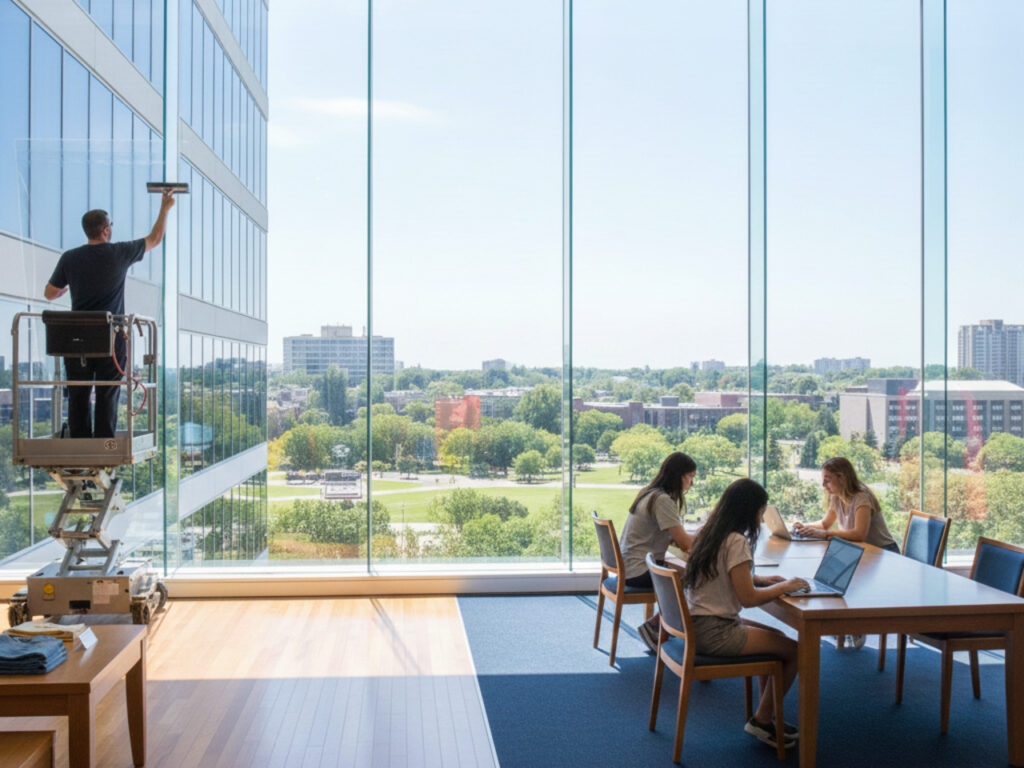
A common concern with window treatments is their potential to alter a building’s aesthetic appeal or obstruct valuable views. Unlike traditional dark tints or physical screens, many professional-grade solar control films are designed to be optically clear or offer subtle, neutral tones. This ensures that the building’s exterior retains its intended architectural character, and interior occupants continue to enjoy unobstructed outward visibility and ample natural light. Maintaining clear views and a bright, inviting interior environment is crucial for preserving property value and enhancing the user experience, aligning with aesthetic demands without sacrificing performance.
Strategic Implementation: Navigating Large-Scale Commercial Window Film Projects
Implementing advanced window film solutions across large-scale commercial projects requires a strategic, systematic approach. Successful deployment hinges not just on the technical merits of the film, but on meticulous planning, efficient execution, and rigorous quality assurance. Project managers must navigate logistical complexities to ensure the project meets its objectives without unduly disrupting operations.
Pre-Installation Planning: Assessing Fenestration and Project Scope
A comprehensive pre-installation assessment is the bedrock of any successful commercial window film project. This phase involves a detailed evaluation of the existing fenestration, including the type of glass (e.g., annealed, tempered, laminated, low-e coating), frame materials, and window seal integrity. Understanding these variables is critical for selecting the appropriate film that is compatible with the existing glazing system and will perform optimally without risking thermal stress or seal failure.
Key planning considerations include:
- Performance Requirements: Clearly define desired outcomes (e.g., specific TSER, UV rejection %, glare reduction, security levels).
- Building Codes and Warranties: Verify compliance with local building codes and assess impacts on existing window warranties.
- Site Logistics: Plan for access to all windows, staging areas for materials, and coordination with building occupants.
- Environmental Factors: Consider climate zone, solar orientation of facades, and specific solar exposure patterns.
This thorough planning ensures the selected film aligns with the project’s multifaceted goals, from energy savings to tenant comfort and security.
Minimizing Disruption: Efficient Window Film Installation Methodologies for Active Sites
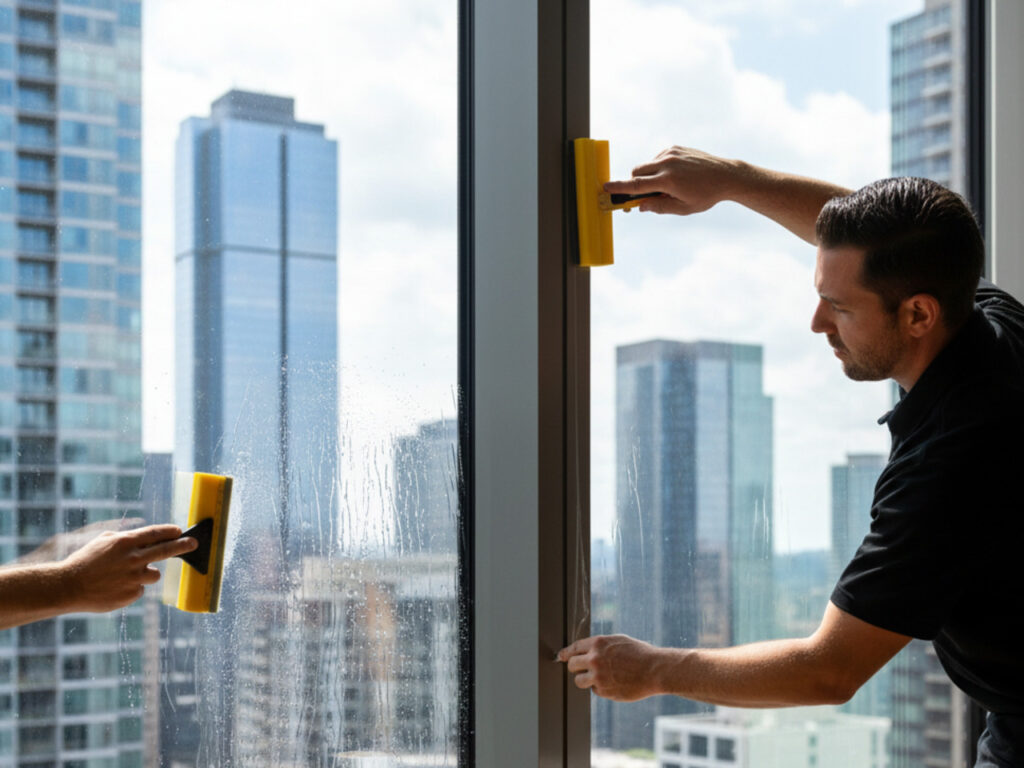
Installing window film in an active commercial building demands methodologies that prioritize minimal disruption to ongoing operations. This often involves strategic scheduling and adaptable workflows. Professional installers frequently implement phased installations, tackling specific sections or floors at a time, or scheduling work during off-peak hours, such as evenings or weekends, to avoid impacting business activities. Clear communication protocols with building management and occupants are essential to manage expectations and ensure smooth execution. Efficient teams utilize specialized tools and techniques to complete window film installation swiftly and cleanly, maintaining a safe and tidy work environment throughout the project duration.
Quality Assurance and Post-Installation Verification on Commercial Buildings
Upon completion of installation, a robust quality assurance process is vital to confirm that the film has been applied correctly and is performing as specified. This typically includes a detailed post-installation inspection where technicians visually check for common imperfections such as bubbles, creases, or debris trapped under the film. Beyond visual checks, some projects may benefit from performance verification, using instruments to measure light transmission, solar energy rejection, or UV blockage to ensure the film meets the agreed-upon technical specifications. A comprehensive manufacturer’s warranty, often a multi-year or lifetime guarantee, provides an additional layer of assurance, protecting the investment and de-risking long-term project outcomes for building owners.
Partnering with Expert Installers: Leveraging Experience and Industry Authority
The complexity and scale of commercial window tinting projects underscore the importance of partnering with certified, expert installers. Such partners bring not only technical proficiency in film application, but also invaluable experience in navigating the logistical challenges inherent in large-scale deployments. They possess deep product knowledge, ensuring the right film is selected for specific glazing types and performance objectives. Furthermore, expert installers are often factory-trained and authorized by leading manufacturers like 3M, guaranteeing adherence to stringent installation protocols and validating manufacturer warranties. This partnership transforms the film from a mere product into a fully supported, engineered solution, ensuring longevity, optimal performance, and professional project execution.
Conclusion: Elevating Building Performance With Advanced Film Technology
Reaffirming the Superiority of Professional 3M Window Films as a Strategic Asset
Throughout our discussion, it has become clear that classifying professional-grade 3M window film merely as a “UV protection screen for windows” fundamentally misunderstands its engineering and performance capabilities. These are not simple aftermarket additions, but rather sophisticated, multi-layered systems designed to deliver specific, quantifiable improvements to a building’s envelope. They represent an engineered asset, offering a level of thermal, UV, and security performance that traditional shading solutions cannot match. The integration of advanced film technology transforms standard glazing into a high-performance component, directly contributing to the structural and operational efficiency of commercial properties. This distinction is crucial for project managers specifying materials for large-scale developments.

Summarizing the Core Benefits for Project Managers and Property Owners
For project managers like Paul, navigating complex client demands for security, energy efficiency, and aesthetics, professional 3M window films offer a unique confluence of solutions. They simultaneously address multiple critical objectives, often surpassing the performance of individual, disparate solutions.
- Quantifiable UV Protection: With UV Rejection percentages consistently above 99%, these films provide unparalleled defense against solar degradation, preserving interior furnishings, flooring, and valuable retail inventory from fading and damage. This extends asset lifespans, reducing future replacement costs.
- Enhanced Energy Efficiency: By significantly reducing Total Solar Energy Rejected (TSER), films mitigate heat gain, lowering cooling loads and subsequently decreasing HVAC operational expenses. This translates into tangible energy savings and a reduced carbon footprint, aligning with modern sustainability goals.
- Improved Tenant Comfort and Productivity: By blocking excessive heat and glare without sacrificing natural light, the films create a more stable and comfortable indoor environment. This direct improvement in tenant well-being can lead to higher satisfaction rates and productivity, contributing to lower vacancy rates.
- Integrated Security and Aesthetics: Certain film lines also offer enhanced glass safety, fragment retention, and blast mitigation, providing a critical layer of security without compromising the building’s architectural integrity or view. The clarity and discreet application maintain or even enhance aesthetic appeal.
- Simplified Project Management: Consolidating solutions for UV protection, energy efficiency, and security into a single, professionally installed product streamlines vendor management and installation logistics, de-risking project timelines and budgets.
The Long-Term Return on Investment for Specifying High-Performance Film
The initial investment in professional 3M window films yields substantial long-term returns for both project owners and future tenants. The immediate energy savings from reduced cooling costs contribute directly to a lower operational expenditure, improving the building’s net operating income (NOI). Beyond this, the extended lifespan of interior assets due to superior UV protection significantly defers capital expenditures on replacements, representing considerable savings over decades. Furthermore, the enhanced comfort and security features contribute to a higher perceived value and desirability of the property, potentially commanding higher rental yields and improving asset liquidity. The robust manufacturer warranty accompanying these films further safeguards this investment, offering peace of mind and demonstrating the quantifiable confidence in their longevity and performance.
Future-Proofing Commercial Properties: A Call to Action for Informed Specification
In today’s rapidly evolving commercial real estate landscape, future-proofing properties against environmental challenges and operational inefficiencies is paramount. Specifying advanced 3M window film technology is a proactive step toward achieving this. For construction and renovation managers, the call to action is clear: move beyond conventional assumptions about window treatments. Engage with technical data, understand the proven benefits, and integrate these high-performance films as a strategic component in your project specifications. This informed approach not only meets immediate client demands but also positions the property for sustained success, aligning with the highest standards of energy performance, occupant comfort, and asset protection for decades to come.
Frequently Asked Questions
What is the primary difference between a generic UV protection screen for windows and professional-grade 3M window film?
A generic UV protection screen for windows offers basic UV attenuation, but professional-grade 3M window film utilizes advanced material science, such as multi-layer optical films and nanotechnology, to achieve 99% or greater rejection of harmful UVA and UVB rays. This provides quantifiable, warrantied protection, integrated solar control benefits, and superior durability, making it an engineered asset specification rather than a simple accessory.
How do professional window films contribute to a building’s energy efficiency?
Professional solar control film significantly reduces a building’s energy consumption by managing solar heat gain. By selectively rejecting infrared radiation and total solar energy, these films lower the load on HVAC systems, particularly during warmer months. Some advanced films also feature low-e coatings, which help retain interior heat in colder seasons, leading to substantial year-round energy savings.
Can window film enhance the security of commercial glazing?
Yes, certain professional-grade window films are engineered with security features. These films, often thicker and more resilient, hold shattered glass together upon impact. This capability helps deter forced entry attempts, mitigates injury risk from accidental glass breakage, and provides protection against flying debris during severe weather or seismic activity, offering dual-purpose benefits alongside solar control.
Will installing window film change the aesthetic appearance of my commercial property?
Many professional solar control films are designed to be optically clear or feature subtle, neutral tones. This ensures that the building’s exterior retains its intended architectural character, and interior occupants continue to enjoy unobstructed outward visibility and ample natural light. Unlike dark tints or physical screens, these films preserve or enhance aesthetic appeal without compromising performance.
What kind of warranty can I expect with commercial window film installation?
Reputable manufacturers like 3M offer comprehensive, long-term warranties for their professional-grade commercial window tinting products. These warranties typically cover both the film itself and its installation, protecting against defects such as bubbling, peeling, or significant discoloration for many years, often exceeding a decade. This ensures peace of mind and safeguards your investment in the film’s long-term performance.